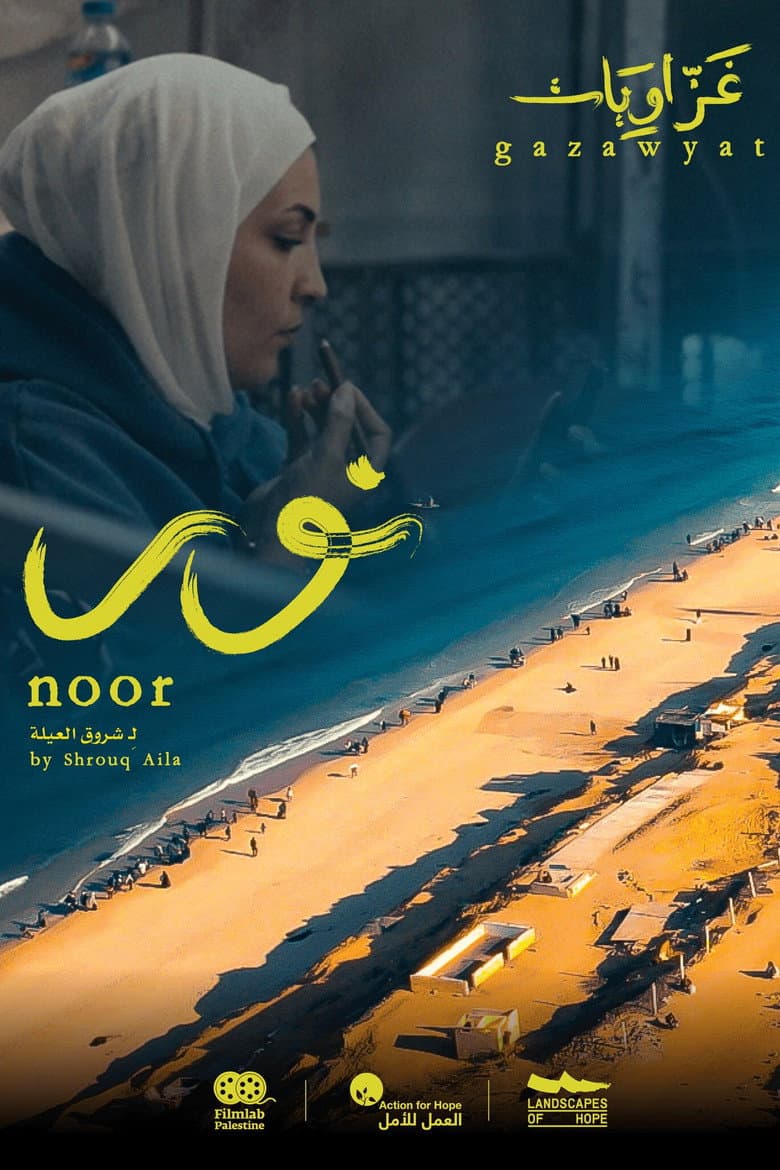
Seven minutes. That's roughly the time it takes to boil a pot of tea, or to scroll past a dozen headlines without absorbing any of them. Shrouq Aila's documentary "Noor" asks you to spend those seven minutes inside a life that most news cycles flatten into statistics. The film arrives on OTT Stories today, November 2, 2026, and it is the rare piece of nonfiction that treats the camera as a witness rather than an intruder.
Release Date & Where to Watch
"Noor" is streaming now, having launched on OTT Stories on November 2, 2026. There's no theatrical window to speak of; this is a film built for intimate, at-home viewing, and its brevity makes it dangerously easy to slot between episodes of something lighter. Don't. The runtime is seven minutes, but the film's residue lingers far longer than that. Viewers in the United States can find it on the platform from day one, and given the subject matter, expect it to circulate widely in educational and journalism circles over the coming weeks.
Cast & Crew
The film is directed by Shrouq Aila, who also appears on screen as herself. That dual role - filmmaker and subject - is the engine of the entire project. Aila is a Palestinian journalist, and "Noor" is drawn directly from her lived experience, which means there's no distance between the observer and the observed. When the camera shakes, it's because her hands are shaking. When the framing feels claustrophobic, that's not a stylistic choice so much as a spatial fact.
Aila's background as a reporter shapes the film's grammar. She knows how to compose an image, how to find the emotional center of a scene, and, crucially, when to stop recording. The supporting presence is Nour, the journalist at the heart of the story, whose daily life between frontline reporting and displacement structures the narrative. The production is Hollywood-backed, delivered in English, and clocking in at seven minutes - a format that strips away everything except what's essential.
Story & What to Expect
The synopsis is blunt, and the film doesn't soften it: "Noor" follows Nour, a Palestinian journalist living through genocide, as she moves between frontline reporting and displacement. The tent where she lives becomes the film's central arena - a space that should be private but isn't, where the walls are thin in every sense. Privacy collapses. The body becomes a site of negotiation. Marriage strains under the weight of constant observation and constant threat.
What Aila captures is the grinding, unglamorous texture of survival. This isn't a film about dramatic heroics; it's about the silent struggle for dignity, voice, and humanity under conditions designed to erase all three. The tent is both shelter and exposure, and the film's genius is in making the viewer feel that contradiction physically - the way a space can be simultaneously too small and too open, too safe and not safe at all.
Expect a documentary that operates less like reportage and more like testimony. There are no talking heads explaining context, no archival montage doing the emotional labor. Seven minutes is not enough time for exposition, so Aila trusts her audience to arrive with some understanding and leaves room for the rest. The film's power lies in what it withholds as much as what it shows - the unspoken negotiations of a marriage under siege, the small rituals of maintaining personhood when the world insists on reducing you to a category.
The title itself carries weight. "Noor" means light, and the film plays on that meaning without ever underlining it. What kind of light survives in a tent? What does it illuminate, and what does it fail to reach? These are the questions the documentary leaves humming in the air after its final frame.
Why It's Worth Watching
Because seven minutes is a manageable commitment for a story that deserves far more attention than it typically receives. Because Aila is doing something genuinely difficult: making a film about atrocity that refuses to aestheticize suffering, that keeps its focus on the mundane, stubborn work of remaining human. The film has no rating yet on TMDb - it's brand new, and the score will presumably settle once viewers catch up with it - but its value isn't in aggregate numbers. It's in the specificity of one woman's voice, recorded and preserved against enormous odds.
"Noor" also matters as a document of what journalism looks like when the journalist is also the story. Aila isn't reporting from a safe distance; she's reporting from inside the tent. That proximity gives the film an urgency that no amount of production polish could manufacture. And at a moment when attention is the scarcest resource on earth, a seven-minute film that earns every second of yours feels almost like a gift.
Watch it tonight. Watch it twice. Then think about what it means that this is the length a story like Nour's has been granted - and what it would take to grant her more.