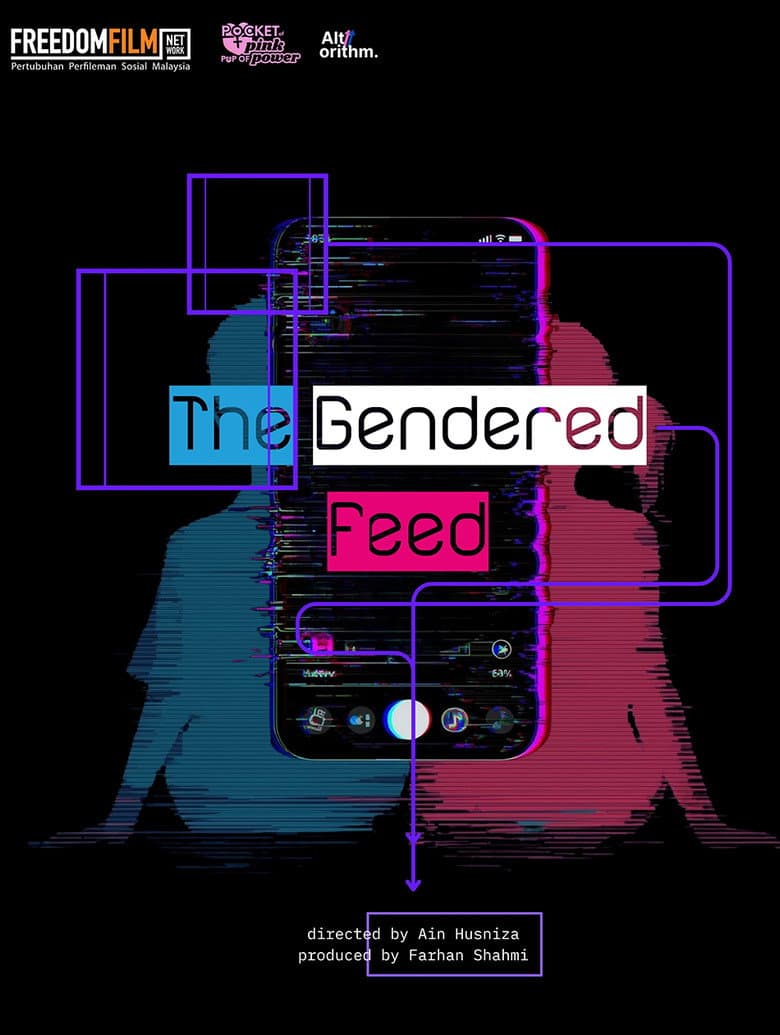
The phone in your hand is a mirror with a mind of its own. That is the uncomfortable premise at the heart of The Gendered Feed, a compact, quietly alarming documentary arriving on OTT Stories today. In nine minutes flat, director Ain Husniza takes one of the most ordinary habits of modern life, the mindless scroll, and reveals the machinery humming beneath it, asking a question few of us want to answer honestly: what is the feed doing to the person holding it, and does it treat them differently depending on who they are?
Release Date & Where to Watch
The Gendered Feed premieres on OTT Stories on October 24, 2026, the same day as its official release. At just nine minutes, it is a deliberately lean watch, the kind of film that fits neatly into a lunch break but lingers far longer than its runtime. Given its HOLLYWOOD production backing and English-language presentation, expect it to slot comfortably into the platform's documentary slate, likely positioned as a conversation starter rather than a deep-dive epic. There is no word yet on extras or companion material, though the subject matter almost begs for a follow-up panel or viewer guide.
Cast & Crew
The film is directed by Ain Husniza, who brings a youthful, research-driven sensibility to the material. Cast details are being kept under wraps, with no named subjects confirmed; the film instead follows a team of young researchers on camera, anonymous enough to keep the focus squarely on the method rather than the personalities. That choice feels intentional. The Gendered Feed is not a star vehicle. It is a piece of visual journalism, and the crew is effectively the cast. With a tight nine-minute runtime and a documentary format, the production leans on editing and structure over spectacle, which is precisely the right call for a subject this slippery.
Story & What to Expect
The premise is simple and ingenious. Every day, millions of people open TikTok and scroll a feed that has been assembled specifically for them. The Gendered Feed sets out to map where that personalisation leads. A video about confidence, we are told, can become a gateway to the manosphere. A makeup tutorial can slide into a spiral of unattainable beauty standards. Curiosity, the film warns, tips into radicalisation. The documentary follows a team of young researchers who create blank accounts and then simply watch, documenting what the algorithm serves up and tracking how gender shapes the spiral in real time.
What emerges is less a lecture than an experiment filmed as it unfolds. The researchers become both observers and, by necessity, participants, and the film's short runtime suggests a fast, punchy structure, probably built around striking examples rather than exhaustive theory. Expect screen recordings, talking-head interviews and the kind of slow-burn reveal that makes you want to check your own feed the moment the credits roll. The overview makes clear that the film is interested in process, not blame; it wants to understand how the slide happens, not merely to scold the people sliding.
It is worth noting that the film is in English and produced within the HOLLYWOOD system, so viewers should expect a polished, accessible treatment of a topic that could easily have been dry or academic. At nine minutes, it will likely function as a snapshot rather than a comprehensive study, an invitation to think rather than a final word.
Why It's Worth Watching
The most compelling reason to watch The Gendered Feed is its timing. We are living through a moment when algorithms are being scrutinised from every angle, from regulators to parents, and yet the daily experience of the feed remains stubbornly personal and oddly invisible. This documentary makes that invisible system visible. By building blank accounts and letting the algorithm do its work, the researchers expose something uncomfortable: the feed is not neutral. It learns, and what it learns is shaped by gender, among other things.
The film's nine-minute length is a feature, not a bug. It is quick enough to watch with someone who would never sit through a feature-length investigation, and sharp enough to spark a real argument afterward. The subject matter touches on confidence, body image, radicalisation and identity, all in the space of a coffee break. There is something almost radical about a documentary that respects your attention span while still making a serious point.
It is also, frankly, a mirror. The film's central question, what does your feed think you are, is one we rarely ask ourselves. Watching a team of researchers answer it on camera makes the question harder to dodge. The rating data is not yet in, and with a runtime this short the film is unlikely to be measured in box-office terms, but its value lies elsewhere: in starting conversations about how the feeds we scroll are quietly shaping who we become. For anyone who has ever caught themselves an hour deep in a feed they did not plan to watch, The Gendered Feed is nine minutes well spent.