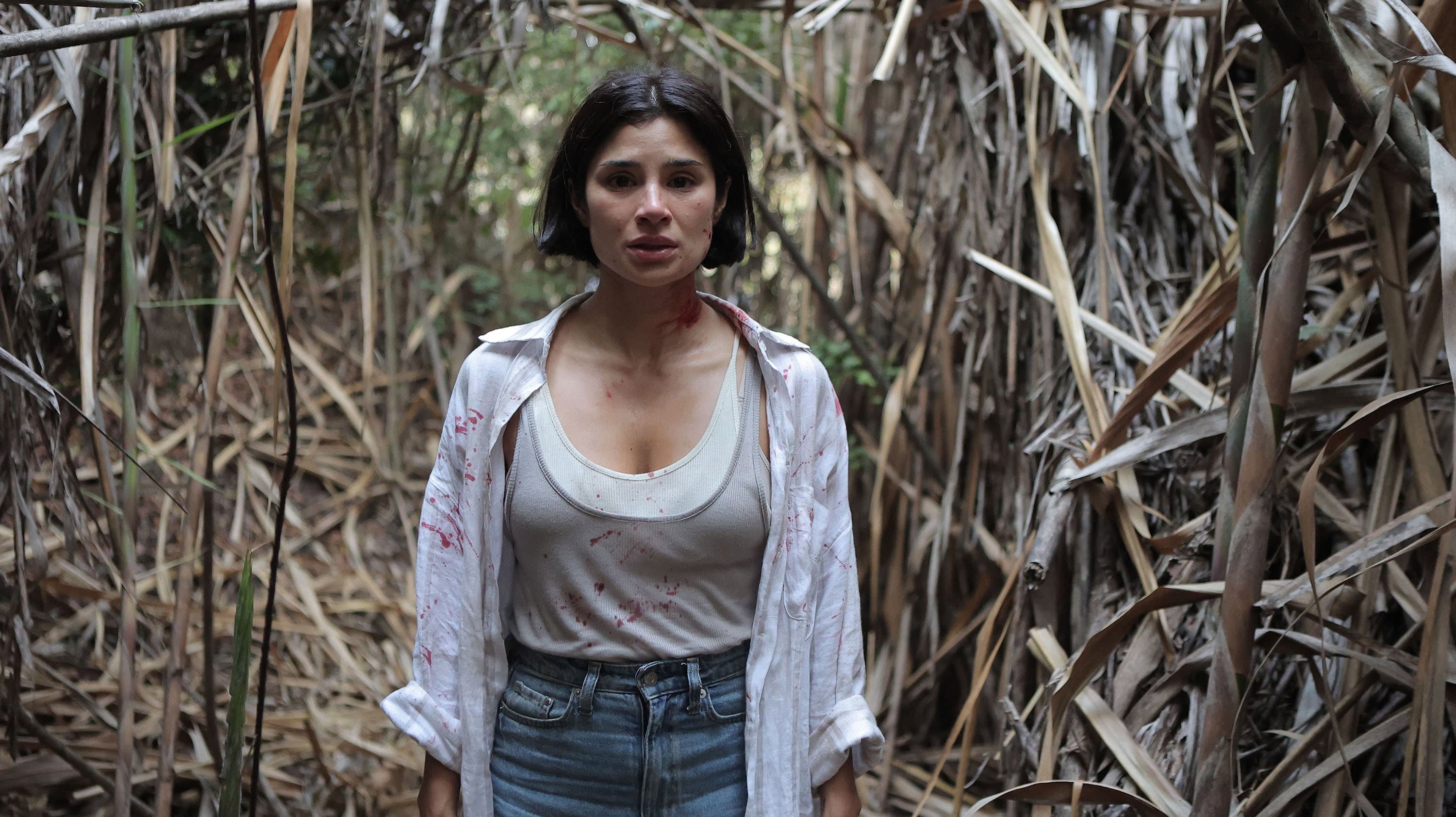
Diego Velasco’s The Whistler arrives on streaming this month carrying a reputation that precedes it. Since its September 24 theatrical release, the film has become something of a curiosity among horror enthusiasts - not because it broke new ground, but because it seemed to actively repel audiences. A 1/10 rating on TMDb isn’t just a critical drubbing; it’s a collective shrug of bewilderment from viewers who expected something more from a project with this much pedigree.
The premise holds promise. Nicole and Sebastian Castillo, played by Diane Guerrero and Juan Pablo Raba, are grieving parents who inherit a secluded Venezuelan farm. It’s the kind of setup that has launched a thousand haunted-house stories: urban professionals, rural isolation, and a tragedy so fresh it practically begs for supernatural intervention. Velasco, working from a script that gestures toward folk horror without fully committing to its traditions, builds the first act with genuine patience. The Venezuelan countryside is rendered with an almost documentary-like reverence - lush, indifferent, and quietly menacing. You can feel the heat through the screen.
But somewhere between the couple’s arrival at the property and their first encounter with the local residents, The Whistler loses its nerve. The film introduces a gallery of supporting characters - Petra (Indhira Serrano), Laureano Silverio Moré (Laureano Olivares), his daughter Greisy (Laura Sofía Domínguez), and a handful of others - who seem to belong to a richer, more coherent movie. They speak in riddles, observe ancient rituals, and regard the newcomers with a mixture of pity and suspicion. It’s familiar territory, but the actors commit. Serrano, in particular, brings a weathered gravity to Petra that suggests a backstory the screenplay never bothers to explore.
The central mystery - what exactly is whistling in the hills, and why does it seem to follow Sebastian’s every move? - is teased with competence but resolved with a shrug. Velasco stages a few genuinely unnerving sequences: a nighttime scene by a water tank, a whispered conversation that turns into something else entirely, a final act that attempts to merge psychological breakdown with supernatural reckoning. These moments work in isolation. As a whole, they never cohere into a satisfying narrative.
Part of the problem is the pacing. At 97 minutes, The Whistler should feel taut. Instead, it feels both rushed and interminable - a paradox that speaks to the script’s inability to decide what kind of movie it wants to be. Is this a meditation on grief? A possession thriller? A critique of colonial legacies in Latin America? The film gestures at all three without landing any of them. Guerrero and Raba are game, but their characters remain sketches: the hysterical mother, the skeptical father, their daughter’s memory reduced to a photo and a few tearful monologues.
The horror itself is largely implied. A whistle here, a shadow there. For some viewers, that restraint will read as sophistication. For most, it will read as evasion. When the film finally reveals its hand in the third act, the payoff is neither shocking nor satisfying - just confusing. The mythology, such as it is, gets explained in a rushed monologue that raises more questions than it answers. By the time the credits roll, you’re left wondering if entire scenes were left on the cutting room floor.
What’s most frustrating is that The Whistler isn’t a lazy film. Velasco has an eye for composition, and the sound design - wind, insects, that titular whistle - does more heavy lifting than any visual effect. There’s a version of this movie that works, one that leans harder into the folk horror traditions of the region and trusts its audience to keep up. This isn’t it. Instead, we get a film that’s too slow for mainstream horror fans and too conventional for arthouse crowds. It exists in a liminal space, much like its grieving protagonists, never quite finding its footing.
For OTT viewers scrolling past it this month, the question isn’t whether The Whistler is scary. It’s whether it’s worth your time. With a 1/10 rating, the consensus is already clear. But ratings can be misleading, especially for horror, where personal taste plays an outsized role. If you’re drawn to slow-burn mysteries, atmospheric cinematography, and performances that elevate thin material, there might be something here for you. If you’re looking for answers, or coherence, or a reason to care about anyone on screen, you’ll likely be disappointed.
The Whistler is now streaming. It runs 97 minutes. It feels longer.