Some films arrive with the subtlety of a held breath, and Madison Sawyer’s A Smaller Sun is exactly that kind of quiet implosion. It doesn’t scream for attention; it waits for you to lean in. On a day when the multiplex is dominated by explosions and superheroes, this seven-minute family drama - releasing today, August 9, 2026 - offers something rarer: a microscope on a boy’s fractured sense of self, and the nearly invisible glue that keeps a household from falling apart. It’s a tiny flicker of a movie, but it burns long after the credits roll.
Release Date & Where to Watch
A Smaller Sun premieres today, August 9, 2026, exclusively on OTT Stories. This is not a theatrical rollout, nor does it need to be - the film’s intimacy feels engineered for a screen you can touch, for a quiet evening where a phone buzzes and you hit pause, then realize you don’t want to. At just seven minutes, it’s designed for the streaming era’s sweet spot: brief enough to fit between chores, substantial enough to ruin your composure. No theatrical window, no festival circuit prior - just a direct-to-platform release that lets the work speak in its own cramped, urgent timeframe. If you’ve got a subscription to OTT Stories, it’s already waiting. Clear your schedule for roughly the length of a pop song’s extended mix; you’ll need the aftermath to breathe.
Cast & Crew
The creative triangle here is compact but sharp. Director Madison Sawyer, whose previous short-form work has circled themes of domestic quiet and emotional neglect, handles the material with a restraint that borders on the surgical. She doesn’t over-explain; she trusts the frame. Leading the charge is Max Blanc-Brude as Sam, the fourteen-year-old protagonist who feels like a ghost in his own home. Blanc-Brude’s performance is a marvel of micro-expressions - the way he looks at a dinner table like it’s a foreign country, the slight slump of a boy who’s stopped asking for a seat at the conversation. Opposite him, Phoebe Edwards plays Thea, whose role I won’t spoil, but whose presence carries a weight that recontextualizes everything Sam thinks he knows. Then there’s Phil Jackson as Lucas - a name that might evoke basketball legends, but here Jackson grounds the film in a lived-in, weary paternal energy. He has maybe three minutes of screen time, yet he makes each second land like a gentle hand on a shoulder. No Oscars have been handed out for a seven-minute film, but TMDb’s yet-to-be-filled rating of 0/10 feels less like a verdict and more like a blank slate, waiting for audiences to do the math themselves.
Story & What to Expect
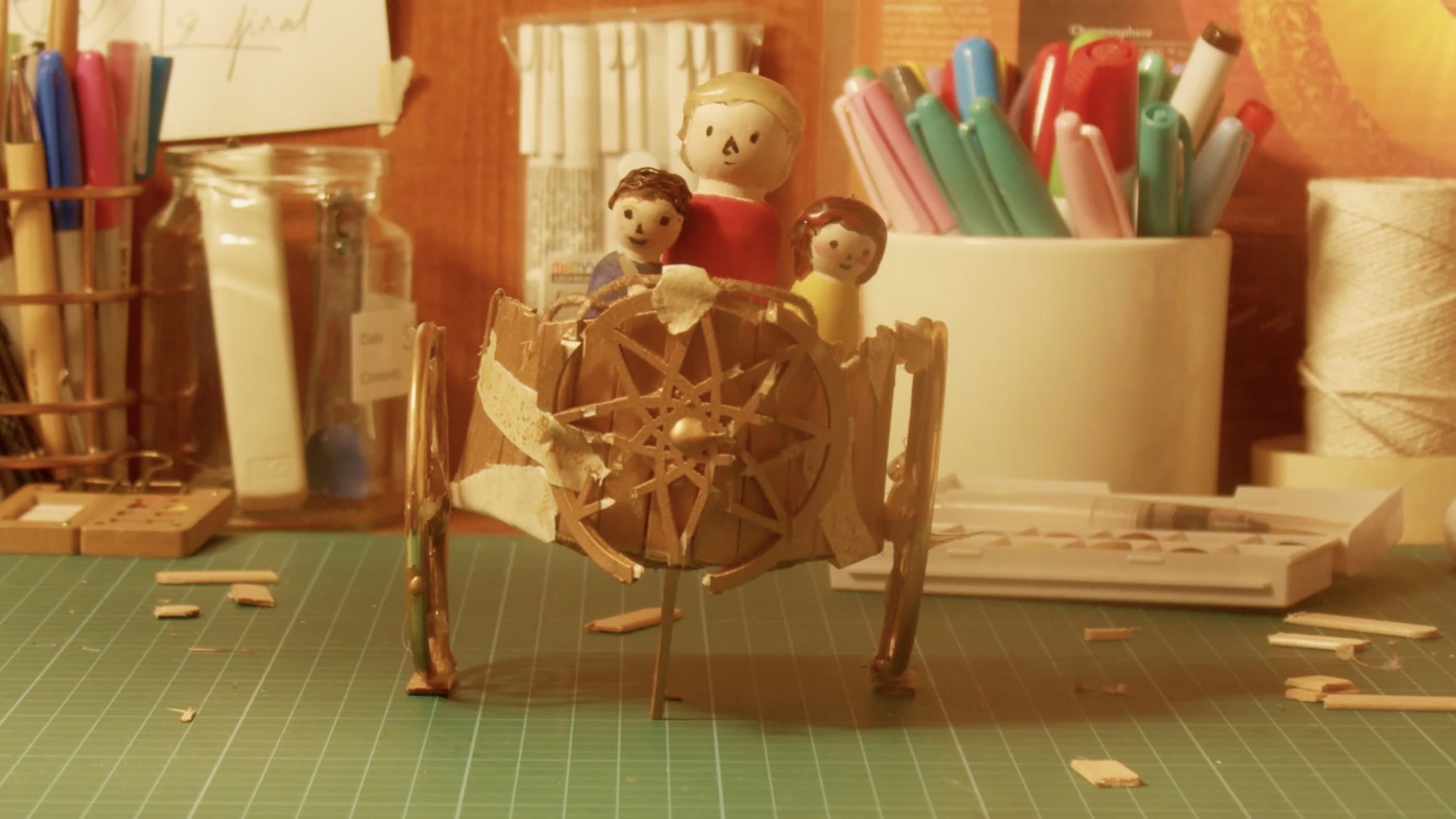
The logline is deceptively simple: Sam, fourteen, feels invisible. His family moves around him - siblings, parents, all orbiting their own gravitational pulls - and he retreats into imagination, daydreaming of a world where someone finally notices his name being called. That’s the setup. But Sawyer isn’t interested in a twee fantasy. The “smaller sun” of the title isn’t a literal celestial body; it’s a metaphor for the diminished warmth Sam feels at home, a star that used to center his universe but now flickers at the edges. The imagination sequences are rendered with a low-budget dreaminess - soft focus, slightly overexposed light, the sound of his own breathing amplified - never veering into full-blown spectacle. This is a kid’s escape hatch, not a CGI portal.
Then comes the “painful mistake.” Without giving away the pivot, know this: it’s a moment of petty, adolescent cruelty, the kind born from frustration rather than malice, and it backfires in a way that forces Sam to see his family’s love not as absent, but as misread. The film’s final third pivots from internal monologue to observational truth - he watches his dad fix a broken drawer, his sister leave a glass of water on his desk, his mother’s hand hovering over his shoulder before she decides not to interrupt. The quiet love isn’t loud. It’s a series of unrecorded gestures, and Sawyer films them with the reverence of a documentarian cataloging endangered species. Expect no score to swell, no dramatic confrontation. Expect a boy sitting on the floor of his bedroom, realizing that visibility isn’t about being seen - it’s about learning to look.
Why It's Worth Watching
Here’s the pitch, plain and simple: this film does in seven minutes what many features fail to do in two hours - it makes you feel the weight of a single, ordinary afternoon. The runtime is a gimmick in the best way; it forces Sawyer to compress jealousy, longing, and reconciliation into a haiku-like structure. There’s no fat, no filler, no digression. Every shot is a clause in a sentence building toward a period of quiet understanding. For parents, it’s a mirror held up to the spaces between “how was school” and “pass the salt.” For teenagers, it’s a validation of that specific, aching loneliness that adults often mistake for attitude. And for anyone who’s ever felt like the background character in their own family photo, it’s a two-minute stretch near the end that might just crack you open.
The casting is the secret weapon. Blanc-Brude doesn’t perform invisibility; he is it - slumped shoulders, eyes that look past people rather than at them. When he finally locks eyes with Jackson’s Lucas, the exchange carries more unspoken dialogue than a transcribed script ever could. Edwards, meanwhile, brings a complexity to Thea that could easily have been a cipher; she’s neither villain nor savior, just a sister doing her own surviving.
There’s no viral moment here, no clip destined for TikTok loops. A Smaller Sun is a slow burn that ends before you’ve fully registered its heat. But that’s the point. It’s a reminder that the smallest stories often hold the largest truths, and that on a platform flooded with content, sometimes the bravest thing a film can do is ask you to sit still for seven minutes and watch a boy learn to see his own reflection in the eyes of people who never left. Watch it alone, watch it with your family - just watch it. The sun may be smaller here, but it’s warm enough to matter.