Some filmmakers chase spectacle. Others chase truth. And a rare, combustible few - like the subject of this new short documentary - chase both at once, often crashing into the walls of history in the process. Arriving quietly on streaming platforms this week, Abel Gance: A Life in Art is a compact, nine-minute meditation on one of cinema’s most audacious pioneers, a man whose name may not ring bells in every household but whose fingerprints are all over the medium’s most ambitious impulses. It’s a brisk, dense little film - less a biography than a lightning strike of remembrance.
Release Date & Where to Watch
As of today, August 21, 2026, Abel Gance: A Life in Art is available to stream exclusively on OTT Stories, the boutique platform known for championing overlooked cinematic histories. There’s no theatrical run, no festival circuit detour - just a direct-to-digital drop designed for curious viewers who want their film history in a single coffee break. The release date itself is notably sparse; the metadata lists it as “unknown,” which feels almost fitting for a subject whose own filmography is a patchwork of lost cuts and resurrected versions. You won’t find it on the big mainstream services yet, so if you’re a subscriber to OTT Stories, carve out nine minutes. If you’re not, this might be the nudge to sign up for a month. The runtime is mercifully precise: 9 minutes, no more, no less. No intermission required.
Cast & Crew
Here’s where the mystery deepens. The film’s director is listed simply as “unknown,” which is either a metadata gap or a deliberate artistic choice - perhaps a nod to Gance himself, who often subsumed his own identity into collaborative chaos. The crew credits are similarly lean. What we do know is the voice that carries the entire piece: Joseph Torres, credited solely as “Narration.” That’s it. No interviewees, no archival commentators, no celebrity talking heads. Torres’s voice is the spine, the connective tissue, and apparently the only human presence we’ll hear. It’s a bold structural decision - essentially a one-man audio essay layered over historical footage, stills, and fragments of Gance’s own films. Given the director’s anonymity, it’s tempting to wonder if Torres had a hand in shaping the visuals, but the official credits don’t say. For now, treat this as a solo performance wrapped in a documentary’s body. The lack of a credited editor or cinematographer only adds to the air of a passion project assembled in the shadows.
Story & What to Expect
The film doesn’t waste a second. Within the first minute, Torres’s narration establishes the stakes: Abel Gance was the man who tried to bend cinema into a total art form, a synthesis of music, image, and rhythm that anticipated the widescreen epics and experimental structures of decades later. The documentary traces his arc in swift, impressionistic strokes - from his early silent work in the 1910s, through the towering achievement of Napoléon in 1927, to his later struggles with sound, commercial pressures, and the industry’s amnesia. But don’t expect a cradle-to-grave summary. This is less a Wikipedia entry and more a poetic eulogy.
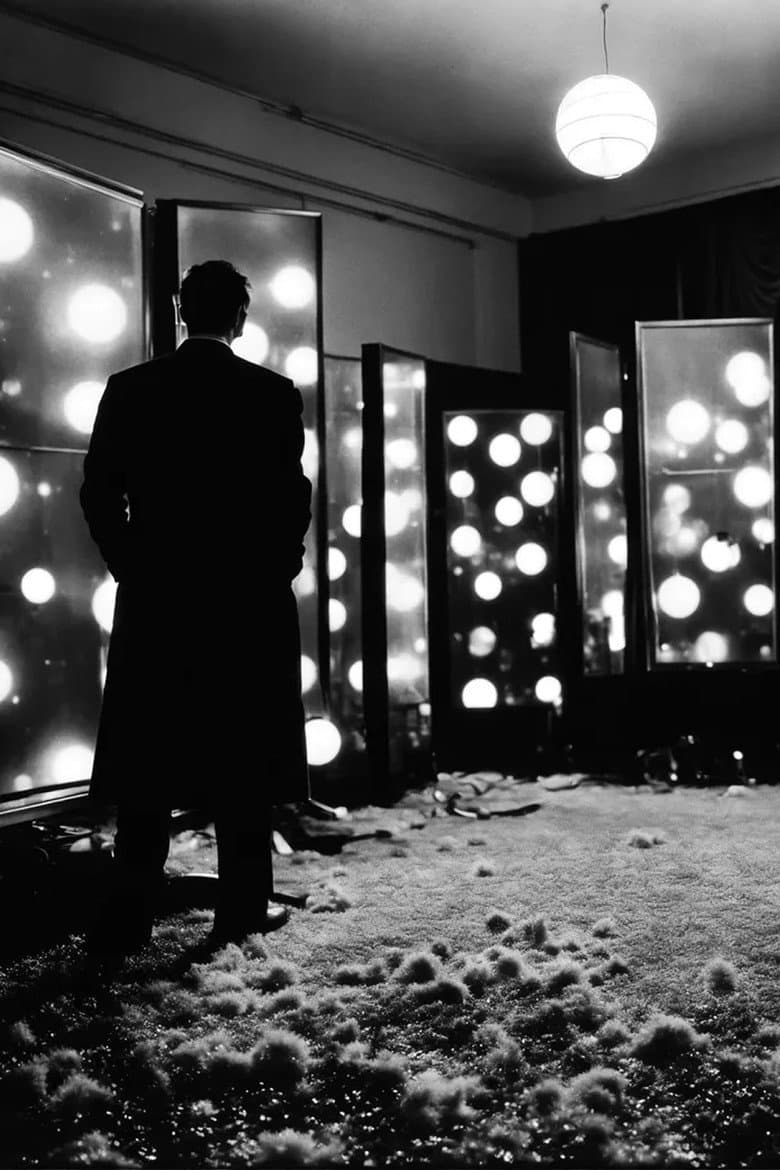
What’s striking is how much ground the film covers without feeling rushed. Torres’s narration is measured, almost hypnotic, and the editing - whoever did it - cuts between Gance’s famous triptych sequences, his use of hand-held cameras (decades before it was cool), and the chaotic production stories that became legend. One segment lingers on the Polyvision experiment, where Gance used three simultaneous screens to create a panoramic effect that predates Cinerama by three decades. Another touches on his obsession with Napoleon as a mythological figure, not just a historical one. There’s no grand thesis statement, no moralizing. Instead, the film operates like a fever dream of cinema history, trusting that the viewer will leave with a sense of awe and perhaps a burning desire to track down La Roue or the 1927 Napoléon restoration.
Don’t come in expecting a conventional talking-heads structure or a clean chronological timeline. The film jumps, doubles back, and occasionally lingers on a single haunting image - like a close-up of Gance’s eyes, or a crumbling film reel - while Torres speaks of obsession and sacrifice. It’s impressionistic, almost avant-garde itself, which feels like a loving tribute to a man who never played it safe. The 9-minute runtime is a constraint, but it’s used like a sonnet’s form: tight, deliberate, and surprisingly emotional by the final frame.
Why It’s Worth Watching
Because nine minutes is all it takes to realize you’ve been missing a crucial piece of cinema’s DNA. Gance is often footnoted, a name dropped in film classes for his technical innovations, but rarely felt as a human being. This short documentary rectifies that by making him achingly present. Torres’s narration - and it’s a genuinely committed performance, not just a voiceover gig - turns what could have been a dry lecture into a lament for all the artists who outlive their recognition. The film doesn’t pretend Gance was a saint. It hints at his megalomania, his financial disasters, his painful fall from grace. But it also insists, with quiet fury, that his vision mattered - that his attempts to make cinema a symphonic experience paved the way for everything from 2001: A Space Odyssey to the immersive experiments of today.
It’s also a masterclass in economy. Most documentaries would stretch this material to 60 minutes with padding and repetition. Here, every second counts. The unknown director (or directors) clearly understands that brevity can be a form of respect - honoring the subject by not burying him in bloat. And for the casual viewer, it’s a zero-risk proposition: nine minutes of your commute, a lunch break, or a pre-bed scroll, and you’ll walk away with a new appreciation for the reckless courage of early cinema.
Yes, it’s slight. Yes, it’s incomplete. But it’s also a spark. If you’ve never seen Napoléon, this documentary will make you want to. If you have, it’ll make you want to see it again. That’s the mark of good criticism, and surprisingly, of a good little film about a giant. As the credits roll - or don’t, given the unknown crew - you might find yourself sitting in silence, wondering why history chose to remember some names and forget others. Abel Gance: A Life in Art doesn’t have the answer. But it asks the question beautifully.