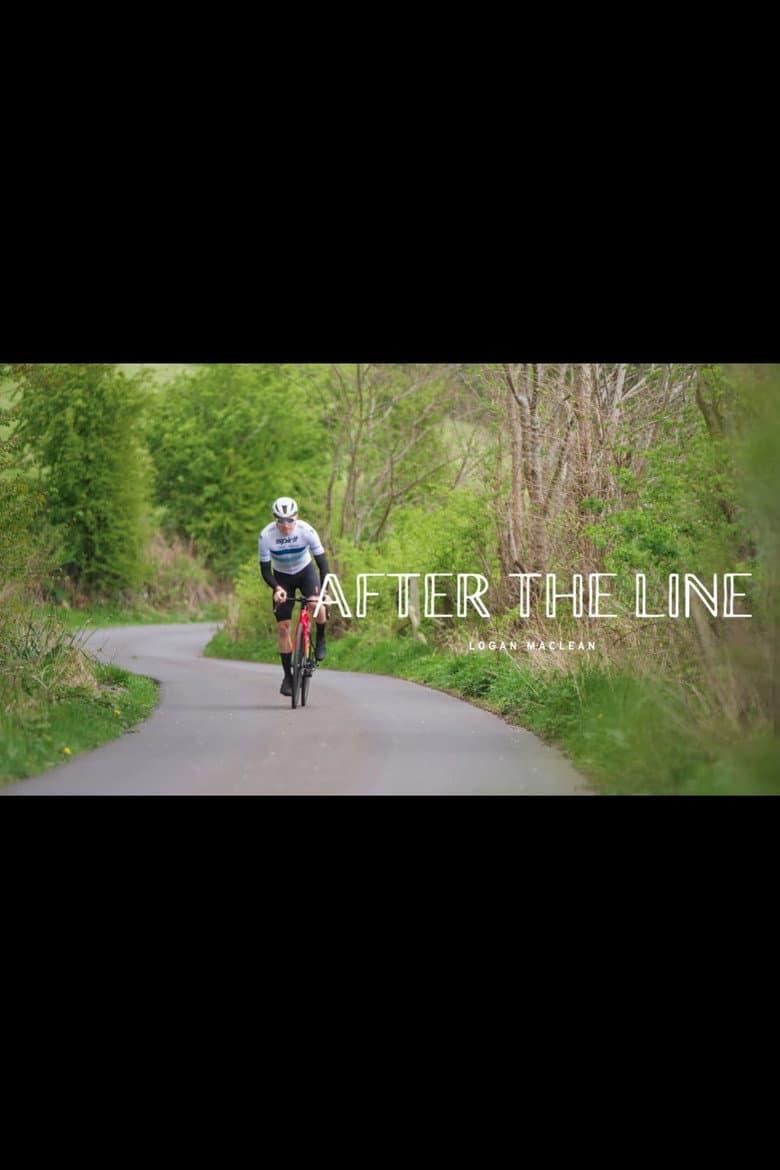
Today, July 29, 2026, marks the quiet arrival of a tiny but potent documentary. “After the Line” isn’t the kind of film that floods multiplexes or generates weeks of buzz before a premiere. It clocks in at eleven minutes, and its subject is a cyclist named Logan Maclean - no household name, no gold medals splashed across the news. But that brevity and modesty are precisely the point. This is a portrait stripped of everything except the essential, a look at what happens not when the race is won, but the instant the effort stops. Released on OTT platforms this morning, it’s the sort of short that rewards anyone willing to lean in and pay attention.
Release Date & Where to Watch
“After the Line” premieres today, July 29, 2026, and is available to stream now on major OTT platforms. Given the film’s abbreviated runtime, it is best watched without distraction - a coffee break or a lunchtime pause is all you need. There is no theatrical rollout, no festival circuit hype; director Ben Fitzhugh has opted for a direct-to-digital release, which suits the intimate, observational nature of the project. Streaming services have increasingly become the home for documentaries of this scale, where a tight eleven-minute window can still deliver an emotional wallop. For now, you can find it listed under new documentary shorts, likely with a still of Maclean on his bike, eyes fixed somewhere past the lens. Check your platform of choice; availability may vary by region, but the global reach of OTT means most viewers can catch it within a day or two.
Cast & Crew
The film’s sole on-screen presence is cyclist Logan Maclean, a rider who has logged thousands of miles in relative obscurity. Maclean is not a superstar of the peloton; the documentary does not present him as a contender for grand tours or Olympic podiums. Instead, he serves as a stand-in for the hundreds of athletes who race without cameras following them - the grinders, the domestiques, the ones who finish mid-pack and then have to figure out what comes next. Maclean’s quiet intensity and willingness to be observed make him an effective subject.
Behind the camera is director Ben Fitzhugh, whose previous documentary work includes a short on off-season rugby training and a feature-length look at small-town rodeo riders. Fitzhugh favors vérité style and a stripped-down approach: handheld cameras, natural light, minimal narration. He is not interested in backstory exposition or montages of childhood trophies. His strength lies in capturing presence - the moment when a person is too exhausted for performance and becomes, briefly, unguarded. For “After the Line,” he followed Maclean for a single day: the morning of a race, the race itself (captured in fragmented, almost abstract shots), and the hours immediately after crossing the finish. The credits list only Fitzhugh and Maclean, plus a sound mixer and editor. No composer credit - the soundscape is raw: wind, breathing, the click of cleats on pavement.
Story & What to Expect
The title “After the Line” is literal. The documentary opens with a close-up of Maclean’s face as he rides - his expression is unreadable, the camera shaky, the road blurring beneath him. The race is not named, the distance not given. There is no announcer’s voice, no on-screen graphic with a clock. Fitzhugh wants you to feel the sensory confusion of the final kilometer: the burn in the lungs, the narrowing of vision, the body operating on instinct. Then, suddenly, the line comes. Maclean crosses it. The wheels slow.
What follows is an eleven-minute meditation on the minute after effort ends. Maclean dismounts, walks his bike to a grassy verge, and sits. Fitzhugh’s camera stays on him in real time. He drinks water slowly. He stares at the road. He takes off his helmet, runs a hand through sweat-caked hair. There is no triumphant speech, no coach rushing over with a towel. Other riders pass - some in packs, others alone - but nobody stops. The silence is punctuated only by distant cheers from the finish area and the sharp sound of Maclean’s own breathing as it steadies.
The documentary is not about the race itself. It is about the dissolution of purpose. For months, maybe years, every decision Maclean made - diet, sleep, training hours - was oriented toward that finish line. Now it’s behind him. The camera holds. You can see the question forming in his eyes, though he never articulates it: What now? Fitzhugh trusts the image to carry the weight. There are no voice-overs, no interviews, no third-act revelations. The emotional arc is subtle, built entirely on Maclean’s micro-expressions - a jaw muscle clenching, a blink that lasts a fraction too long, the small smile that doesn’t quite reach his eyes.
The runtime is precisely eleven minutes, and the pacing is patient. Viewers accustomed to fast-cut sports montages may find it slow. That is intentional. “After the Line” resists the impulse to explain or justify. It simply observes. The result is a documentary that feels more like a short story - one that ends on a held breath rather than a punchline.
Why It's Worth Watching
“After the Line” is not for everyone, and it knows that. If you require narrative propulsion, a clear conflict, or a triumphant conclusion, this short will likely frustrate you. But for viewers who appreciate documentary as a quiet art - the kind that reveals character through stillness rather than dialogue - this eleven-minute film is a small gem.
Its value lies in what it refuses to do. It does not romanticize cycling or the athlete’s journey. It does not manufacture stakes where none exist. Instead, it gives you a real person in a real moment, raw and unedited. The absence of a soundtrack or dramatic editing forces you to sit in that moment alongside Maclean. You start to notice the small things: the way his fingers tremble slightly as he unscrews the water bottle cap, the shadow of a cloud moving across the grass, the sound of a truck rumbling on a distant road. That attention to texture is rare in short-form documentaries, which often try to cram in too much context.
And then there is the simple power of watching someone process exertion, accomplishment, and emptiness in real time. Many of us will never cross a finish line at the front of a race, but we have all felt the hollowing out that happens after a long effort - the disorientation when the goal that structured your days suddenly vanishes. “After the Line” captures that disorientation without sentimentality. It does not tell you to feel moved. It just shows you a man sitting on the grass, and lets you decide.
For cycling fans, the film offers an intimate, unglamorous look at a discipline often depicted as heroic. For documentary lovers, it is a masterclass in restraint. And for anyone who has ever asked themselves what comes next - whether after a race, a project, or a chapter of life - it is an eleven-minute mirror. The TMDb rating remains 0/10, but that only means no one has voted yet. This short deserves to be seen, savored, and rated. Find it today, while it’s fresh.