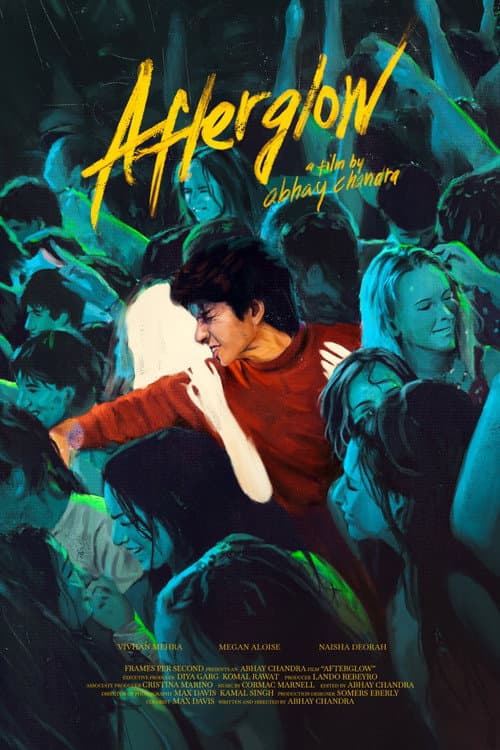
There is a particular kind of loneliness that only a crowded room can produce. Abhay Chandra's new short film Afterglow understands this instinctively, and it uses that understanding to craft something that feels both intimate and pleasantly disorienting. Clocking in at just nine minutes, the film arrives on OTT platforms today, October 14, 2026, ready to prove that you do not need a feature-length runtime to leave an audience emotionally winded.
Release Date & Where to Watch
Afterglow is available to stream starting today, October 14, 2026. As a Hollywood production with English as its original language, the film is positioned for a broad international audience, though its nine-minute runtime suggests it will likely find a home among curated short-film collections and festival-style streaming hubs rather than a traditional theatrical rollout. Viewers should check their preferred OTT platform's short film section for availability, as titles of this length tend to circulate through specialty streaming libraries and premium short-form catalogs.
Cast & Crew
Chandra directs from a screenplay that places enormous weight on performance, and the casting reflects that priority. Vivhan Mehra leads as Aarav, the lonely Indian student whose St. Patrick's Day takes an unexpected turn. Mehra carries the film's emotional arc, which demands a quiet interiority punctuated by moments of release. Opposite him, Megan Aloise plays Fia, the mysterious Irish girl who pulls him onto the dance floor. Aloise's role requires a different kind of register, one that shifts between warmth and enigma as the film blurs the lines between what is happening and what is remembered. Cormac Marnell rounds out the principal cast as Band Member #1, contributing to the pub's lived-in musical texture. Naisha Deorah appears as Meera, a presence who likely anchors the grief Aarav is trying to outrun. Chandra's direction, paired with the film's dual identity as a drama and a music piece, suggests a filmmaker interested in how sound and movement can express what dialogue cannot.
Story & What to Expect
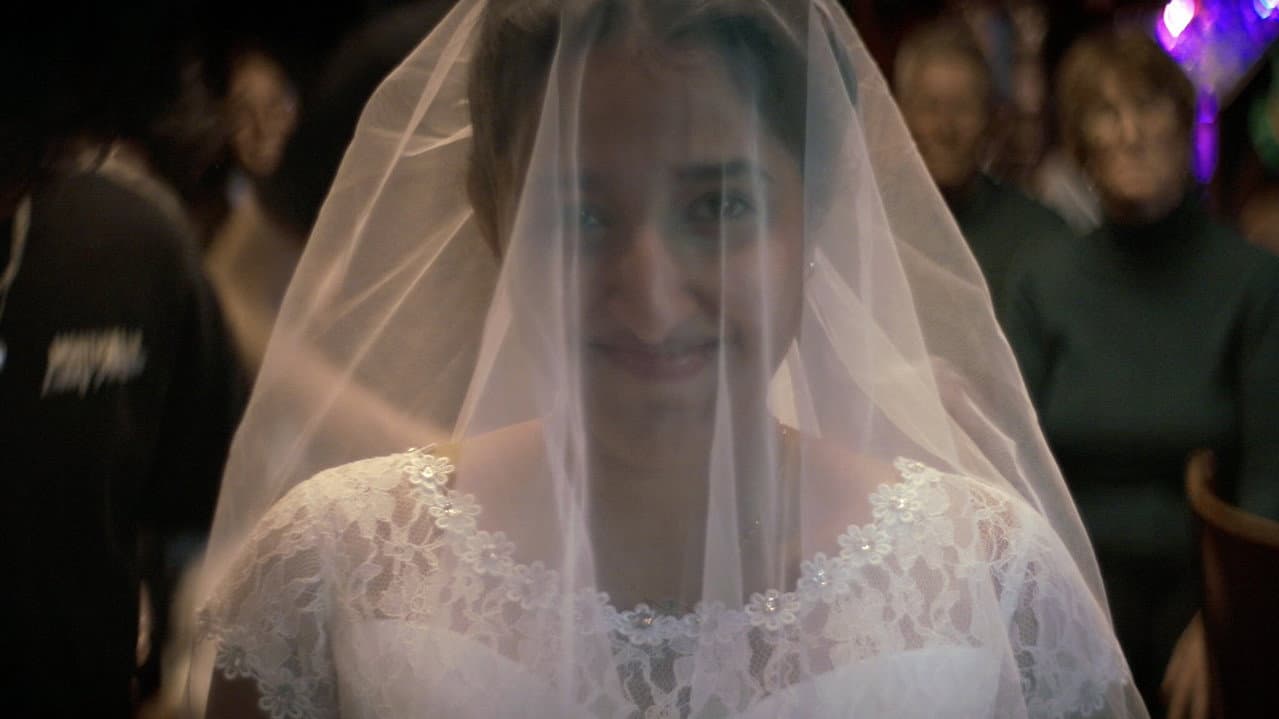
The premise is deceptively simple. On St. Patrick's Day, Aarav wanders into a lively Irish pub in Boston. This is a city with a deep Irish immigrant history, and the pub functions as a natural crossroads, a place where a student far from home might stumble into a culture that is not his own yet feels, for one night, welcoming. Fia notices him. She pulls him onto the dance floor. And then the film does something more interesting than a straightforward romance would allow.
As they dance, the boundary between memory and reality begins to dissolve. This is where Afterglow earns its title. The film is not interested in the dance itself so much as the cracks it opens. Aarav is confronting grief he has struggled to leave behind, and the pub, the music, and Fia herself become conduits for that confrontation. Expect a structure that moves fluidly rather than linearly, with the nine-minute runtime forcing every scene to carry weight. The music genre tag is not incidental. Sound and rhythm appear to be the mechanism through which memory intrudes, meaning audiences should pay attention to how the film uses its soundtrack as narrative architecture rather than background decoration.
What to expect, then, is a film that rewards attentiveness. This is not a plot-driven piece with a tidy resolution. It is a mood piece, a brief immersion into a single night that resonates far beyond its runtime. The St. Patrick's Day setting adds a layer of cultural specificity, that feeling of collective celebration that can make individual sadness feel sharper by contrast. Aarav is surrounded by joy he did not ask for, and the film explores the strange space between that joy and his own private sorrow. Grief, the film suggests, does not announce itself. It waits for the music to start.
Why It's Worth Watching
Short films rarely get the attention they deserve, and Afterglow makes a case for why that neglect is a mistake. In nine minutes, Chandra attempts something thematically ambitious: the dissolution of the boundary between memory and reality as a way of depicting grief. That is a difficult trick to pull off at any length. The film's drama and music genres work in tandem here, with the Irish pub setting providing both a physical location and a sonic landscape that can carry the audience into Aarav's interior world.
The cultural collision at the film's center is also worth noting. An Indian student in Boston, an Irish girl, an Irish pub on St. Patrick's Day. These are specific details that give the film texture rather than relying on generic loneliness. Aarav is displaced, and Fia represents both connection and mystery, a figure who may or may not be exactly what she appears. Whether she is real, a memory, or something in between is a question the film seems content to leave partially unresolved, and that ambiguity is a feature rather than a flaw.
At nine minutes, Afterglow asks very little of your time and offers a great deal in return. It is a film about how grief follows us into the most unlikely places and how, sometimes, a stranger's hand on a dance floor can be the thing that forces us to finally look backward. With its talented cast, its dual commitment to drama and music, and a director willing to take stylistic risks, this is the kind of short that lingers after the credits.