The hospice room at St. Anne’s is quiet, save for the rattle of a humidifier and the low, muttering cadence of an old woman who may or may not know she has an audience. That’s the setup for Adam O’Brien’s taut, 84-minute chiller Bury the Devil, which arrives on OTT Stories this week after a whisper-quiet theatrical run back in March. The film, which stars Emmanuelle Lussier Martinez as a rookie nurse named Julia, doesn’t waste time on the trappings of haunted houses or demonic possession rituals. Instead, it traps you in a single room with two people, a clock, and a slowly curdling dread.
The premise is deceptively simple. Julia is assigned an overnight shift caring for Evelyn, portrayed with unsettling mercurial precision by Dawn Ford. Evelyn has dementia - or so the charts say. She drifts between lucid pleas and fractured warnings, her eyes sometimes milky with confusion, sometimes sharp as a scalpel. But as the night wears on, Julia begins to notice patterns that don’t fit the clinical picture. Evelyn speaks in a voice that isn’t hers. She knows things about Julia that no one could know. And she keeps repeating a single phrase, one that translates roughly to “don’t let the night finish what it started.”
What follows is less a monster movie than a siege. O’Brien, directing from a script that feels like a two-hander play adapted for a locked-room camera, leans hard into the logistics of medical care as a horror landscape. The bedrails become bars. The call button becomes a lifeline. The medication cart becomes an arsenal. Lussier Martinez carries the film’s physical and emotional weight with a performance that oscillates between exhausted professionalism and sheer animal panic. She’s not a horror movie heroine who quipps or over-explains; she’s a woman in scrubs who has to decide whether to treat a patient or defend herself.
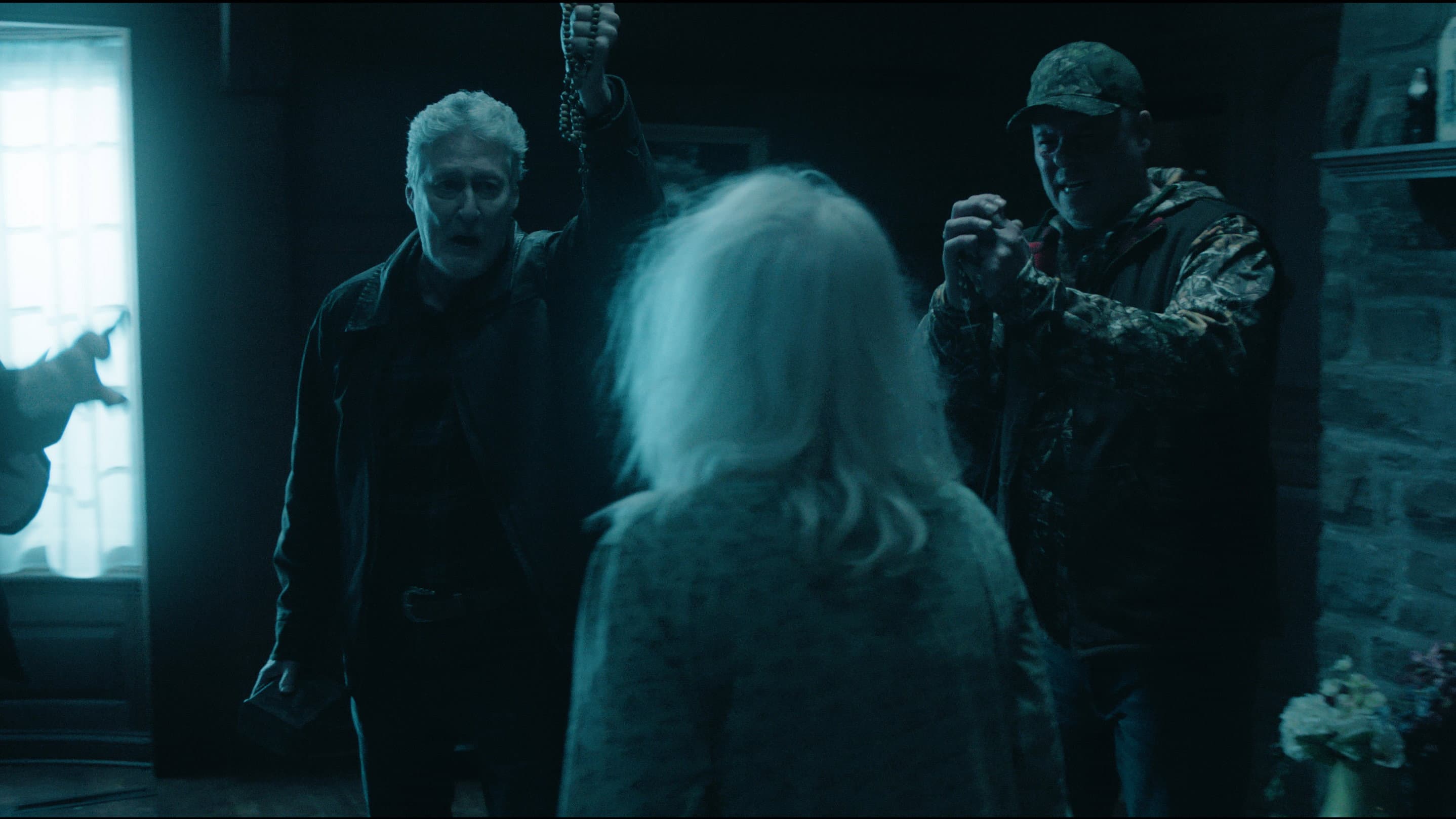
The film’s secret weapon is its ambiguity, carefully calibrated by O’Brien and the cast. Is Evelyn genuinely possessed, or is she a woman with a degenerative brain disease whose final synaptic firings are being misinterpreted as supernatural? The script plants evidence for both readings. Father Thierry, played with gravelly weariness by Mark Antony Krupa, shows up midway through the night as a priest who’s been called before - and it’s clear he’s seen this version of Evelyn before, or at least something like it. But his rituals are just as likely to be theater as sacrament. Bill Rowat appears as Randall, a family member with a legal claim on Evelyn’s care, and his casual cruelty suggests that the real demon in the room might simply be inheritance.
O’Brien directs with a patience that pays off. He holds on Lussier Martinez’s face as she listens to Evelyn’s rambling, letting the silence stretch until you can hear the fluorescent lights hum. The sound design is meticulous: the shuffle of slippers, the click of a lock, the distant buzz of a call bell interrupted. The filmmakers understand that true horror in a confined space comes not from jump scares but from the sensation of options narrowing. By the final act, Julia has barricaded the door with a wheelchair, and the audience is as exhausted as she is, convinced that dawn will never come.
The film’s release date of March 6 this year feels almost intentional - a late-winter counterprogramming against blockbuster season, a smaller, meaner story designed for late-night viewing. And that’s where Bury the Devil finds its natural home on OTT Stories. The streaming context suits its intimacy. Watched alone, in the dark, on a laptop or a tablet, it becomes a test of your own nerve. The TMDb rating of 6.5 feels fair; this is not a masterpiece of narrative invention, but it is a masterclass in escalating dread. It’s the cinematic equivalent of a splinter under a fingernail - small, nagging, and impossible to ignore.
That said, the film does stumble in its final ten minutes. Without spoiling, the conclusion trades some of its careful ambiguity for a more literal resolution, and the appearance of an exorcism-adjacent set piece feels like a concession to genre expectations that the preceding hour had wisely avoided. But even then, Lussier Martinez and Ford keep the emotional stakes grounded. Ford, in particular, deserves recognition for playing a woman who is simultaneously victim and architect of her own unraveling, a performance that refuses easy villainy.
Bury the Devil is not for anyone looking for a quick scare or a tidy mythos. It’s a slow-burn study of caregiver burnout, faith erosion, and the way memory can become a prison. It asks a simple, uncomfortable question: if someone you love stops remembering who they are, what remains of the person you pledged to protect? The film’s answer is quiet, vicious, and stays with you long after the credits roll. Turn off the lights, press play, and say a small prayer for the night shift.