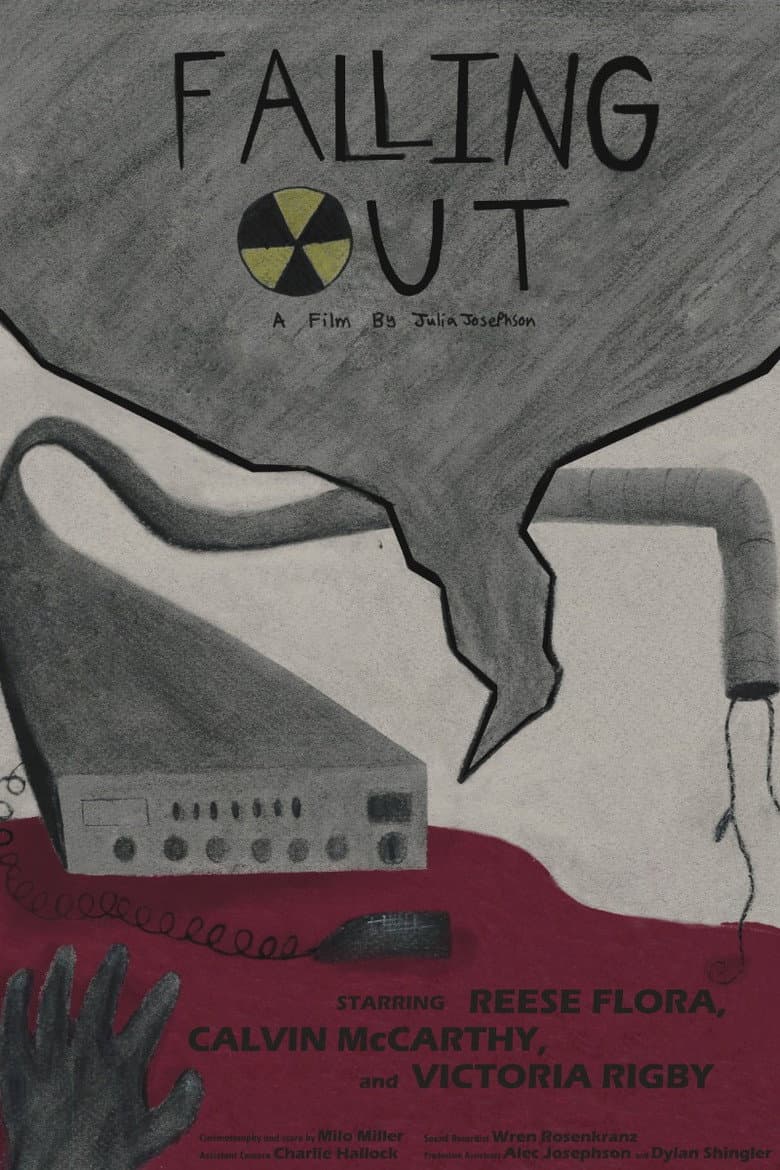
The loneliness of a confined space has always been fertile ground for psychological drama, but rarely has it been explored with the stark, immediate dread of a ticking clock as it is in Falling Out. This isn’t a story about monsters lurking in the shadows; the monster is hunger, the monster is claustrophobia, and the monster might just be the person sitting three feet away from you. As global tensions simmer in the real world, this timely science fiction short arrives not as escapism, but as a raw, unsettling mirror. It’s a compact, 9-minute gut punch that asks a haunting question: when civilization collapses, what happens to the bond between siblings? The answer, as this film suggests, is anything but comforting.
Release Date & Where to Watch
Mark your calendars for today, August 15, 2026, because Falling Out is making its debut right now. It’s now available for streaming on OTT Stories, the platform known for championing bold, independent short-form cinema. There’s no theatrical rollout or week-long festival circuit anticipation here - this is a direct-to-digital release, designed for immediate consumption. Given the film’s tight 9-minute runtime, it’s perfect for a quick, intense viewing session. You won’t need to clear an evening for this; you just need to carve out a moment when you’re ready to feel deeply uncomfortable. It’s a debut that rewards those who stumble upon it with a potent, concentrated dose of narrative tension.
Cast & Crew
The film is anchored by a quartet of performers who dive headfirst into the emotional rubble. Reese Flora leads as Maxine, the older sister forced into a position of reluctant authority. Her performance is a study in frayed nerves, a woman trying to hold the fort while her own sanity crumbles. Opposite her is Calvin McCarthy as Adam, her younger brother, whose desperation oscillates between childish defiance and simmering rage. The chemistry between Flora and McCarthy is palpably volatile; you can almost feel the heat of their shared, stale breath.
Supporting them are Victoria Rigby as Danielle, a survivor who complicates the already fragile dynamic, and Alec Josephson, who appears as Dead Benji - a name that leaves little to the imagination. The voice on the radio, a character in its own right, is a credit that demands attention, adding an unseen layer of menace. The score and writing are handled by a team that clearly understands the power of restraint, building dread through silence and sudden, jarring noise. At the helm is director Julia Josephson, who has crafted a micro-budget pressure cooker. Josephson’s direction is confident and claustrophobic, using the dusty, debris-strewn shelter not just as a set, but as a character itself. She understands that in a 9-minute film, every frame has to count, and she makes each one sting.
Story & What to Expect
The setup is brutally simple: nuclear war has broken out, and the world above is gone. Siblings Maxine and Adam are trapped in a bombed-out shelter, a concrete tomb that’s already been damaged by the very attack it was meant to protect against. The air is thick with dust, the light is dim and sickly, and the shelves are bare. There’s no food, and space is a luxury they can’t afford. Into this toxic mix comes a mysterious voice crackling over a salvageable radio - a voice that offers not salvation, but something far more sinister: a wedge to drive between the two.
What follows is less a plot and more a descent. The film eschews action set-pieces for a slow, agonizing boil of paranoia. The dialogue, sharp and naturalistic, begins as urgent planning and devolves into bitter accusations. Who gets the last scrap of food? Who gets the slightly more comfortable corner? These petty grievances are magnified by the constant, oppressive threat of death. The mysterious radio transmissions serve as the catalyst, whispering doubt and exacerbating the existing tensions, turning small disagreements into existential betrayals. Expect a film that doesn’t flinch from the ugly mechanics of survival. It’s a drama about what happens when love is corroded by fear. The science fiction element is subtle, serving primarily as the catastrophic backdrop, but the dread is purely human. In just nine minutes, you’ll watch a relationship fracture in real time, and the final shot will linger long after the credits roll. This is not a film about heroes; it’s a film about survivors, and the distinction is catastrophic.
Why It's Worth Watching
In an era of bloated blockbusters and endless streaming series, Falling Out is a testament to the power of brevity. It does more in nine minutes than most films do in two hours. The decision to keep the runtime so tight is a masterstroke of storytelling; there’s no time for exposition or fluff, only pure, unfiltered conflict. It’s a character study that feels urgently relevant, tapping into a primal fear of isolation and the fragility of our closest bonds when the chips are down.
The performances are raw and unpolished in the best way, bringing a documentary-like authenticity to the high-concept premise. You’re not watching actors; you’re witnessing two people genuinely tearing each other apart. Director Julia Josephson’s vision is clear and uncompromising, crafting a film that feels both intimate and epic. It’s a movie that will spark conversations, forcing you to ask yourself: what would I do in that shelter? Would I hold onto my humanity, or would I let the voice on the radio win? Falling Out isn't an easy watch, but it’s a vital one. For fans of tense, intelligent science fiction and hard-hitting family drama, this is the must-watch short of the weekend. Just make sure you’re not claustrophobic.