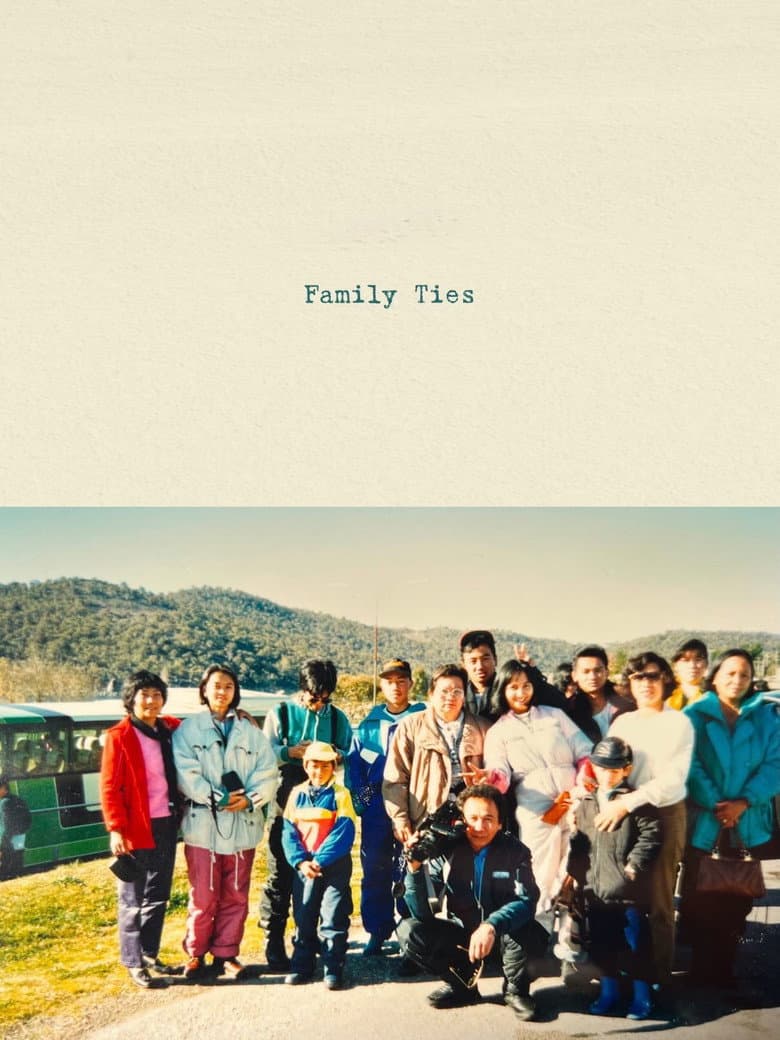
Some stories aren’t written in a writers’ room. They’re etched into the lines of a grandmother’s face, whispered across a mahjong table, and carried across oceans in worn-out suitcases. On August 20, 2026, Family Ties arrives as a tender, 10-minute documentary that trades spectacle for something far more intimate: a granddaughter’s attempt to understand her own roots before they fade into memory. It’s a film that feels less like a premiere and more like a family heirloom, finally polished and shared with the world.
Release Date & Where to Watch
Mark your calendars for a Thursday. Family Ties officially premieres on August 20, 2026, and will be available for streaming exclusively on OTT Stories. There’s no theatrical rollout, no red-carpet frenzy - just a quiet, powerful addition to the platform’s documentary slate. Given its snug 10-minute runtime, it’s perfect for a lunch break or a late-night reflection. For those eager to catch it early, OTT Stories typically drops new originals at midnight Pacific Time, so insomniacs and early risers alike can be first in line to stream this deeply personal project.
Cast & Crew
The film is the brainchild of director Tigerlily Henderson-Smith, who steps behind the camera with a mission that feels almost archaeological. She’s joined in front of the lens by her mother, Ellen Henderson-Smith, who appears as herself, and the emotional core of the project: Elenea Papelera and Manuel Papelera, Tigerlily’s grandparents. For the Papeleras, this isn't a performance. It's a testimony.
There’s a poetic symmetry in the casting. Ellen serves as a bridge between two generations, while Tigerlily holds the camera steady, asking questions that her mother might have been too close to ask, or perhaps too afraid. The direction is minimalist by design - no dramatic reenactments, no sweeping orchestral score. Just a table, some chairs, and four women and men bound by blood and history. The TMDb rating currently sits at a clean 0/10, which is less a verdict and more a testament to its freshness - this is a world-premiere moment, untainted by early buzz.
Story & What to Expect
Don’t let the short runtime fool you; Family Ties packs a lifetime into ten minutes. The narrative centers on a conversation - a loving, sometimes heavy-hearted reckoning - between Tigerlily and her grandparents, Elenea and Manuel. The couple, now in their twilight years, bravely revisit the scars of their youth: growing up in the Philippines during the final days of World War II and the brutal Japanese occupation that preceded the Allied liberation.
The documentary doesn’t flinch from the weight of that history. Elenea’s voice, soft but steady, recalls the scarcity of food, the constant hum of fear, and the resilience of a people who learned to find joy in the smallest mercies. Manuel, quieter, speaks to the labor that defined his early adulthood - literally rebuilding a country from rubble, only to realize that the future might lie elsewhere.
From those memories, the film follows their audacious decision to uproot everything. They chose Australia, a country with a different sky, a different language, and a different set of struggles. The segment on immigration is perhaps the most visceral: suitcases packed in a hurry, the hollow goodbye to relatives who would never follow, and the arrival to a land where their skills were dismissed, their accents mocked. Yet Manuel and Elenea didn’t break. They took on laborious jobs - factory shifts, cleaning gigs, any work that put food on the table and school fees in the bank. They built a life not for themselves, but for the generations they’d never meet.
The film’s final act turns inward. As Tigerlily listens to her Lola and Lolo speak, she begins to peel back the layers of her own identity. The filmmaker discovers that her Filipino heritage isn’t a distant concept - it’s in the way her family fights, laughs, and, most importantly, gathers. The closing scenes show the extended family, three generations strong, crowded around a mahjong table. Tiles clack, teasing insults fly in a mix of English and Tagalog, and for a moment, the pain of the past dissolves into the pure, uncomplicated joy of presence. They’re not just survivors; they’re thrivers, still betting over every round, still bickering over every play.
Why It's Worth Watching
In an era of bloated, three-hour epics and multi-season sagas, Family Ties is a reminder that brevity can be profound. It doesn’t overstay its welcome, nor does it rush its emotional beats. The documentary’s power lies in its restraint - Tigerlily Henderson-Smith never forces a tear-jerking moment; she simply lets her grandparents exist, and their honesty does the heavy lifting.
This is also a crucial piece of living history. The voices of WWII survivors are disappearing every day. To have Elenea and Manuel’s testimony preserved, not in a museum archive but in a streamable, accessible format, is a quiet act of resistance against forgetting. For Filipino-Australian viewers, this will feel deeply personal. For everyone else, it’s a masterclass in intergenerational understanding - a reminder that our parents’ and grandparents’ struggles are never really in the past; they live on in our habits, our anxieties, and our hopes.
There’s no action sequence, no plot twist. The twist is that this family is still here, laughing, shuffling mahjong tiles, and remembering. That alone is worth the ten minutes. So on August 20, pull up a chair, press play, and listen. You might just find a piece of your own story in theirs.