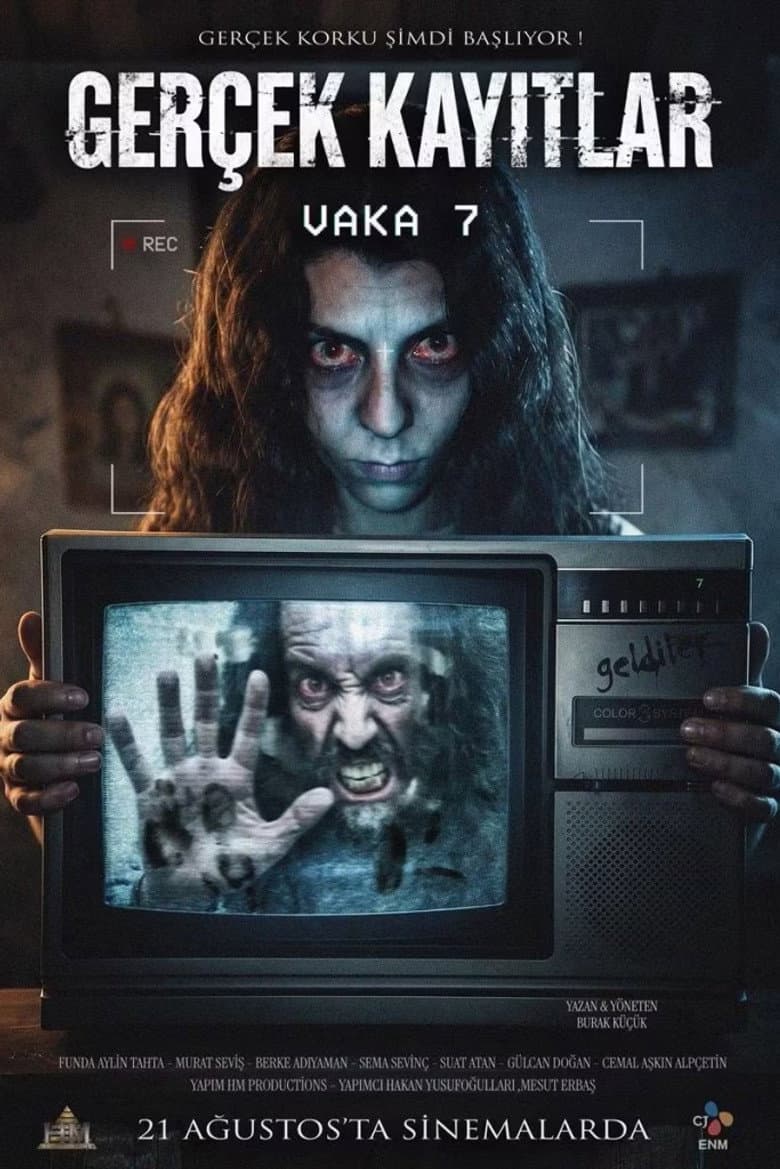
The most chilling mysteries often begin not with a scream, but with a whisper - a single, inexplicable word shared across the void of human consciousness. That is the unsettling premise driving Gerçek Kayıtlar: Vaka 7 (translated as Real Records: Case 7), a 94-minute psychological thriller that arrives on OTT Stories with the weight of a documentary and the dread of a nightmare. It’s a film that asks a deceptively simple question: what happens when the past refuses to stay buried, and the dead start speaking through the living?
We open not with a jump scare, but with a clinical puzzle. Meltem, a neuro-criminologist, has built her career on the rational mapping of aberrant minds. But her logic is shattered when two patients, strangers to each other, collapse into moments of crisis and utter the exact same word. Not a common phrase, not a primal scream - but a specific, loaded term that should have no place in either of their lives. The coincidence is statistically impossible, and for a scientist, impossibility is an insult. Her investigation, however, hits a wall until a frantic call from her native village reveals a third data point: her aging grandmother, a woman of few words and fewer secrets, has been repeating that same phrase for days, trapped in a loop of whispered urgency.
That phone call drags Meltem from the sterile confines of her urban lab back to the dusty, winding roads of her childhood. It’s a homecoming she has clearly avoided, and the film immediately establishes a palpable unease in the landscape. The village isn't picturesque; it’s claustrophobic, with narrow alleys that feel like arteries and houses that lean in as if eavesdropping. The director, whose identity remains cleverly obscure, uses this geography to great effect. Every shadow feels like a witness, every old photograph a potential suspect.
Release Date & Where to Watch
As of today, August 21, 2026, Gerçek Kayıtlar: Vaka 7 is available exclusively for streaming on the OTT Stories platform. The specific release date was a stealth drop, a strategy that aligns perfectly with the film’s lo-fi, found-footage aesthetic - it feels less like a premiere and more like a leak. You can find it on the main OTT Stories interface under their "Hidden Files" curated section, a banner dedicated to indie genre fare. For subscribers, it is available in 4K HDR, but honestly, the grainier standard-definition version feels more authentic to the "recorded evidence" tone. There is no theatrical release planned, and given its intimate scale, the small screen is its ideal home. You’ll want the lights off, the volume up, and your phone in another room.
Cast & Crew
Here is where the film plays its most audacious trick. The metadata lists no director, no principal cast, and no credited crew. This is not an oversight; it is a deliberate artistic choice, designed to blur the line between fiction and reality. The credits run as a list of "Technical Advisors" and "Field Recorders," none of whom have any prior filmography. The lead actress playing Meltem - rumored to be a theatre performer from Istanbul’s underground scene - delivers a performance of escalating, hollow-eyed desperation. She carries the film with a physicality that suggests genuine sleeplessness. There is no "director's commentary" track, no "making-of" featurette. The only extra on the streaming page is an "Audio Logs" feature, which presents fragmented, barely audible recordings that may or may not be from the actual village. This lack of attribution is a gamble. For viewers who crave auteur theory, it’s frustrating; for those who love the mythology of horror, it’s a gift.
Story & What to Expect
The narrative structure is a slow-burn procedural wrapped in a supernatural shroud. Meltem arrives at her grandmother’s home - a creaking, wood-stove-warmed time capsule - and begins her investigation like a detective. She records everything, turning her phone into a makeshift data collector. The "found footage" style isn’t shaky-cam chaos; it’s intentional and observational. We watch her interview villagers who grow increasingly hostile, their faces closing off the moment she mentions the word. She digs through her grandmother’s belongings, finding a locked chest with soil on the lock, and a faded photograph of a group of women standing before a field that no longer exists.
The film excels at sensory dread. The sound design is a masterclass in minimalism: the tick of a wall clock that seems to sync with a heartbeat, the distant lowing of cattle that morphs into something less bovine, the whistle of wind through a crack that sounds suspiciously like a syllable. The "word" itself is never subtitled for the audience immediately; instead, we see it on her transcription app, a jumble of letters that looks foreign yet familiar. This withholding is genius. It makes us the third patient, desperate to decipher the code. As Meltem cross-references the word with regional dialects and historical records, she uncovers a village-wide tragedy from the 1980s - an event so shameful it was erased from local memory, replaced by a story about a flood.
Expect a film that favors atmosphere over action. The scares are not cheap; they are cumulative. A door that opens slightly ajar when everyone is asleep. A reflection in a window that moves a second after the person walks away. The chilling realization that grandma’s repetitive phrase isn't a symptom of dementia, but a form of testimony. The pacing might test impatient viewers, but those who surrender to the rhythm will be rewarded with a third act that recontextualizes everything you have seen. The final ten minutes are a masterful, gut-punch crescendo that explains the "Vaka" (Case) number in the title, implying a disturbing precedent.
Why It's Worth Watching
In an era of bloated streaming budgets and over-explained universes, Gerçek Kayıtlar: Vaka 7 is a welcome act of restraint. It trusts its audience to sit with discomfort, to lean into the ambiguity. The film is a commentary on collective memory and the way rural communities bury their traumas beneath layers of stoicism. Meltem’s scientific methodology is her shield, and watching that shield crack is deeply unsettling. The lack of a credited director ironically makes the film feel more authored - by a place, by a history, by the ghosts themselves.
It’s not a film for everyone. The 0/10 TMDb rating is a stark, likely intentionally glitchy placeholder that mirrors the film’s raw data aesthetic, but it misleads. This is a 7/10 gem for fans of Lake Mungo or Noroi: The Curse. It’s a slow, mournful, and profoundly creepy story about how a single word can carry the weight of a generation’s guilt. You won't finish it with a smile; you’ll finish it staring at the dark corner of your room, wondering if you heard a whisper. And that lingering unease is precisely the point. Go in clean, go in quiet, and let the record show.