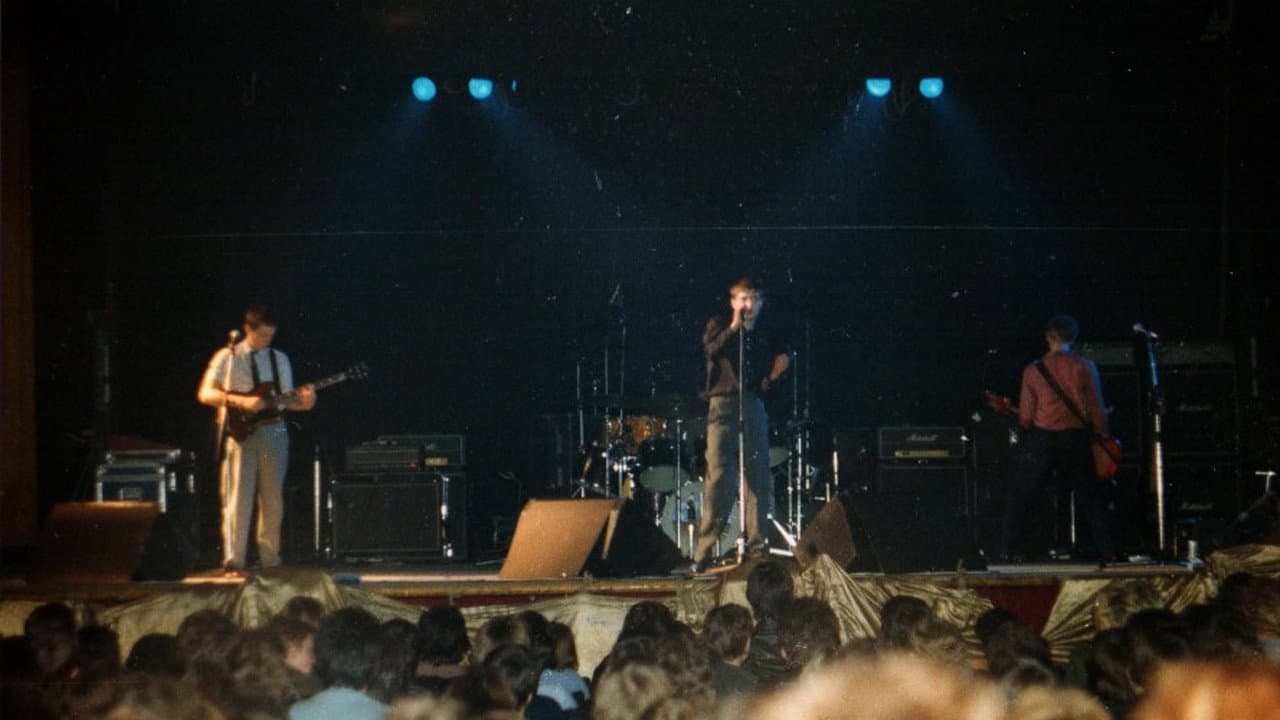
Some live performances are whispered about for decades, traded on grainy bootlegs, and dissected by obsessives who swear they can feel the static in the room. For nearly half a century, Joy Division’s two-night stand at the Apollo Theater in Manchester - October 27th and 28th, 1979 - has held that exact mythic status. The only problem? The audio and visuals that survived were, to put it kindly, rough. But now, thanks to a meticulous restoration and the directorial eye of Anton Corbijn, those two nights are getting the definitive document they always deserved. Dropping on OTT Stories on August 25th, 2026, Joy Division: Apollo Theater, Manchester 27 and 28th October 1979 promises to pull back the curtain on a band teetering on the edge of something enormous - and something tragic.
Release Date & Where to Watch
Mark your calendars for Tuesday, August 25th, 2026. That’s when the full, uncut shows premiere exclusively on OTT Stories, the streaming platform that has increasingly become the home for deep-catalog music documentaries and archival concert films. Unlike a theatrical rollout or a limited series, this is a straight-to-streaming drop, which makes sense for a project that is less about event spectacle and more about immersive, at-home listening with a good sound system. The runtime remains officially listed as “unknown,” but given that these are complete performances from two separate nights - plus presumably some interstitial material - expect a hefty viewing experience. You won’t find this on Netflix or Prime; this is an OTT Stories original acquisition, and if their track record with similar restorations holds, they’ll likely offer both a standard stream and a high-bitrate option for the audiophiles who want to hear every scrape of Peter Hook’s bass cutting through the mix.
Cast & Crew
The creative force behind this project is Anton Corbijn, the Dutch photographer and filmmaker who has spent a career chasing the ghosts of post-punk. Corbijn is, of course, the man behind the iconic imagery of U2, Depeche Mode, and - crucially - the 2007 biopic Control, which chronicled Ian Curtis’s final years. His return to this material isn’t a cash grab; it’s a completion of a circle. He knows these songs, these faces, and this specific Manchester gloom better than almost anyone alive.
On stage, the “cast” is the classic, definitive Joy Division lineup: Ian Curtis on vocals and guitar, his baritone already sounding like a transmission from a broken heart; Peter Hook on those impossibly melodic, lead-bass lines; Bernard Sumner on guitar and keys, providing the jagged textures; and Stephen Morris on drums, whose motorik precision held the whole fragile edifice together. There are no new interviews or retrospective talking heads - this is a pure document, let the performances speak. Corbijn’s role here is less “director” in the narrative sense and more “curator and visual restorer,” ensuring the framing, lighting, and intimacy of the original shows are preserved without modern slickness. The archival source is the key crew member here: the tapes have been remastered (audio and video) from the best available sources, but there’s no CGI polish over the sweat.
Story & What to Expect
Here’s the crucial backstory: the Apollo shows from late October 1979 were not just another pair of gigs. They came hot on the heels of the release of Unknown Pleasures, the band’s debut album that had dropped that June and was already rewiring the DNA of rock music. This was Joy Division at their most potent - still a club band at heart, but now playing cavernous, 3,500-seat venues like the Apollo, a space that was arguably too big for their claustrophobic sound, and yet that tension is what makes these recordings so compelling.
The overview provided is explicit: these are “the full uncut shows previous released in low quality.” That’s the core story. For years, fans had to make do with a rough fourth-generation cassette tape of the October 28th show, known colloquially as the “Apollo bootleg.” It had raw energy but horrendous hiss, muffled drums, and a flat, muddy vocal. This release isn’t a re-recording; it’s an excavation. Expect the setlist to draw heavily from Unknown Pleasures - “Disorder,” “She’s Lost Control,” “Shadowplay” - alongside then-unreleased tracks that would later appear on Closer, like “Atrocity Exhibition” and “A Means to an End.” The 27th show is the rarer beast, and having both nights in sequence allows you to chart subtle differences: the pacing, the banter (and lack thereof), and Curtis’s increasingly intense, contorted dancing - his now-famous “dead chicken” flail that was part seizure, part shamanic possession.
Don’t expect a backstage documentary. There are no interviews with band members reflecting on the era. This is 100% concert footage, spliced together from the two nights, uncut and in order. The restoration will likely brighten the stage lighting, which was famously stark and monochromatic - often just a single spotlight on Curtis, leaving the others in silhouette. You’ll hear the crowd, but it’s the spaces between the songs that carry the weight: Morris’s count-in, Hook’s bass rumble before the band snaps into gear, the feedback swells.
Why It's Worth Watching
If you’re a casual fan, wait - this might feel like homework. There’s no narrative arc, no dramatic confession, just raw performance. But for anyone who understands that Joy Division was a live animal first and a studio project second, this is essential viewing. The low-quality versions that circulated for decades did a disservice to the band’s power. You could hear the songs, but you couldn’t feel them. Corbijn’s restoration aims to fix that, to give you the oppressive, beautiful weight of the Apollo’s acoustics and the terrifying intimacy of Curtis’s presence.
It’s also a historical snapshot of a band on a precipice. These shows took place less than seven months before Curtis’s death by suicide in May 1980. Watching him perform “Transmission” or “Decades” in October 1979 is to watch a man who is physically present but emotionally already somewhere else. The uncut nature of the footage is crucial - there’s no editing to spare you from the awkward silences, the guitar retuning, the moments where Curtis stands motionless, staring into the dark. That rawness is the point.
Finally, it’s Anton Corbijn’s love letter. He’s not trying to make Joy Division accessible; he’s making them monumental. The low-quality originals were like hearing a great song through a wall - you knew something amazing was happening, but you couldn’t see it. This release breaks the wall down. Whether you’re a devotee who has memorized every bootleg or a newcomer curious about the myth, this is the closest you’ll get to being in that smoky, cavernous room on a cold Manchester night. Turn the lights off, turn the volume up, and let the haunting static of history wash over you.