Space princesses usually wait around for someone else to write their story. Not Saira. She’s too busy storming across the galaxy to save an ex-girlfriend, which already puts her ahead of most animated royalty. Lesbian Space Princess, which finally lands on OTT Stories after its September 2025 theatrical run, is a scrappy, sugar-rush adventure that knows exactly what it wants to say and doesn’t care if you’re comfortable hearing it. That’s both its greatest strength and, occasionally, its undoing.
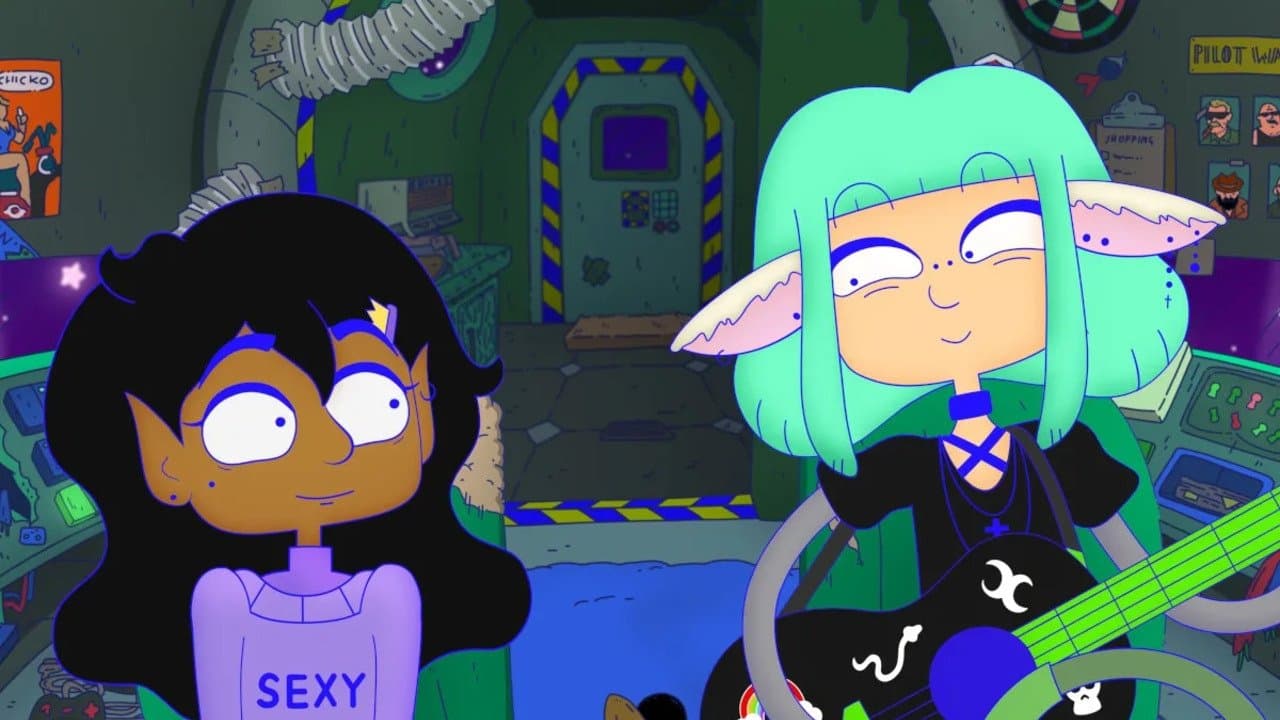
The premise is gloriously silly on paper and even sillier in motion. Saira (voiced with wide-eyed earnestness by Shabana Azeez) has lived her entire life inside the protective bubble of her mothers’ Queendom - two formidable queens voiced by Jordan Raskopoulos and Madeleine Sami, who treat royal parenting like a cosmic game of chess. When her bounty hunter ex, Willow (Gemma Chua-Tran), gets kidnapped by a faction known as the “straight white maliens,” Saira must leave her sheltered existence, pilot a ship, and confront a universe that has absolutely no patience for her privilege. The ship, voiced with sleazy delight by Richard Roxburgh, is called Problematic Ship, and yes, that’s the joke, and yes, it lands.
Director Emma Hough Hobbs, working from a script that has no interest in subtlety, builds a world that feels like a queer punk zine exploded into outer space. The animation is bold and flat, all neon hues and angular character designs, borrowing from retro video games and DIY webcomics. It’s not trying to compete with Pixar’s rendering budgets, and that’s fine. The energy is so relentless that the visual limitations become part of the charm, like watching a particularly ambitious student film that got a studio check and ran with it. There are musical numbers, unexpected cameos from drag icons (Kween Kong shows up as Blade with a sword and an attitude), and a running gag about the maliens’ baffling obsession with heteronormative rituals that never quite gets old.
The comedy is sharpest when it targets the absurdity of straightness as an alien concept. The maliens are depicted as bland, interchangeable figures in pastel suits, obsessed with lawn maintenance, monogamy, and asking “what do you actually do all day?” It’s a pointed, funny inversion of the usual alien-invasion trope, and the film leans into it with glee. Roxburgh’s Problematic Ship gets the best lines, delivering passive-aggressive microaggressions with the polish of a used-car salesman who reads self-help books. His dynamic with Saira - who slowly learns to push back against his mansplaining - is the film’s emotional engine, more than the romance at the center.
That romance, however, is where things get wobbly. Willow is mostly a damsel in distress, which feels like a missed opportunity. Chua-Tran gives her warmth and grit, but the script keeps her locked in a cage for most of the runtime, only letting her shine in flashbacks. The central love story is sweet but undercooked, and the emotional stakes sometimes feel like they’re running on fumes between chase sequences. A TMDb rating of 4/10 suggests audiences were divided, and that’s fair. This is a film that will alienate viewers who want their sci-fi slick or their comedy dry. It’s messy, shouty, and occasionally repetitive.
But for those who plug into its frequency, Lesbian Space Princess is a blast of fresh air. It’s a film that treats queer joy as the default, not the exception. The maliens aren’t scary because they’re evil; they’re scary because they’re boring. The real villain is conformity, and the real hero is a princess who learns that being sheltered doesn’t mean being weak - it just means she has more to unlearn. Azeez’s voice work carries the arc beautifully, moving from shrill entitlement to genuine vulnerability without losing the comedic timing.
The final act, which involves a heist, a wedding, and a very unusual rescue, lands with a satisfying thump. It’s not a perfect film. The pacing drags in the middle, and some jokes are repeated past their punchline. But it’s an honest one, made with visible passion and a clear point of view. In an era where animated films are polished to a sterile gloss, there’s something thrilling about a movie that feels hand-drawn in the margins of a notebook during a queer studies lecture.
By the time the credits roll, you’ll have laughed, rolled your eyes, and probably hummed at least one tune. Saira doesn’t save the galaxy, and she doesn’t get the girl back in the way you’d expect. But she does grow up, and she does it loudly, proudly, and entirely on her own terms. For an 87-minute animated comedy with a 4/10 rating, that’s a pretty stellar mission accomplished.