It’s a specific kind of melancholy that arrives with the final weeks of summer - that sticky, urgent feeling that the world is about to change and you haven’t done enough to stop it. For two teenage girls in the summer of 2008, that feeling isn’t just a mood; it’s a full-blown, jagged, 12-minute crisis. That’s the precise emotional frequency tuned into by Lizzzard, the new short film from director Kylee Hill, which lands on OTT Stories this Wednesday, August 19, 2026. This isn’t your typical nostalgic trip back to the era of flip phones and Myspace. It’s a raw, intimate snapshot of restlessness, shot with the kind of urgency that feels like a held breath.
Release Date & Where to Watch
Mark your calendars for a mid-week premiere: Lizzzard officially drops on OTT Stories on Wednesday, August 19, 2026. There’s no theatrical rollout, no awards-season campaign attached - this is a pure streaming experience, designed for the kind of viewer who clicks play at 11 p.m. and lets the film’s unease crawl under their skin. The runtime is a brisk 12 minutes, a compact, efficient burst of storytelling that respects your time while leaving a lingering impact. You won't need a premium subscription tier or a special add-on; it’s available to all OTT Stories subscribers as part of the platform’s ongoing commitment to elevating short-form drama. Given its "Drama" genre classification, this is a mood piece, best watched in a dark room with headphones, preferably after the house has gone quiet.
Cast & Crew
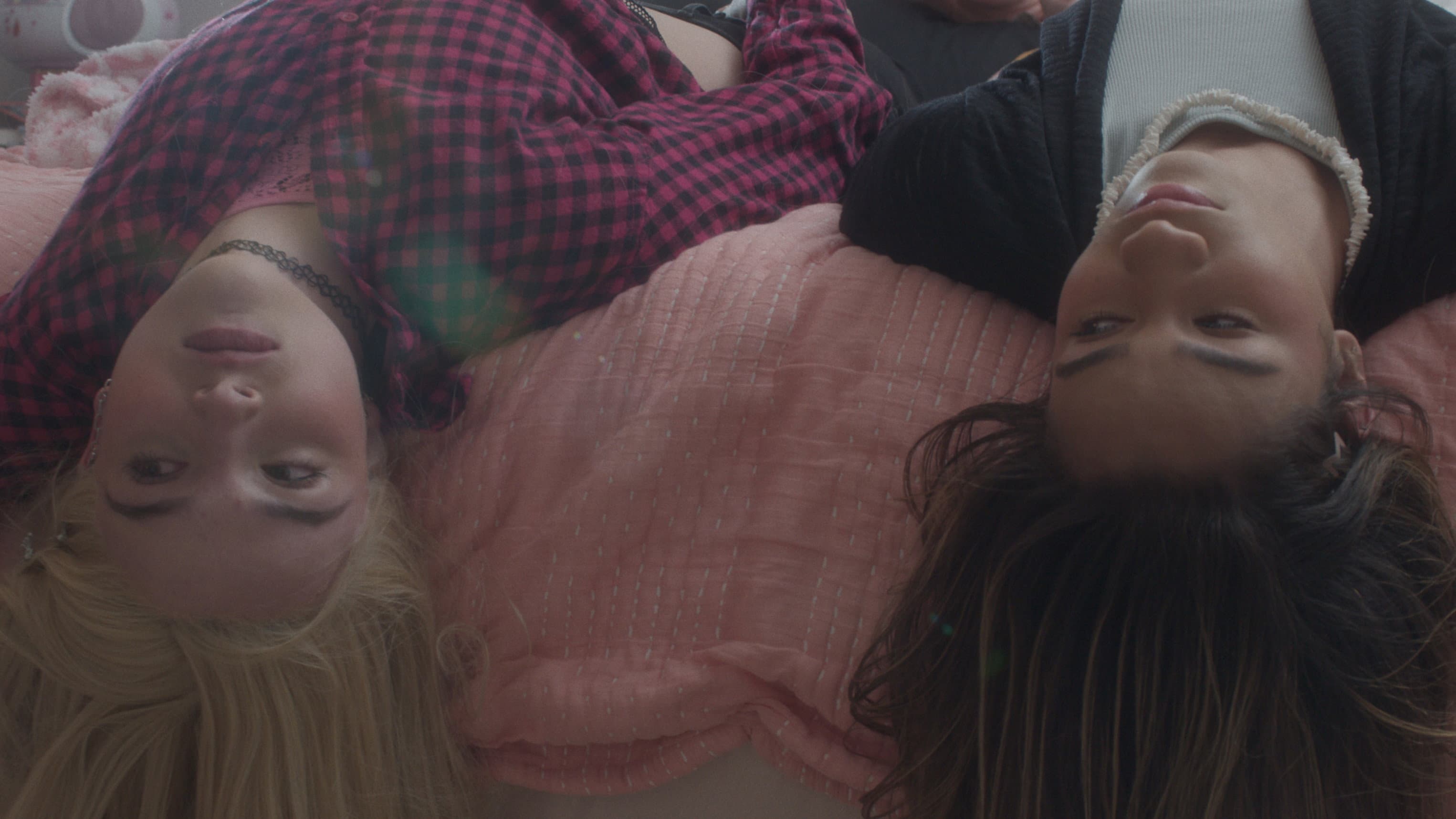
The film is anchored by a pair of magnetic central performances that carry the weight of the entire, abbreviated narrative. Serin Dunne stars as Rachel, the apparent architect of the night’s chaotic energy, delivering a performance that oscillates between manic impulsivity and quiet vulnerability. Opposite her, Brie Musser plays Hannah, the more cautious observer, whose measured reactions provide the grounding counterbalance to Rachel’s spiral. Their dynamic feels lived-in - a friendship so familiar that words are optional, but the silence between them is deafening. The supporting cast is a fascinating ensemble of deliberate archetypes. Billy McCormac and Elisha Kempf both share a billing as "Tyler 1" and "Tyler 2," respectively, a clever bit of casting that suggests the boys in this world are interchangeable, indistinguishable background noise. Dylan Mosholder appears as Brian, while Hannah Dienhart pops up as Gabby, both presumably orbiting the central duo’s gravitational pull. And in a crucial, brief role, Ashley St. Sauveur plays Hannah’s mom, a cameo that likely represents the authority figures from which the girls are so desperately trying to escape.
At the helm is director Kylee Hill, a filmmaker who clearly has a sharp eye for the poetry of suburban decay. Hill’s direction keeps the camera uncomfortably close to her subjects, favoring naturalistic light and shaky, handheld framing to amplify the sense of immediacy. She’s not interested in glamorizing the past; instead, she’s chosen to recreate the sensory overload of a night that could go anywhere, capturing the scratchy texture of cheap carpet and the acrid smell of a car’s hot engine. The script, presumably assembled by Hill as well, trusts its actors to convey meaning through gesture and glance more than exposition.
Story & What to Expect
The logline is deceptively simple: "Two teenage girls push the limits of their sleepy suburban world during one jagged night in 2008." But within that simple premise lies a powder keg of adolescent frustration. Set against the backdrop of a pre-smartphone era, where boredom was a tangible force and every interaction felt like a potential dead end, the film follows Rachel and Hannah as they leave a house party or a diner - the specifics are deliberately murky - and embark on a aimless, reckless tour of their neighborhood. The title Lizzzard hints at the film’s internal logic. It’s a play on "lizard," suggesting a cold-blooded, instinct-driven reaction to a changing environment. The triple 'z' adds a buzzing, hypnotic hiss to the word, mirroring the static-filled air of a summer night teetering on the edge of violence or revelation.
Expect no tidy answers. This is a visceral experience, less concerned with narrative plot points and more with capturing a specific, hormonal frequency. The year 2008 is crucial; the film will likely leverage period details - the clunky Motorola Razr, the scene-adjacent pop-punk coming from a car stereo - not as mere novelty, but as a way to emphasize that the characters are disconnected from a globalized world and trapped in their own microcosm. The "limits" they push aren't necessarily legal boundaries, but the limits of their own patience, their own understanding of friendship, and their tolerance for the suffocating quiet of the cul-de-sac. It’s a study in the tension that builds before a fight or a kiss, the kind of high-stakes emotional game where the last one to speak loses.
Why It's Worth Watching
In a streaming landscape dominated by 10-hour miniseries and sprawling epics, Lizzzard is a reminder of the power of brevity. This is a film that doesn't overstay its welcome; it arrives, makes its point, and leaves you staring at the credits, feeling like you’ve just been shaken awake. It’s a calling card for director Hill, a confident piece of work that showcases her ability to extract deep emotion from sparse material. The central performances from Dunne and Musser are the main draw - authentic, raw, and completely devoid of the glossy sheen typical of teen dramas. The ambiguous TMDb rating of 0/10 is a provocation, a blank slate that invites you to form your own judgment before the critics weigh in. For anyone who remembers the frantic desperation of a summer night in high school, or for those who admire cinema that captures raw, unfiltered human energy, Lizzzard is the most compelling 12 minutes you’ll spend this week. It doesn't tell you what the night means; it simply makes you feel it.