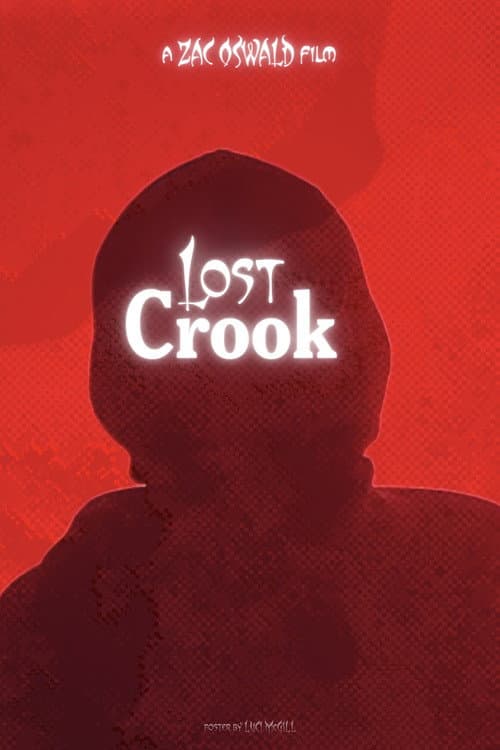
Some stories don’t need two hours to burrow under your skin. Sometimes, a single minute is enough to leave you disoriented, intrigued, and quietly haunted. That’s the precise aim of Lost Crook, a new micro-drama that arrives today, August 23, 2026, with a runtime so lean it feels more like a fever dream than a film. It’s a bold experiment in compression, a narrative that hinges on a single, surreal premise: a man called the Pilfer doesn’t just steal objects - he steals a person, only to discover that the act of taking has pulled him through the fabric of reality itself.
Release Date & Where to Watch
Lost Crook officially premieres today, August 23, 2026, and it’s not playing in any theater near you. This is a pure OTT play, available to stream immediately on the platform’s dedicated micro-content hub. You won’t need a special ticket or a festival pass; just a subscription and a willingness to press play on something that clocks in at roughly the length of a commercial break. The brevity is the point. In an era where streaming catalogs are bloated with 10-episode slogs, this 60-second dispatch is a palate cleanser. Check your OTT app’s “Shorts” or “New Arrivals” section - it should be sitting there, waiting to be consumed in a single, disorienting sitting. Don’t blink, literally; you might miss a crucial transition.
Cast & Crew
The man behind the madness is Zac Oswald, who wears two hats here as both director and star. Oswald, who has carved a niche in experimental digital storytelling, plays the titular crook, a role he reportedly wrote with himself in mind. He’s a director who understands that a single frame can carry the weight of a monologue, and his performance is a study in twitchy, breathless desperation. Opposite him is Sabrina McGill as The Lady, the unnamed woman caught in the dimensional crossfire. McGill brings a disarming stillness to her role, a counterweight to Oswald’s kinetic anxiety. There’s also a third credit - Luci McGill - listed without a character name, which feels intentional. Who is Luci? A shadow? A child? A figment? The ambiguity is part of the film’s allure. The credits are sparse, the crew unnamed beyond the director, which is fitting for a project that feels like a midnight experiment between friends rather than a studio product. Every glance, every movement, feels improvised yet precisely calibrated by Oswald’s singular vision.
Story & What to Expect
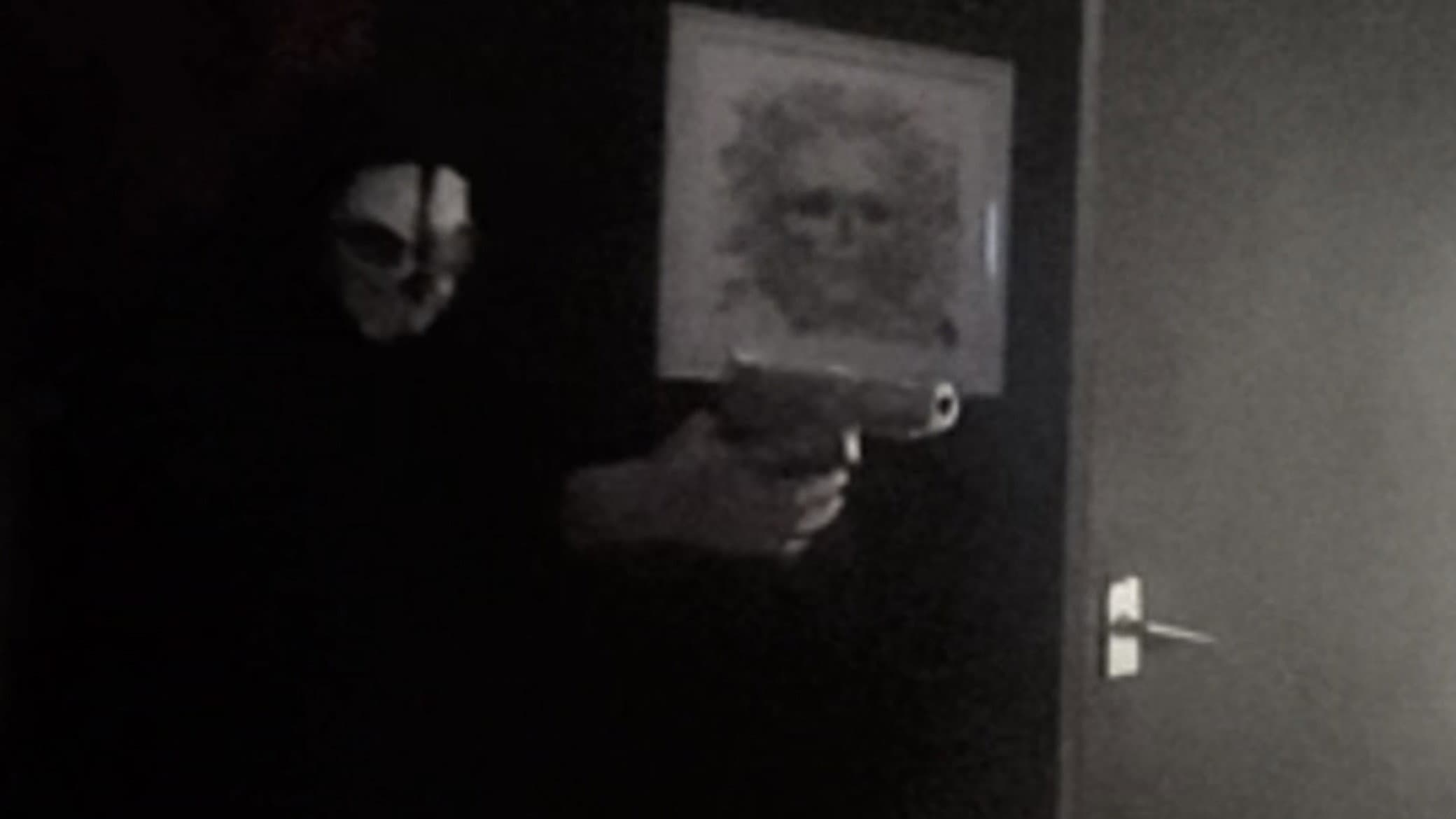
The premise is elegantly simple on its surface, but the execution is anything but. The Pilfer is a thief, probably a petty one, given the griminess of his world. He operates in a reality that feels like ours - rain-slicked sidewalks, flickering neon, a city that doesn’t care. But then, something breaks. He doesn’t just pick a pocket or crack a safe; he crosses a threshold. The logline says he enters a different dimension, and that’s not hyperbole. In the span of 60 seconds, the color grading shifts, the ambient noise drops out, and the Pilfer finds himself in a space that is both familiar and profoundly wrong. It’s there he encounters The Lady, and his instinct as a predator kicks in. He kidnaps her. But here’s the twist: as he drags her through this strange landscape, the power dynamics begin to invert.
What starts as a crime becomes a symbiosis. The Lady doesn’t scream or fight; she watches him with a knowing calm, as if she’s been expecting him. The “kidnapping” feels less like an act of violence and more like a forced entanglement, a dance between two souls bound by a cosmic joke. The film doesn’t explain the mechanics of the dimension. There’s no exposition about portals or parallel universes. Oswald trusts the audience to surrender to the logic of the image. Expect a lot of shaky handheld work, close-ups on sweaty brows and wide, unreadable eyes. Expect a sound design that oscillates between crushing silence and a low, industrial hum. And expect an ending that doesn’t resolve so much as it dissolves. You’ll get a final shot that lingers just long enough to make you question what you actually watched. It’s not a twist in the M. Night Shyamalan sense; it’s a tonal gut-punch that recontextualizes everything that came before.
Why It's Worth Watching
Look, the TMDb rating is a flat zero, which is either a badge of obscurity or a scathing indictment. It’s impossible to tell. But that’s precisely why you should give a damn. Lost Crook is not designed for mass consumption. It’s a work of willful weirdness, the kind of thing that gets buried in algorithmic feeds because it refuses to fit a genre tag. It’s drama, sure, but it’s also a psychological puzzle, a sci-fi fragment, and a macabre romance all crushed into a single breath. The film’s entire aesthetic rejects the bloated, over-explained storytelling that dominates modern streaming. There’s no three-act structure, no hero’s journey. Instead, Oswald offers a pure, undiluted vibe - a mood that clings to you after the screen goes dark.
The performances are raw. Oswald’s Pilfer is not a charming rogue; he’s a sweaty, panicked man who realizes he’s bitten off more than he can chew. McGill’s The Lady is a mirror, reflecting back the thief’s own confusion. The 1-minute runtime is a dare. It challenges you to pay attention, to rewatch immediately, to debate what you just saw with a friend. Is it pretentious? Maybe. Is it a waste of time? Absolutely not. In a world where a blockbuster spends 20 minutes on a CGI explosion, Lost Crook spends 20 seconds on a single, loaded glance between two strangers in a broken universe. That’s audacity. That’s art. And for the adventurous streamer, that’s more than enough reason to hit play. Whether you leave satisfied or irritated, you won’t forget it. And for a film called Lost Crook, finding a permanent spot in your brain is the only victory it needs.