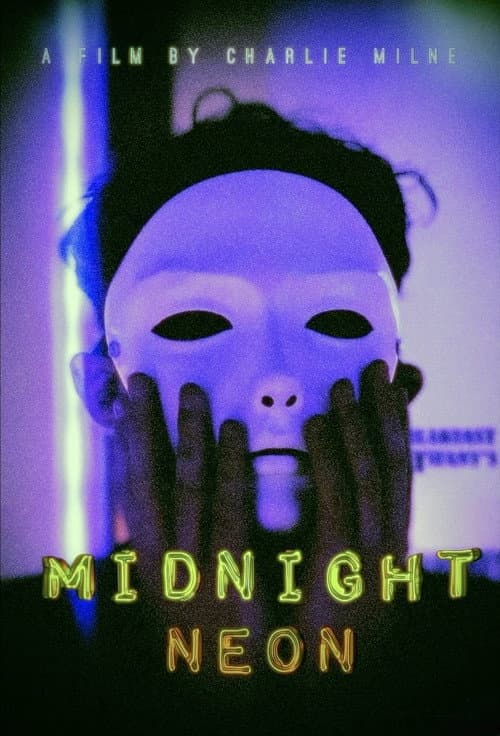
The calendar flipping to August 15th marks more than just the peak of summer; for cinephiles with a taste for the unsettling, it signals the arrival of Midnight Neon, a nine-minute fever dream that arrives today on OTT Stories. This isn't your typical blockbuster fare. It’s a compact, dense slice of psychological thriller, a tightly wound coil of paranoia and artistic angst that promises to linger long after the credits roll - all from the mind of director Charlie Milne. In a landscape of two-hour epics, a precisely crafted short like this feels like a dare: can you handle a story that refuses to blink?
Release Date & Where to Watch
Your wait is over. Midnight Neon officially premieres today, August 15, 2026, and it is exclusively available for streaming on OTT Stories. There’s no theatrical rollout to worry about, no limited engagement; just pull up your favorite streaming device, search for the title, and immerse yourself in a world where the distinction between night and nightmare dissolves. At just nine minutes, it’s the perfect interstitial experience - a potent shot of cinematic espresso designed to jolt you out of your afternoon slump or cap off a late-night binge. Given the platform’s penchant for edgy, creator-driven content, this feels like a natural home for Milne’s vision. So carve out ten minutes today; you’ll likely want to watch it twice to catch all the shadows moving in the periphery.
Cast & Crew
The film is anchored by a compelling performance from Vincent Aydon as The Protagonist, a man whose weary eyes carry the weight of a thousand unwritten pages. Aydon navigates the character’s descent with a quiet desperation that feels unnervingly authentic, avoiding melodrama in favor of a slow-burn internal collapse. He is the still center of a storm, and his chemistry - or rather, his anti-chemistry - with the enigmatic Eve, played by Merista Quetzal, is the film’s magnetic core. Quetzal imbues Eve with a serpentine grace, a woman who seems to exist both inside and outside the protagonist’s fractured reality.
Surrounding them are two crucial, if brief, turns that add texture. Ryan Johnson appears as the Studio executive, embodying the soulless, corporate gatekeeper who might have pushed our writer over the edge, while Stephen Longley delivers a chillingly composed performance as the Cult member, a gateway into the "organised darkness" the logline promises. But the real auteur here is Director/Writer Charlie Milne, who crafts every frame with an architect’s precision. Milne isn’t just telling a story; he’s building a maze. His direction is confident, using the short runtime to create a sense of claustrophobia and inevitability that would make Christopher Nolan proud, albeit on a far more intimate, gritty canvas. The title itself, Midnight Neon, is a promise of the aesthetic: a world lit by the garish, artificial glow of city signage, where truth hides in the flicker between tubes.
Story & What to Expect
The logline sets the stage: a writer searching for purpose falls into a world of organised darkness. But as the synopsis hints, this is not a simple tale of corruption. The protagonist's reality begins to deteriorate almost immediately. We meet him in a state of flux, haunted by a creative block that the Studio executive (Johnson) is all too eager to exploit. Enter Eve, the femme fatale archetype reimagined for the streaming age, who leads him down a rabbit hole of late-night meetings and whispered promises. The "cult" isn't a bunch of robed figures chanting in a basement; it’s a more insidious network of influence, a cabal of shadowy players who feed on creative despair.
What follows is a mind-bending, 540-second descent. Expect disorienting jump cuts, a sound design that buzzes with low-frequency dread, and dialogue that cuts like a knife. The writer’s quest for purpose becomes a pilgrimage to his own doom. He is forced to confront the choices that led him to this neon-lit purgatory. Is the darkness external, or is he the architect of his own ruin? That’s the question at the film’s heart. The narrative is lean, but it is packed with symbolism - from the flickering neon tubes that represent fragile inspiration to the recurring motif of blank pages. Do not expect a neatly tied bow at the end. Milne is far more interested in open wounds than polished conclusions. The mystery is not just in the plot, but in the very fabric of the protagonist's perception, leaving the viewer to piece together what was real and what was a projection of his fractured psyche.
Why It's Worth Watching
In an era of content bloat, Midnight Neon is a testament to the power of restraint. It dares to be short, leaving you wanting more rather than checking your watch. For fans of the thriller genre, it’s a back-to-basics jolt of pure adrenaline, minus the car chases and explosions. This is a cerebral thriller, fueled by existential dread and performance anxiety - the fear of the blinking cursor, the desperate need to create something meaningful in a world that seems designed to commodify everything.
The film taps into a universal fear: that we are one bad decision away from losing our grip on reality. Aydon’s portrayal is a masterclass in nuance, capturing the arrogance and fragility of the artistic ego. While the TMDb rating currently sits at 0/10 - a placeholder for a film that has just unspooled for the public - you have the rare opportunity to be among the first to assign it meaning. This is the kind of work that ignites discussions. Was the Cult member real? Who was Eve really working for? On OTT Stories, where independent voices are championed, Midnight Neon is a bold statement. It is a haunting, stylish, and intellectually provocative piece that proves a great story doesn’t need 120 minutes to burrow under your skin. It only needs nine. And a little bit of darkness.