

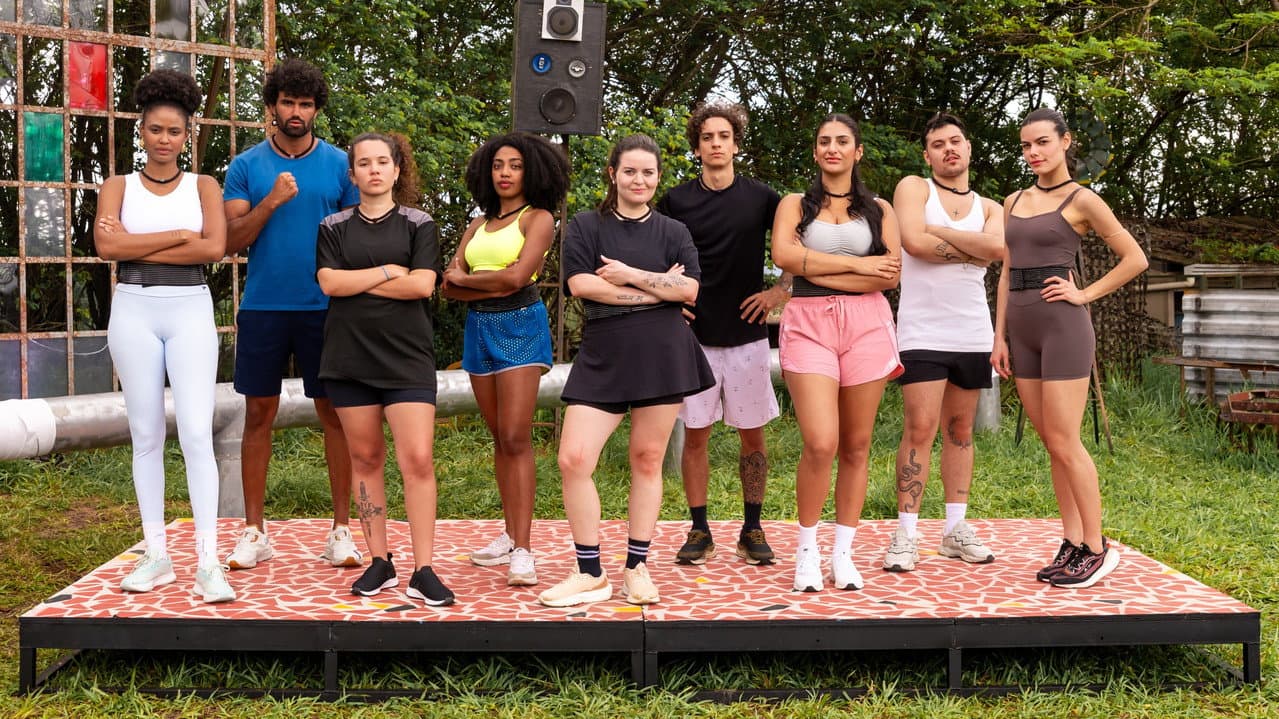
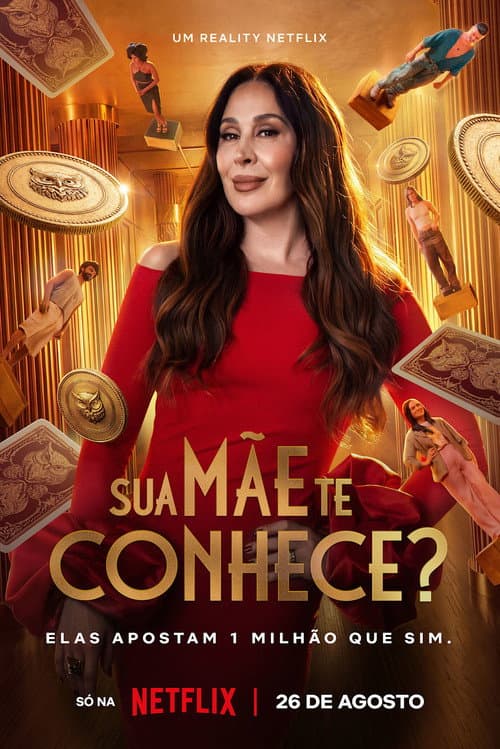
Netflix has quietly added a new Brazilian reality competition to its lineup this week, and it comes with a twist that hits close to home for anyone who has ever heard a teenager sigh mid-conversation. Mom Knows Best?, which premiered on the streaming platform on August 26, 2026, puts nine mothers in a high-stakes game of prediction - each one betting real money on how well she truly understands her own child.
The series, presented in Portuguese, leans on a deceptively simple premise: mothers wager cash on their ability to foresee how their kids will act, think, or choose in a series of scenarios. The hook, however, is that the children are not just passive participants. They make their own calls, and the results often undermine the very confidence their mothers walked in with. According to the show’s official synopsis, the mothers discover that their children can still surprise them - a gentle but pointed reminder that no matter how many years of parenting experience you accumulate, a kid’s next move is never a sure thing.
Hosting duties fall to Cláudia Raia, a veteran Brazilian actress whose television career spans decades. Raia, known for her commanding screen presence in telenovelas and her turn as a charismatic figure on Brazilian TV, brings a warm but playful energy to the proceedings. She’s not just a neutral announcer here; she’s the one who delivers the results, watches the mothers sweat, and offers a knowing smile when a prediction goes sideways. Her role feels deliberately designed to soften the edge of a format that could otherwise turn into pure competitive cruelty.
The show’s tone, based on the early episodes now streaming, walks a careful line. It’s a competition, yes - money is on the line, and the stakes raise with each round - but it’s also a family dynamics experiment dressed in reality-TV clothing. The format belongs to a broader recent wave of unscripted shows that mine parent-child relationships for drama, but Mom Knows Best? focuses less on conflict than on revelation. The mothers are not competing against each other in a head-to-head physical or trivia battle; they’re competing against their own assumptions. Each wager is a public declaration of intimacy, and each wrong answer is a small fracture in a relationship that suddenly looks less solid than it did at breakfast.
That emotional gamble is what separates the show from standard game-show filler. Watching a mother confidently predict her teenage daughter’s pick - only to watch the daughter choose the exact opposite - carries a sting that no contrived dramatic twist could replicate. The production doesn’t milk those moments for cruelty, though. Instead, the editing allows for quiet reaction shots: a mother’s laugh that catches in her throat, a child’s shy glance at the camera, a mutual shrug that says, well, maybe we don’t know everything about each other. Those small human beats are the real currency of the series.
Beyond the central competition, the show also captures a cultural specificity that feels distinctly Brazilian without being exclusionary. The families come from a range of backgrounds, but their banter, the way they interrupt each other, the physical affection, and the loud, overlapping arguments have a rhythm that reads as authentic. That’s not to say the format won’t travel well - reality TV built on family friction is a global appetite - but the texture here is unmistakably homegrown. The Portuguese-language dialogue is subtitled for international viewers, and the show’s accessibility benefits from that cultural grounding rather than suffering for it.
Production details remain sparse, as is often the case with unscripted launches. No director has been credited publicly, and the runtime per episode has not been confirmed, but the initial drop is available in full on Netflix’s reality category. The show has no critical consensus yet - its TMDb score sits at zero for now - but early viewer reactions on social media have skewed toward curiosity rather than dismissal. The premise is silly in the best way, the kind of thing that feels like a party game that grew up and got a budget.
The broader context matters too. Reality television has spent the last few years wrestling with its own ethics, particularly when it comes to competition formats that humiliate or exploit. Mom Knows Best? seems aware of that discourse. The stakes are real but the tone is playful, and the producers appear more interested in family truth than in manufactured feuds. When a mother fails to predict her child, the show frames it as a discovery, not a failure. That’s a refreshing approach in a genre that often rewards cringe.
For viewers looking for something light but not empty, the show fills a particular niche. It’s not a cooking contest, not a dating show, and not a survival challenge. It’s a domestic quiz show with a psychological edge, one that invites you to play along at home and then, inevitably, to ask yourself whether you’d do better. Most parents won’t. That’s precisely the point.
As the series settles into its streaming run, it will be worth watching whether the format evolves in subsequent episodes - whether the wagers grow, the challenges get harder, or the family dynamics get messier. For now, the first batch of episodes sets a promising tone: funny, warm, and just uncomfortable enough to feel like more than noise. If you’ve ever told your mom “you don’t know me,” and watched her laugh because she absolutely does - or worse, absolutely doesn’t - this one’s for you.
Source: Netflix Newsroom