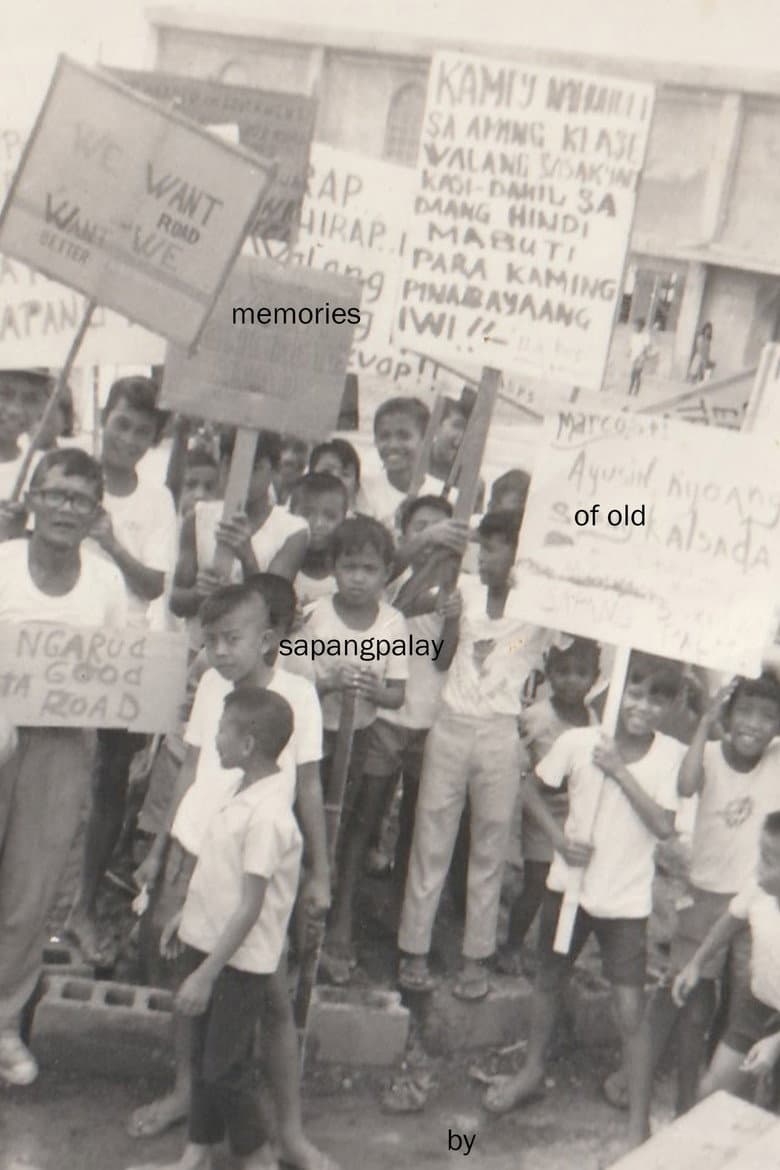
The math is almost absurd: five minutes. That’s shorter than the average time it takes to microwave popcorn, shorter than a single commercial break on network television. And yet, Edsel Gasmen’s experimental documentary short, MOOSAP (Memories of Old Sapang Palay), attempts to compress decades of broken promises, a brutal foot march, and the haunting question of whether history is doomed to repeat itself into that fleeting window. It’s a radical act of compression, a dense capsule of national memory that premieres today, August 11, 2026, and it demands your full attention precisely because it knows it has none to waste.
Release Date & Where to Watch
Mark your calendars for today, August 11, 2026. MOOSAP is now streaming exclusively on OTT Stories, the platform that has increasingly become the home for bold, formally inventive Filipino independent cinema that might otherwise slip through the cracks. This is not a theatrical release, nor is it buried in a deep-cut film festival sidebar; it is available right now, on demand, for subscribers. Given its incredibly lean runtime of five minutes, it’s designed for a single, focused sitting. Clear your notifications, dim the lights, and give it the full cinematic respect you’d afford a feature. It’s the kind of short that rewards immediate rewatching, as its dense layers of archival and contemporary imagery will likely reveal new resonances upon a second pass. Don’t scroll past it; it’s a stone dropped into a still pond, and the ripples are the point.
Cast & Crew
On paper, the "cast" is listed as unknown, which is entirely fitting for a project this experimental. There are no actors to credit in a traditional sense. The real performers here are the faces frozen in 1970s government propaganda footage, the weary settlers of Sapang Palay captured on grainy film, and, in a more abstract way, the modern-day displaced individuals who mirror their struggles. The lone name at the helm is director Edsel Gasmen, who functions less as a traditional narrative director and more as an archaeologist of moving images. Gasmen acts as a curator of memory, sifting through physical archives and weaving them with new digital footage to create a dialogue between eras. He is the singular creative force, the one who makes the choice to place a black-and-white image of a mother clutching her child against a modern, high-definition shot of a family packing their belongings into a tricycle. Without a conventional crew list, the film feels like a deeply personal, almost handmade artifact - a singular vision that is all the more powerful for its intimate, auteur-driven construction.
Story & What to Expect
The film’s title is an acronym, but it’s a nostalgic, almost tender one. MOOSAP doesn’t just tell you about the history of Sapang Palay; it tries to make you feel the texture of its memory. Here’s the historical context you need: in the late 1960s and early 1970s, thousands of families were forcibly relocated from Manila to Sapang Palay, a resettlement area in Bulacan, under the promise of a better, more prosperous life. What they found instead was a barren, undeveloped wasteland with no proper housing, water, or livelihood - a promise that curdled into severe neglect. The settlers’ desperation culminated in a long, arduous march to Malacañang Palace, demanding the most basic necessities for survival.
Gasmen’s film does not present this as a dry history lesson. Instead, it’s a fractured, poetic montage. You will see archival footage of that era - the muddy paths, the improvised shanties, the determined, exhausted faces of the marchers - intercut with contemporary images. Those modern parallels are the film’s most urgent gambit. Gasmen doesn't just show you the past; he establishes a visual rhyme scheme where a 1970s eviction is mirrored by a present-day demolition, where a long walk for water becomes a long walk to a government office. The structure is more emotional than chronological, a collage of images that build a thesis: displacement is not a historical anomaly but a continuous, cyclical engine of Filipino urban life. Expect no narration to spoon-feed you. The story is told through the stark juxtaposition of images, the rhythm of the edit, and the haunting silence between frames. It asks you, the viewer, to do the work of connecting the dots, to recognize that the faces may change, but the geometry of suffering remains tragically familiar.
Why It's Worth Watching
In an era of bloated runtimes and franchise fatigue, MOOSAP is a masterclass in cinematic economy. Five minutes might seem like a slight commitment, but this is a dense, intellectually rigorous work that feels like a gut punch. Its power lies in its refusal to comfort. It’s not a nostalgic look back at a bygone struggle; it is a mirror held up to the present. When you see a group of informal settlers being moved from a highway underpass today, the film forces a chilling realization: the march to Malacañang was not a singular event but a recurring nightmare.
For fans of experimental documentary, this is essential viewing - a film that understands that the language of cinema can be more potent than simple exposition. It uses the archive not as a museum piece but as a living, breathing testament. The film’s core question - "how long must a community walk before their voices are truly heard?" - is not rhetorical; it hangs in the air, unanswered, and lands on the viewer’s conscience. It’s an uncomfortable watch, by design. It challenges the easy narrative of progress, suggesting that the empty promises of the past have simply been repackaged for the present. At a mere five minutes, it is both a quick watch and a deeply lasting one, a quiet thunderclap that will linger long after the screen goes dark. It is, quite simply, journalism, poetry, and history fused into a single, urgent scream. Do not miss it.