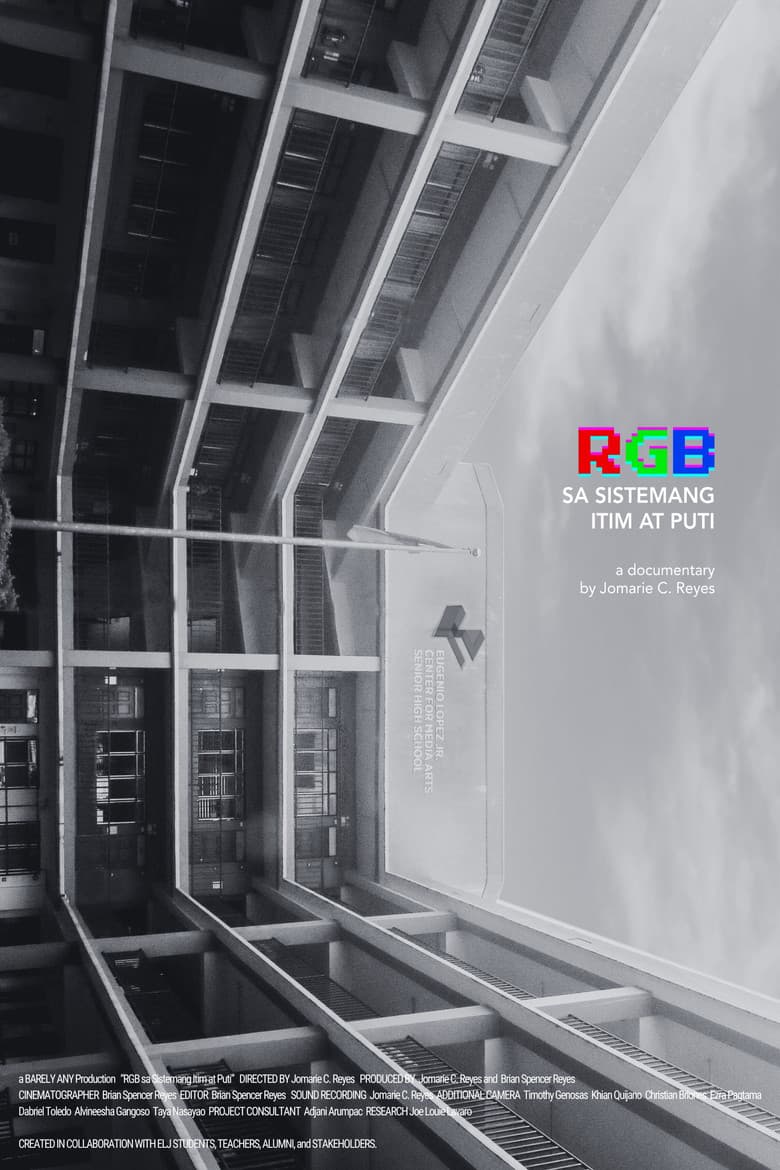
The quiet hum of a film projector is about to become a eulogy. On August 10, 2026, a 23-minute piece of cinema arrives with the weight of a much larger conversation. RGB sa Sisteman Itim at Puti - which translates to RGB in a System of Black and White - is not a loud protest film. It is a measured, observational glance at a specific moment in time, one that feels both deeply local and universally resonant. The title itself is a contradiction: how do you render the vibrancy of color, of creativity, when the system insists on binary outcomes? That question hangs over every frame.
Release Date & Where to Watch
There is no theatrical rollout, no red-carpet premiere scheduled for this piece. RGB sa Sisteman Itim at Puti is destined for the streaming realm, premiering on OTT Stories starting today. As of this writing, the exact release time remains unconfirmed, but the platform typically drops new titles at midnight Pacific Standard Time. For now, this is an exclusive - you will not find it on any other major subscription service. The runtime is a tight 23 minutes, which makes it an easy, digestible watch for a quiet evening, but do not mistake its brevity for superficiality. This is a short film that demands your full attention, not something to have on in the background while you scroll through your phone.
Cast & Crew
Here is where things get deliberately sparse. The metadata provided lists the director as unknown, the cast as unknown, and the crew as unnamed. This is not a case of lazy database entry; it feels like a deliberate editorial choice, a mirror of the film's own subject matter. The film is set at the Eugenio Lopez Jr. Center for Media Arts Senior High School (ELJ Center), a real institution in the Philippines known for nurturing young storytellers. By withholding the names of the people who made this, the film shifts focus away from individual auteurs and onto the collective - the students, the teachers, the institution itself. In an era where every short film is a launchpad for a director's career, RGB chooses anonymity. The only "cast" that matters here is the student body and faculty of the school, playing versions of themselves or fictionalized stand-ins, navigating a shared crisis. Do not come looking for familiar faces; come looking for the spirit of a place.
Story & What to Expect
The premise is quietly devastating. The film drops us into the ELJ Center in the weeks leading up to a new national curriculum - one that will excise Media Arts from the senior high school track. For a school built specifically to offer that program, this is not a minor tweak; it is an existential erasure. The documentary-style narrative does not rely on dramatic showdowns or tearful goodbyes. Instead, it observes. We see students editing footage on aging computers, teachers grading final projects with a mix of pride and resignation, and hallways filled with the mundane chatter of teenagers who are only half-aware of the bureaucratic knife hanging over their futures.
The "RGB" in the title is a crucial lens. In digital imaging, RGB (Red, Green, Blue) is the additive color model that creates the full spectrum on screens. The "Sisteman Itim at Puti" (system of black and white) suggests the institutional mindset that sees education as either successful or failed, funded or cut, relevant or obsolete. The film’s aesthetic likely mirrors this: moments of lush, saturated color when we see the students' work - their films, their animations, their photographs - intercut with the flat, bureaucratic grays of administrative offices and official documents. The film does not argue; it merely shows the gap between the vibrant potential being nurtured in the classrooms and the monochrome logic of a policy paper that cannot measure passion.
Expect a slow burn. At 23 minutes, it has the space to breathe, to capture long takes of students rehearsing a scene or a teacher quietly packing up a decade's worth of lesson plans. There is no villain with a mustache, no speech from a politician. The antagonist is the system itself, an abstract force that operates through memos and curriculum revisions. The film’s power lies in its restraint, allowing the audience to draw their own conclusions about what is lost when we quantify the value of arts education.
Why It's Worth Watching
In the current media landscape, where everything is hyperbolically marketed as "a must-see event" or "the most thrilling ride of the year," RGB sa Sisteman Itim at Puti offers something rarer: honesty. It is a time capsule of a specific anxiety - the fear that the skills you are honing will be deemed obsolete before you can even graduate. For students, it will feel painfully familiar. For educators, it will be a reflection of a battle many have fought behind closed doors. For everyone else, it is a reminder that curriculum decisions are not just administrative footnotes; they shape the dreams of young people who are told to follow their passions, only to have the rug pulled out from under them.
The film's unknown rating of 0/10 on TMDb is fitting. It has not been judged yet because it has not been seen. This is a blank slate, a chance for early viewers to define its legacy. Watching it feels like a small act of solidarity. You are not just consuming content; you are bearing witness to a specific, documented struggle. The decision to keep the release quiet, the director anonymous, and the runtime short feels like a deliberate attempt to let the subject matter speak without the noise of celebrity or spectacle.
This is the kind of short film that festivals used to champion and that streaming algorithms now bury. But OTT Stories is giving it a home, and that is a win in itself. It is not entertainment in the traditional sense - there are no explosions, no laugh-out-loud moments, no satisfying narrative closure. The final frame will likely leave you with more questions than answers, particularly about the future of the students whose faces you have been watching. But that is the point. RGB sa Sisteman Itim at Puti is not about a solution; it is about a moment of reckoning. It asks you to sit with discomfort, to look at the color being drained from a system, and to wonder what comes next. In that quiet, it finds its profound power.