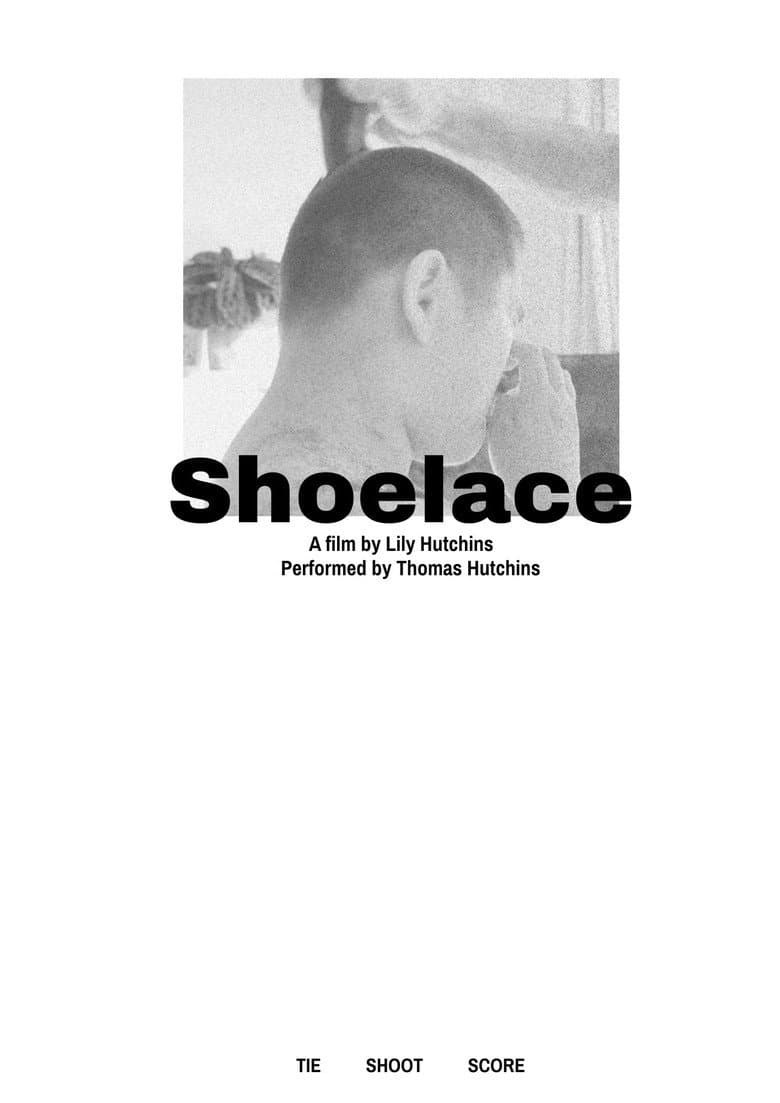
Some films announce themselves with thunderous trailers and hundred-million-dollar marketing blitzes. Others arrive so quietly you might miss them entirely if you blink. “Shoelace,” which premieres today, August 26, 2026, belongs firmly in the latter camp - a whisper of a movie, barely a minute long, that nonetheless manages to capture something achingly universal. It’s the kind of work that doesn’t demand your attention so much as it gently tugs at your sleeve, much like the titular object suggests. And in a streaming landscape clogged with eight-episode epics and three-hour superhero sagas, a one-minute film feels less like a novelty and more like a dare: Can we say something true in sixty seconds? The answer, as it turns out, is a quiet, resonant yes.
Release Date & Where to Watch
Mark your calendars - or more accurately, check your watch - because “Shoelace” hits OTT Stories today, August 26, 2026. The film is available for streaming immediately, joining the platform’s growing slate of micro-narratives that prioritize brevity without sacrificing emotional weight. There’s no theatrical rollout, no staggered international release; it simply appears in your queue, ready to be experienced in the time it takes to brew a cup of coffee. That’s the beauty of a one-minute runtime. You don’t need to carve out an evening. You don’t need popcorn. You just need a moment of stillness, which, fittingly, is exactly what the film asks of its protagonist. OTT Stories has carved a niche for experimental and intimate short-form content, and “Shoelace” fits that mandate like a well-worn sneaker. Given its brevity, repeat viewings are not just possible but practically encouraged - and you’ll likely find yourself pressing play again the moment it ends.
Cast & Crew
At the helm is director Lily Hutchins, a filmmaker whose previous work, though limited in public footprint, has shown a keen eye for the textures of ordinary life. Hutchins doesn’t reach for melodrama; she builds from small, precise gestures. That sensibility is perfect for “Shoelace,” a film that hinges on a single, seemingly mundane action. The entire weight of the piece rests on the shoulders of young Thomas Hutchins, who plays the film’s central figure, also named Thomas. There’s a deliberate, almost reflexive symmetry here - the director and actor share a surname, suggesting a deeply personal project, perhaps even a home-movie lineage elevated to art. Thomas (the actor) doesn’t have a long filmography to lean on; his performance is raw, unpolished, and all the more effective for it. He isn’t acting so much as existing in front of the camera, which is precisely what a slice-of-adolescence piece requires. The cast list is spare by necessity - one name, one role - but that singularity is the point. There are no distractions, no subplots, no supporting players to soften the focus. It’s just Thomas, a moment, and us.
Story & What to Expect
The official overview is tantalizingly vague: A fragment of adolescence, seen through the eyes of Thomas. That’s it. No logline, no plot synopsis, no twist warning. And honestly, that’s the right call. To describe “Shoelace” in conventional narrative terms would be to overstate what it’s doing. The film drops us into a single, quiet moment - likely outdoors, given the title’s implication of movement and pause - where Thomas notices something about his shoelace. Perhaps it’s untied. Perhaps it’s fraying. Perhaps it’s tied in a way that feels suddenly foreign to him, a knot he doesn’t remember making. The camera, we can assume, lingers close, capturing the small furrow of his brow, the hesitation in his fingers. This is not a story about a shoelace. It’s a story about a boy on the cusp of something - a transition so subtle that even he doesn’t recognize it. The lacing becomes a metaphor for the threads of childhood that are beginning to loosen, the simple things that once felt automatic now requiring conscious thought.
The entire film unfolds in real time, presumably in a single continuous take. There’s no dialogue, or if there is, it’s minimal to the point of being ambient. What you’re left with is texture: the sound of fabric rubbing against fingers, the ambient noise of a late-summer afternoon, the weight of a gaze. It’s reminiscent of the lyrical short films by artists like Maya Deren or even the quiet observation of Chantal Akerman, though “Shoelace” has a gentler, more innocent pulse. Thomas isn’t in crisis; he’s in a moment of pause. The film invites you to sit with that pause, to feel its duration rather than rush past it. By the final frame, you may not know anything more about Thomas’s life, but you’ll feel like you’ve glimpsed something essential about his interior world. That’s the magic of a fragment - it doesn’t need completion to feel whole.
Why It’s Worth Watching
Let’s address the elephant in the room: a 1-minute runtime, a TMDb rating of 0/10 (it’s brand new, so that’s a placeholder, not a verdict), and no genre listed. On paper, “Shoelace” is the definition of a hard sell. Why should you spend even sixty seconds on it? Because that’s exactly the point. We live in an age of content overload, where everything is stretched, sequelized, and franchised into oblivion. “Shoelace” is the antidote - a deliberate exercise in restraint that respects your time while asking for your full attention. It’s a palate cleanser between binge sessions, a reminder that film doesn’t need to be long to be meaningful.
But beyond its meta-commentary on consumption, “Shoelace” works on a purely visceral level. Director Lily Hutchins has crafted a visual haiku - spare, evocative, and unexpectedly moving. The decision to cast someone who shares her surname suggests a homegrown authenticity that you can’t fake with a professional child actor. There’s a vulnerability in Thomas’s performance that feels real, not performed. He’s not delivering lines; he’s experiencing a small reckoning with his own body, his own growing up. For anyone who remembers the strange ache of childhood’s end - the moment a favorite activity feels suddenly babyish, or a routine habit feels newly self-conscious - this film will hit like a freight train wrapped in a whisper.
Moreover, “Shoelace” is a testament to what OTT Stories is doing right: championing filmmakers who think in different time signatures. A 90-minute feature can lose your thread; a 1-minute film can’t afford to. Every frame counts. Every breath is audible. You’ll likely watch it, rewatch it, and then sit in silence for a moment, processing how so little can say so much. The rating is blank not because the film is unproven but because it’s outside the usual metrics of success. You can’t measure a sigh. You can only feel it. Watch “Shoelace” today on OTT Stories, and let it tie you up in knots - the good kind.