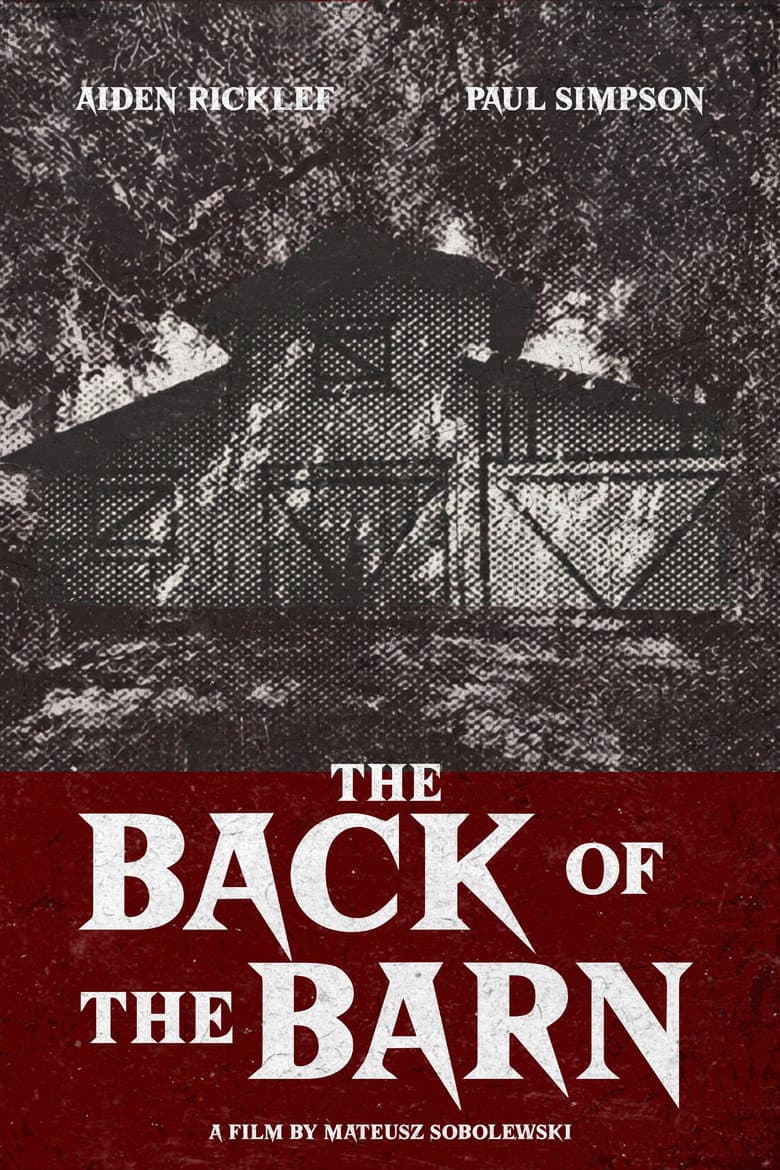
It’s a rare and bracing thing when a short film arrives with the confidence of a feature and the precision of a scalpel. Today, August 28, 2026, marks the release of The Back of the Barn, a 13-minute gut-punch of rural dread from director Mateusz Sobolewski. It’s a film that doesn’t waste a second of its tight runtime, dropping viewers straight into a humid, paranoid corner of the American countryside where the soil feels stale and the shadows seem to move on their own. There are no sprawling epics here - just a concentrated dose of thriller, horror, and raw familial drama that lingers long after the end credits roll.
Release Date & Where to Watch
You can catch The Back of the Barn starting today, August 28, 2026, exclusively on OTT Stories. As a digital-first release, this is a straight-to-streaming premiere, so you won’t need to brave a multiplex or track down a festival screening. The film is available in its original English language, and given its lean 13-minute duration, it’s tailor-made for a single sitting - though you’ll likely want to watch it twice. OTT Stories has been carving out a niche for high-caliber shorts, and this one arrives as a flagship title for their late-summer slate. Given its brisk runtime, it’s the kind of piece that rewards immediate viewing; you can slot it into a lunch break, but don’t be surprised if it haunts your afternoon.
Cast & Crew
The creative engine here is Mateusz Sobolewski, who wears the dual hats of writer and director (with the film proudly credited as “A Film By Mateusz Sobolewski”). Sobolewski has a clear vision, and he’s assembled a compact but formidable trio to bring it to life. Aiden Ricklef takes the lead as Peter, a character who appears to be the anchor of the narrative - his face carries the weight of whatever is lurking just out of frame. Paul Simpson steps in as Artur, a role that suggests a fraught dynamic between the two men, one born of history, mistrust, or perhaps something far more sinister. Then there’s the wild card: Diego Galindo, credited simply as “Creature.” That’s a casting choice that immediately sets the tone. Galindo isn’t playing a human, at least not in the traditional sense, and his physical performance is clearly meant to be the film’s centerpiece of unease.
The production values look sharp, with Sobolewski leaning on atmospheric lighting and sound design to build tension where a bigger budget might rely on jump scares. The director’s hand is evident in every shot, suggesting a filmmaker who understands that in a 13-minute window, every frame is a commitment. There’s no padding here, no wasted dialogue. The cast is small, the scope is intimate, and the result is a lean, mean piece of storytelling.
Story & What to Expect
Plot details have been kept deliberately vague - the kind of mystery that fuels word-of-mouth - but here’s what we can piece together. The story centers on Peter and Artur, two men who seem to share a history that’s both close and corrosive. They find themselves at or near a remote barn, the titular structure that sits like a decaying monument on the landscape. But they aren’t alone. A presence, rendered by Galindo as the "Creature," stalks the periphery. This isn't a slasher or a monster movie in the traditional sense. Instead, the horror is rooted in the drama, in the unspoken things between Peter and Artur that surface when survival is on the line.
Expect a slow-burn tension that accelerates with the quiet fury of a trapdoor snapping shut. Sobolewski uses the barn as a crucible, forcing his characters to confront not just the external threat but the internal fissures in their relationship. The thriller elements keep your pulse elevated, but the drama grounds it in something achingly human. The horror is less about gore - though there’s a gritty, tactile realism to the setting - and more about psychological corrosion. You get the sense that the barn is a place where secrets go to rot, and the arrival of the Creature is merely the catalyst that forces them to the surface.
The film’s visual language appears to favor long takes and close-ups, letting the actors do the heavy lifting. The audio mix is likely to be a key player, with the creak of wood, the rustle of dry grass, and the low, ugly breathing of something unseen doing the work of a full orchestral score. In just 13 minutes, Sobolewski aims to deliver a complete arc - beginning, middle, and a final image that will stick in your memory. It’s a story about consequences, about the things we bury, and the way they eventually claw their way back to the surface, maybe not as ghosts, but as something with teeth.
Why It's Worth Watching
In an era where streaming platforms are dominated by bloated miniseries and 2.5-hour epics, The Back of the Barn is a refreshing counterpoint - a proof that brevity can be a superpower. Sobolewski isn’t trying to fill a runtime; he’s trying to tell a complete story in a single breath. That discipline is palpable in every scene. The cast, though small, is clearly committed to the material. Ricklef and Simpson have a chemistry that reads as volatile, and Galindo’s physicality as the Creature is the kind of choice that elevates a low-key production into something unsettlingly memorable.
But the real draw is the atmosphere. This is a film that understands the secret language of dread. It’s not about what you see - it’s about the empty space in the frame, the pause before a footstep lands, the sound of breathing that isn’t yours. For fans of slow-burn horror with a dramatic backbone - think early Ari Aster or the restrained terror of The Witch - this will be right in your wheelhouse. It doesn’t overexplain, it doesn’t hold your hand, and it trusts the audience to fill in the gaps. That’s a rare commodity. The film’s TMDb score might currently sit at a blank zero, but that’s just a placeholder before the early viewers weigh in. This is a calling card for Sobolewski, a director to keep on your radar, and a perfectly crafted 13 minutes that proves short films can hit just as hard as any $100 million blockbuster. Do yourself a favor - dim the lights, put your phone away, and step behind that barn. It’s dark back there.