It’s a curious thing, the way a single image can burn itself into a marriage. For María Finojosa, that image is the precise instant her husband, Juan de Cervantes, stopped being the man she knew and became something else entirely - a man possessed by a vision so vivid it would rewrite their future. Today, July 24, 2026, the 15-minute drama The Terrible Power of Fiction arrives on OTT Stories, and it does not flinch from the quiet, devastating consequences of that transformation.
Release Date & Where to Watch
The film officially streams today, July 24, 2026, exclusively on OTT Stories. At a compact 15-minute runtime, it is an intimate, concentrated experience - one best watched without interruption, perhaps on a rainy afternoon when the world outside feels as damp and heavy as the Costa Rican mountains where the story unfolds. There are no theatrical screenings, no festival detours; the film arrives directly on the platform, where its lingering, melancholic tone can find its audience on demand.
Cast & Crew
Director David Loynaz, an emerging voice in Latin American indie cinema, has assembled a lean but potent cast. Leo Van Schie plays Juan de Cervantes, the Spanish settler whose obsession calcifies into something that resembles madness. Van Schie, known for his ability to convey both rigidity and vulnerability, uses his angular frame and hollow gaze to suggest a man already half-translated into a myth of his own making. Opposite him, Flora Vargas León delivers a quietly devastating performance as María Finojosa, the wife who must piece together the shards of memory that explain how her husband slipped away from her. Her voiceover, recounted in English as per the film’s narrative approach, carries the weight of a woman who has had too much time to think. Rounding out the cast, Alon Campos Perez appears as Ángel de la muerte - a figure whose presence suggests that fiction, once unleashed, does not merely delude; it can also destroy.
Story & What to Expect
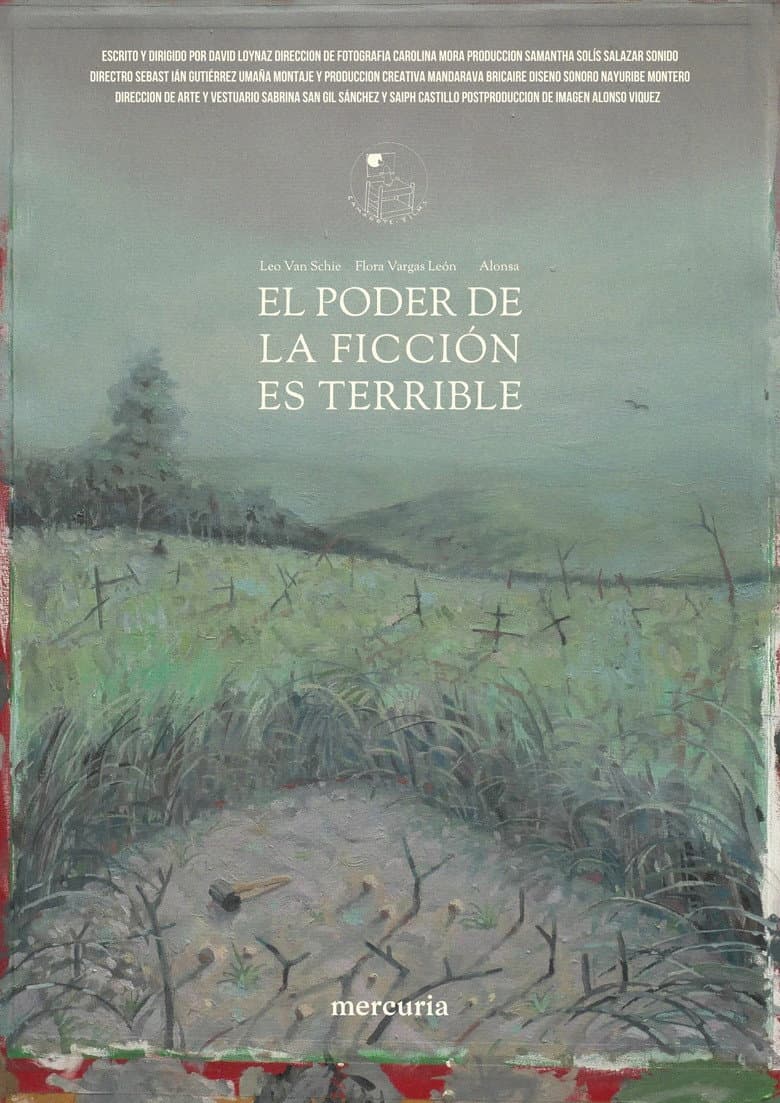
Set in the mid-19th century, the film takes place entirely within the mountains of Costa Rica, a landscape that is both beautiful and oppressive. María Finojosa - now years into her marriage - tunes into the fragile memory of the exact moment when her husband became consumed with a seemingly impossible project: founding a town that would bear his family name, Cervantes, for generations. The script, adapted from the director’s own research into colonial-era diaries, frames this ambition as a Quixote-like delusion, and the film leans heavily into that parallel. Juan is not a visionary; he is a man who has mistaken the pages of chivalric romance for a blueprint for living.
The narrative device is deceptively simple: María’s recollection literally “unravels like the reel of an old film, projected onto the persistent rain.” The film’s visual language mirrors this - frames flicker, images dissolve into water, and the sound of rainfall becomes a persistent, almost hypnotic drumbeat. It is as if the rain itself is trying to wash away the story, or perhaps to drown the fiction that has taken root in Juan’s heart. Loynaz does not deliver a plot in the conventional sense; there is no dramatic climax, no sudden reversal. Instead, we sit with María as she conjures her husband’s face, his words, his manic certainty. We witness the cracks in her memory, the places where the fiction of his obsession has seeped into hers. She says, with the bleak clarity of hindsight, “I can no longer remember where his story ended and ours began.”
Why It's Worth Watching
In a streaming landscape crowded with bloated epics and franchise commitments, a 15-minute film like this feels almost radical in its compression. The Terrible Power of Fiction does not overstay its welcome, but it does hang around in your mind long after the credits roll. It is a meditation on how stories - the ones we tell ourselves, the ones others tell about us - can become traps. Juan de Cervantes, like the Don Quixote he unknowingly shadows, is bent on building a legacy that exists only in his imagination, and in doing so, he abandons the living, breathing woman beside him. María is the film’s true focal point, and Flora Vargas León’s restrained performance captures the exhaustion of loving someone who has already left for a place you cannot follow.
Director David Loynaz has spoken in interviews about his interest in the “muscle memory of fiction” - how beliefs, once adopted, shape the body, the family, the land. Here, that muscle memory manifests as a slow tightening of the chest. The camera lingers on wet leaves, on the way light filters through mist, on María’s hands as she smooths her skirt. There is no score to speak of; only the rain and the occasional creak of old wood. The effect is immersive, almost anthropological, as if we are watching a recovered artifact of a marriage that cracked under the pressure of a dream.
Is it a happy film? Absolutely not. But it is a truthful one, and truthfulness has its own terrible power. For viewers who are tired of escapism and hunger for a story that feels tactile, sorrowful, and real, The Terrible Power of Fiction offers something rare: the chance to watch a woman remember with devastating clarity the exact moment her world shrank into the shadow of a man’s obsession. Streaming now, and just 15 minutes long. You have time. You just might not have the emotional shelter for it.