The release calendar can be a brutal place, a graveyard of big-budget swings and franchise filler. But every so often, a tiny, unassuming project slips through the cracks and reminds you why the medium exists in the first place. On August 13, 2026, the streaming platform OTT Stories unveils a five-minute meditation on grief that feels less like a short film and more like a held breath. It’s called To Flourish, and it isn’t here to dazzle you with spectacle. It’s here to sit with you in the quiet.
Release Date & Where to Watch
Mark your calendars for Thursday, August 13, 2026. That’s the day To Flourish becomes available exclusively on OTT Stories, the boutique digital outlet that has carved a niche for micro-budget, high-impact storytelling. There’s no theatrical rollout, no week-long festival run - just a direct-to-streaming drop that feels appropriately intimate for a piece this personal. You won’t need a premium tier or a special add-on; a standard subscription to OTT Stories will unlock the title at 12:01 AM PT. Given the runtime, it’s the kind of thing you can watch during a coffee break, but don’t be surprised if you sit in silence long after the credits roll. The total investment is five minutes - less time than it takes to scroll past a dozen forgettable trailers.
Cast & Crew
At the helm is director Oliver Zhang, a filmmaker whose previous work in experimental digital shorts has earned quiet festival applause without ever breaking into the mainstream. Zhang has a gift for making minimal resources feel monumental, and here he reunites with Oliver Finnegan, who steps into the role of Josh. Finnegan, known for his raw, unpolished performances in indie dramas, carries the weight of the narrative with a face that seems perpetually caught between a smile and a sob. Opposite him is Marysia Malarczyk as Thalia, a presence that feels almost ethereal - fitting, given the circumstances. Malarczyk’s work here is less about dialogue and more about the spaces between words, a spectral warmth that makes the film’s central conceit believable.
The production notes are sparse, and that’s by design. Zhang reportedly shot the entire piece in a single afternoon, using natural light and a handheld camera to preserve the spontaneity of the performances. There’s a documentary-like texture to the images, a deliberate roughness that keeps you anchored in reality even as the story drifts into dream logic. The score, credited to an unnamed composer, is a sparse piano motif that repeats with subtle variations - a sonic representation of grief’s circular nature. Nothing about the crew list is flashy, but every choice feels intentional, from the muted color grade to the ambient room tone that hums beneath the dialogue.
Story & What to Expect
The premise is deceptively simple, almost archetypal. After losing his best friend, Josh finds himself in a dream where he faces Thalia - the friend he couldn’t save, the person whose absence has hollowed him out. What follows isn’t a plot in the traditional sense. There’s no mystery to unlock, no twist waiting in the wings. Instead, To Flourish is a conversation, a final exchange between two souls separated by the thin veil of mortality. Thalia appears not as a ghost but as a memory given form, her words carrying the weight of everything left unsaid.
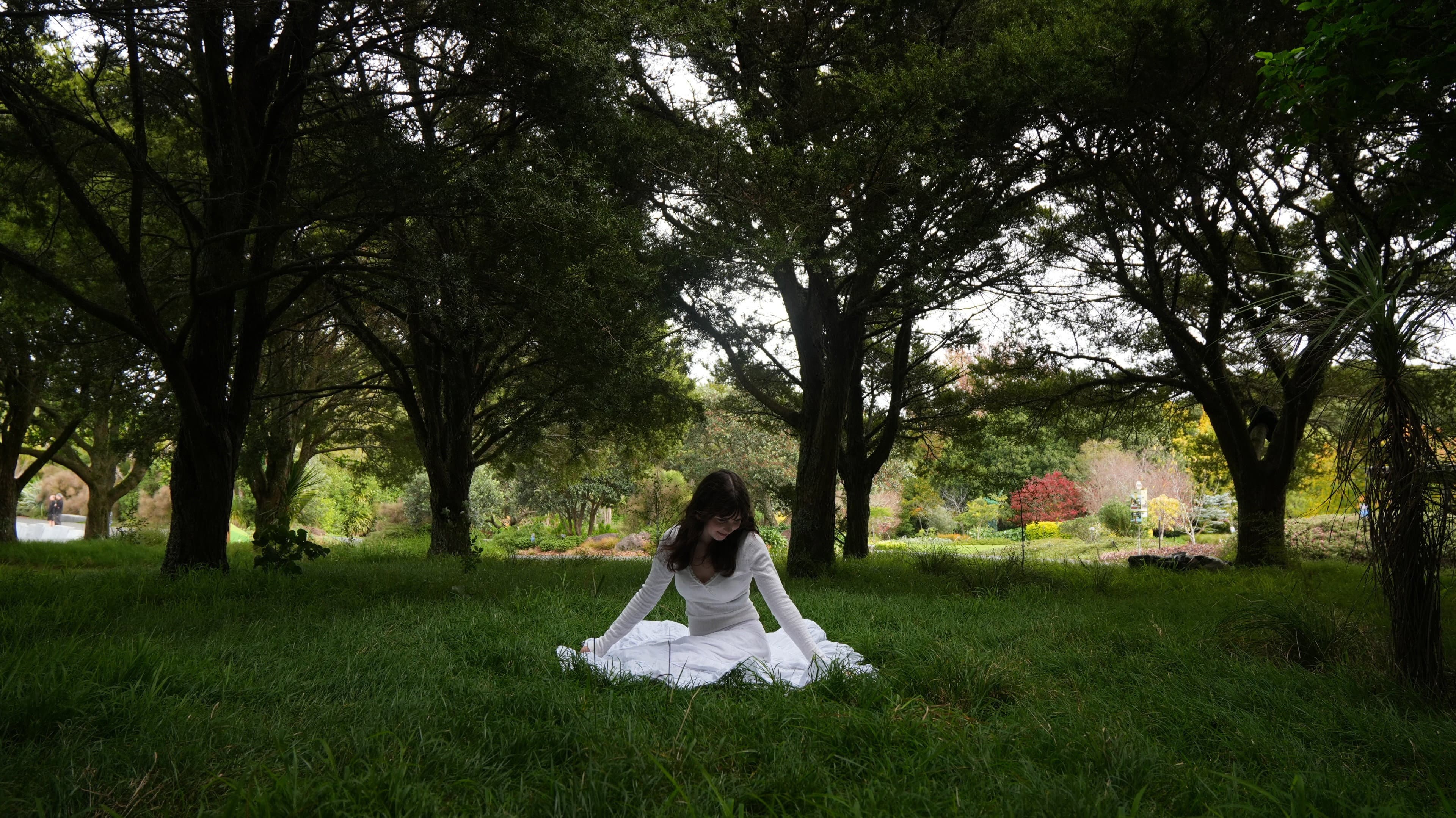
Expect a slow burn, even within the five-minute constraints. Zhang opens with a static shot of Josh sleeping, his face twitching in REM sleep, before dissolving into the dreamscape - a nondescript room with a single window. Thalia sits by the sill, backlit so her features are partially obscured, an effect that keeps her just out of reach. The dialogue is spare but precise. Finnegan delivers his lines with a tremor of desperation, asking the questions everyone who has lost someone wants answered: Did you know? Did you feel it? Were you scared? Malarczyk responds with a calm that borders on unnerving, steering the conversation away from the mechanics of death and toward the permanence of connection.
There is a moment, roughly four minutes in, where the camera finally pushes in on Thalia’s face. It’s the only time we see her clearly, and Malarczyk uses it to devastating effect - not a tear, not a smile, just a quiet acknowledgment that says, I’m okay, and you will be too. The film ends not with a bang but with Josh waking up, the sunlight hitting his pillow, and a single exhale that suggests the beginning of release. There’s no on-screen title card at the end, no text spelling out what closure means. Zhang trusts you to fill in the gaps.
Why It's Worth Watching
Grief stories are a dime a dozen, and most of them confuse length with depth. To Flourish gets that less is more. In five minutes, it achieves what many two-hour dramas fumble: it gives you permission to feel without explanation. The film doesn’t try to rationalize loss or offer a tidy moral. It simply presents a moment - a fragile, honest encounter - and lets it resonate on its own frequency.
There’s also something bracingly refreshing about the rejection of spectacle. No VFX-laden ether, no overdramatic weeping. Just two actors in a room, directed by someone who understands that silence is a form of sound. Finnegan’s Josh is painfully relatable; his inability to let go is rendered with such specificity that you forget you’re watching a performance. Malarczyk, meanwhile, delivers a portrait of grace that feels earned rather than preachy. The chemistry between them is immediate, and it’s that chemistry that sells the supernatural premise.
For those who prefer their cinema with a body count or a superhero, To Flourish will likely bore. But for anyone who’s ever lost a friendship to time, distance, or death, this is a salve. It’s a reminder that closure isn’t a destination but a fleeting sensation - one you have to be brave enough to accept. The TMDb score currently sits at zero, which is less a judgment than a blank slate; this film is too fresh for ratings to have meaning. Watch it on release day, before the discourse catches up. Sit alone, if you can. Let the five minutes wash over you. You might not expect to cry, but don’t be surprised if you do. That’s the point.