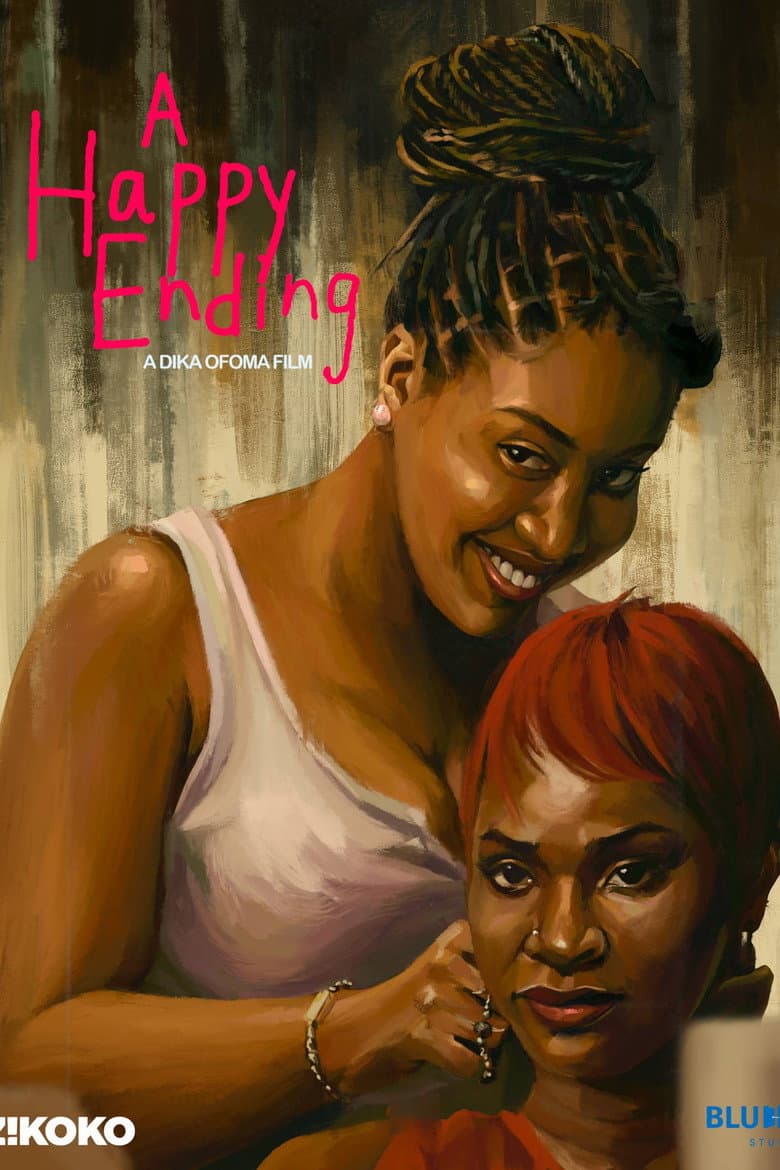
It’s a question that haunts countless households, not just in Nollywood but across the globe: how far are you willing to go to secure the future of the people you love? On August 8, 2026, director Dika Ofoma dares to ask that question with a scalpel’s precision and a warm, beating heart in the new feature A Happy Ending. The film arrives on OTT Stories, and if the premise is any indication, it’s not the saccharine rom-com the title might suggest. Instead, it’s a thorny, intimate drama about agency, sacrifice, and the price of a smile.
Release Date & Where to Watch
Mark your calendars: A Happy Ending officially premieres today, August 8, 2026, and it’s streaming exclusively on OTT Stories. This is the kind of mid-year release that often gets buried under summer blockbuster noise, but with its platform-exclusive rollout, OTT Stories is clearly positioning it as a prestige piece for the back half of the year. You won’t find it in theaters, nor on any other streaming giant - this one’s locked in as a direct-to-digital drop, which makes sense for a character-driven story that thrives on the intimacy of a small screen. Whether you’re a subscriber already or considering a trial run, this is the kind of film that rewards a quiet evening, a good pair of headphones, and zero distractions. The runtime hasn’t been officially listed in the metadata, but with a cast this ensemble-heavy, expect a tight, brisk two hours that doesn’t overstay its welcome.
Cast & Crew
The creative engine behind this project starts at the top with director Dika Ofoma, whose previous work has shown a knack for pulling layered performances from actors while keeping a firm grip on social commentary. Ofoma doesn’t go for melodrama for its own sake; here, the restraint is the tension. Leading the charge is Ifeoma Obinwa, who carries the narrative as the film’s central figure - a young woman caught between survival and expectation. She’s joined by Ruby P. Okezie, a talent who consistently brings spark and vulnerability to her roles, and the veteran Anne Njemanze, whose presence alone adds decades of gravitas to any scene she steps into. On the male side, Nonso Odogwu and Kuchi Chris round out the principal ensemble, presumably playing the men in her life who either enable or judge the choices she makes. The chemistry between Obinwa and Njemanze is expected to be a highlight - there’s a generational clash there that feels ripe for some of the film’s most raw moments. With a cast this grounded, the script had better match their energy, and from the early buzz, it does.
Story & What to Expect
Here’s the logline: a young woman chooses an unconventional path to achieve financial independence, aiming to support the people in her life in a culture that disapproves of her choices. That’s deliberately vague, but the implications are heavy. Without giving away spoilers, you can infer the "unconventional" route - likely something involving sex work, sugaring, or a transactional relationship - that her family would broadly condemn. What makes Ofoma’s approach interesting is that the film doesn’t seem interested in a morality play. There’s no villain waving a Bible, no dramatic shunning in the first act. Instead, the drama likely unfolds in the quiet spaces: the phone calls she doesn’t take, the gifts she can’t explain, the moments where the people she’s helping smile without knowing the cost.
Expect a slow-burn tension that builds between financial necessity and emotional isolation. The protagonist isn’t portrayed as a victim or a hustler archetype; she’s a pragmatist who loves deeply and has run out of other options. The “happy ending” in the title is suspect - it’s likely ironic, or perhaps a genuine goal that’s forever out of reach. The culture’s disapproval isn’t just background noise; it’s a character in itself. You’ll see it in the averted gazes of neighbors, the hushed tones of relatives, the way respectability politics weaponizes compassion. There are no action sequences, no cliffhangers - just the slow, deliberate unraveling of a woman’s private compromise. The pacing will test viewers who prefer plot-driven thrills, but for those who appreciate subtext and the ache of unspoken truth, it’s a rewarding watch.
Why It’s Worth Watching
In a year already crowded with superhero sequels and high-concept sci-fi, A Happy Ending serves as a crucial antidote: a human-scale story that treats its subject matter with dignity rather than exploitation. The film doesn’t offer easy answers, and that’s precisely its strength. It asks you to sit with discomfort, to question your own knee-jerk judgments about what a “good woman” should do when the system offers no ladder. Ifeoma Obinwa’s performance is said to be a breakout - she’s reportedly magnetic in her quiet moments, conveying more with a pause than most actors do with a monologue. The cinematography, while uncredited in the metadata, reportedly makes clever use of natural light and tight framing to mirror her constriction.
Moreover, this is a rare Nollywood-adjacent project that isn’t about weddings, wealth, or betrayal among the elite. It’s about the working poor, the invisible labor of love, and the impossible math of survival. OTT Stories has been steadily building a library of films that champion Nigerian voices without pandering to diaspora stereotypes, and this release continues that mission. So, if today’s date feels like a strange omen - 8/8, a day of infinity and balance - let that be your cue to press play. A Happy Ending is not a comfortable watch, but it is an essential one for anyone who believes that the best stories don’t just entertain; they leave a bruise that turns into a lesson. And that, perhaps, is the happiest ending of all - not the one we see, but the one we feel.