Some films demand you watch them. Others - rarer still - demand you feel them. Arriving today, August 7, 2026, on OTT Stories, Atopia belongs squarely in the latter camp. It’s a five-minute hallucinatory burst of animation, music, and chemical reaction, and it might just be the most intellectually bracing short film you’ll see all summer. Don’t let the runtime fool you; this is dense, provocative work that lingers far longer than its brief, shimmering span.
Release Date & Where to Watch
Atopia premieres exclusively on OTT Stories starting today, August 7, 2026. There’s no theatrical rollout, no festival circuit detour - just a straight-to-streaming drop that feels fitting for a piece so intimate and experimental. You’ll find it under the platform’s “Animation” category, though that label feels almost laughably insufficient. At just five minutes, it’s the perfect palate cleanser between binge-worthy series or a late-night capstone for cinephiles hunting for something they haven’t seen before. Since the cast is intentionally unknown and the runtime is brief, there’s no barrier to entry - just press play and let the thing wash over you. OTT Stories has carved a niche for curated, avant-garde fare, and Atopia sits comfortably in that wheelhouse, available to all subscribers from today onward.
Cast & Crew
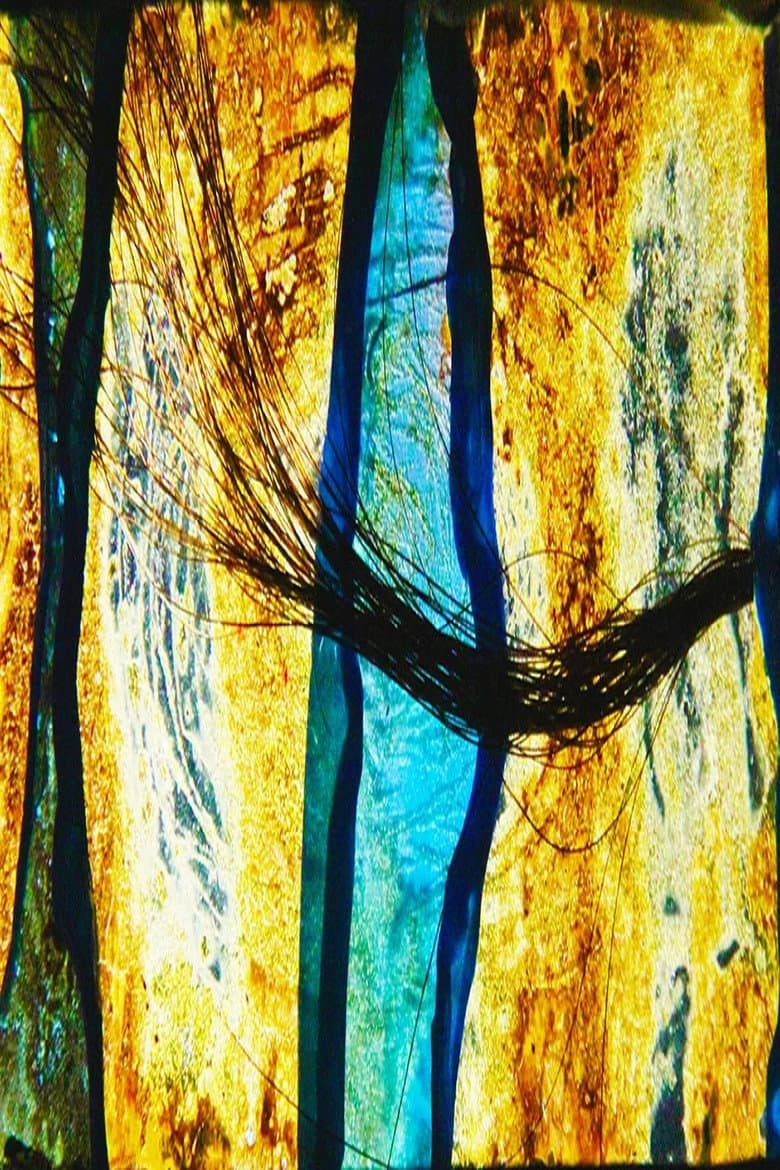
Here’s where things get delightfully unconventional. On paper, the “cast” is effectively a non-entity - no actors, no voice performers, no credited humans in front of the camera. The real star is Italian cellist Giovanni Sollima, whose improvised performance forms the film’s sonic backbone. Sollima isn’t acting; he’s playing, and for those unfamiliar with his work, he’s a formidable presence in contemporary classical music, known for ferocious bow work and a willingness to tear apart genre boundaries. Behind the camera sits director Leonardo Carrano, a filmmaker whose previous shorts have toyed with visual abstraction and material experimentation. Carrano’s approach here is less about directing performers and more about orchestrating chaos - he’s the mad scientist, and the chemistry lab is the film stock itself. The animation credit is a misnomer of sorts; there are no CGI renders or hand-drawn cels. Instead, Carrano and his team subjected 35mm film to direct physical manipulation: acid etching, scratches, abrasions, and hand-applied colour. The result is a collaborative duet between Sollima’s cello and the celluloid itself. No traditional cast list, no familiar faces - just two artists, one living and one material, locked in a conversation.
Story & What to Expect
Let’s address the elephant in the room: Atopia has no plot. There is no protagonist, no conflict, no narrative arc. What it does have is a philosophical thesis, lifted straight from Plato’s Symposium. The title refers to a specific state - atopia - that afflicts Socrates. It’s a Greek concept, but the short film translates it into purely sensory terms. Atopia, roughly speaking, is the experience of being displaced from yourself, a stepping outside one’s own skin, a kind of productive alienation. Carrano and Sollima don’t explain this; they embody it. The film opens on darkness, then a scratch blooms like a lightning strike across the frame. Sollima’s cello enters - low, growling, restless. His bow saws, pizzicato plucks ricochet, and the visuals respond in real time. Acid eats through the emulsion, leaving organic, fractal patterns that pulse like living tissue. Bright pigments bleed into the scratches, creating solar flares of magenta and electric blue. The film grain itself becomes a protagonist, dancing against the abrasions. It’s synesthetic in the truest sense: you hear the bow’s friction and see the scrape on the film surface. You listen to a glissando and watch colour smear in sympathy. The secret relationship between musician and instrument is transposed onto the relationship between filmmaker and medium - both are dialogues of pressure, release, and transformation. Expect no dialogue, no text, no narration. Just five minutes of pure, unmediated aesthetic experience, building to a quiet catharsis that feels almost like waking from a trance.
Why It's Worth Watching
Because it’s not easy, and that’s precisely the point. In an era where streaming algorithms nudge us toward comfort food, Atopia arrives as a bracing shot of espresso. It asks you to surrender, not to comprehend. Watching it, you’ll feel a strange kinship with Socrates, that unsettling sensation of being outside yourself - not lost, but briefly unmoored from the usual coordinates of film viewing. The technical craft alone earns the runtime: direct 35mm manipulation is a dying art, and Carrano’s chemical palette is breathtaking. The acid etching produces shapes that no CGI could replicate with the same organic unpredictability. And Sollima’s performance - captured live, unedited, raw - gives the visuals a heartbeat. There’s also a quiet radicalism to the film’s brevity. Five minutes is enough to make its point and vanish, leaving you with questions rather than answers. It’s a meditation on the limits of representation: how do you show stepping outside oneself? You don’t. You trigger it. By the time the final frame fades to black, you might not be entirely sure what you just watched. But you’ll know you experienced something. For anyone weary of franchise obligations and three-hour running times, Atopia is a compact, jewel-like rebuke - proof that cinema can still surprise you, right in the palm of your hand, in under 300 seconds. Watch it alone. Watch it with headphones. Watch it twice; the second time will be different, because you will be different. That, in essence, is atopia.