There is a certain paradox at the heart of Dr. Seuss’s most famous creation. The Cat in the Hat is, ostensibly, a warning against chaos - a cautionary tale about what happens when you let a stranger dismantle your house while your mother is away. And yet, for generations of readers, the chaotic energy of that feline is precisely the appeal. He is the id unleashed, a force of nature wrapped in a red bow tie. In the new animated feature, The Cat in the Hat, director Erica Rivinoja attempts to answer a question that has lingered since 1957: What happens when the agent of chaos is forced to clean up his own act?
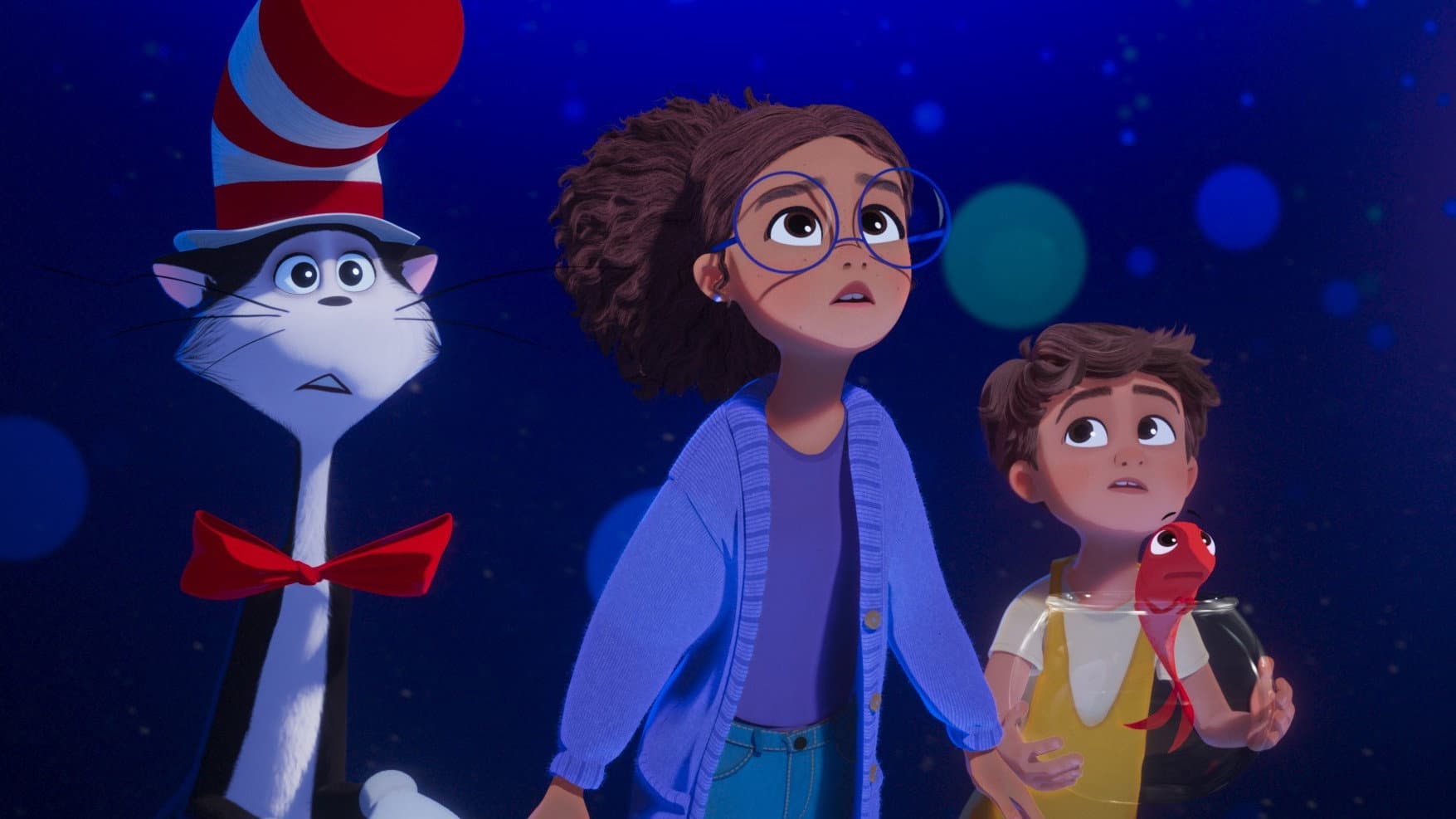
Released on October 31, 2026, this Hollywood production is a vibrant, 108-minute reinvention of the classic tale that trades the suburban stillness of the original book for the bustling culture shock of a new town. The plot hinges on a surprisingly emotional premise. We meet siblings Gabby (voiced by Xochitl Gomez) and Sebastian (voiced by Tiago Martinez), who are grappling with the familiar childhood trauma of relocation. They are lonely, adrift, and struggling to adjust. Enter the Cat (Bill Hader), assigned not to entertain, but to cheer them up. It is a difficult mission for a creature whose primary mode of operation is usually property damage. The stakes, however, are high: this is the Cat’s toughest assignment yet, and failure means losing his magical hat forever.
It is a clever narrative pivot. By grounding the whimsy in the genuine emotional needs of the children, Rivinoja gives the film a beating heart that the previous live-action adaptations largely failed to find. The Cat is no longer just a trickster god visiting boredom upon the complacent; he is a struggling professional, a self-help guru with a problematic track record. The synopsis notes that he is "known for pushing boundaries," a polite way of saying he destroys living rooms. Here, he must prove he can actually help, not just distract.
The casting is, without question, the film’s greatest asset. Bill Hader is a revelation as the voice of the Cat. Stepping into the oversized shoes previously filled by Mike Myers and Jason Lee, Hader brings a manic, jazz-adjacent energy to the role. He lands the rhymes with a snap, but he also finds the vulnerability in a character who is terrified of being unmasked as a fraud. He is supported by a stellar ensemble that leans into the absurdity of the situation. Matt Berry lends his unmistakable baritone pipes to Waffles the Fish, who serves as the film's voice of anxious reason. Quinta Brunson brings her distinct comedic timing to the role of Sherrie, while Bowen Yang and America Ferrera round out a cast that feels like a who’s-who of modern comedy talent. Paula Pell, as Patty, is a highlight in the film's quieter moments.
Visually, the film honors the Seussian aesthetic without being enslaved to it. The world is bendy, the architecture is impossible, and the color palette is a riot of teal and magenta. Yet, there is a modern polish to the animation that distinguishes it from the storybook. The film leans into its genres - Animation, Fantasy, Adventure, Family, Comedy - balancing slapstick humor with genuine moments of wonder. It is a movie that understands its lineage. Rivinoja, a veteran of television comedy, keeps the pace brisk. At 108 minutes, the film never outstays its welcome, though the third act threatens to become overly sentimental. It is a testament to the film's charm that it earns that sentimentality.
Of course, the shadow of the 2003 live-action version looms large. That film was famously vulgar and unsettling, a misfire that misunderstood the assignment. This version, rated a solid 7/10 on TMDb, charts a different course. It is bright, it is musical, and it is deeply earnest. It asks the audience to believe that even those who create messes can ultimately be the ones to fix them.
By the time the credits roll, the Cat has learned his lesson, and so have we. The Cat in the Hat is not just a story about a magical cat; it is a story about resilience. For Gabby and Sebastian, the "magic" they needed wasn't the transmogrifier or the thing-a-ma-jigger, but the realization that a new town is just another kind of adventure. As for the Cat, he proves that while you can’t put the chaos back in the box, you can certainly teach it to juggle. This is a charming, energetic return to form for the Dr. Seuss legacy, proving that the old cat still has plenty of lives left.