The year is 2026, and we are still talking about a movie that was, by all logical metrics, a glorious, beautiful mess. That’s the only way to describe The Fantastic 4: First Steps, which landed with a thud-and-soar dichotomy on July 23, 2025, and has since become the most argued-about blockbuster of the streaming era. The film, now a major title on OTT Stories, doesn't just divide opinion; it shatters it, leaving a debris field of glowing five-star raves and confused one-star rants. And honestly? That chaos is exactly what makes it essential viewing.
Director Matt Shakman, fresh off the small-screen perfection of WandaVision, was tasked with the impossible: rebooting Marvel's First Family for a universe that had already fumbled them twice. His solution was audacious. He didn't just give us a superhero movie; he gave us a retro-futurist fever dream. This is a 1960s that never was, where the architecture is swooping Googie curves, the color palette is a vibrant, sun-bleached comic book panel come to life, and the family at the center of it is as frayed as a vintage dish towel.
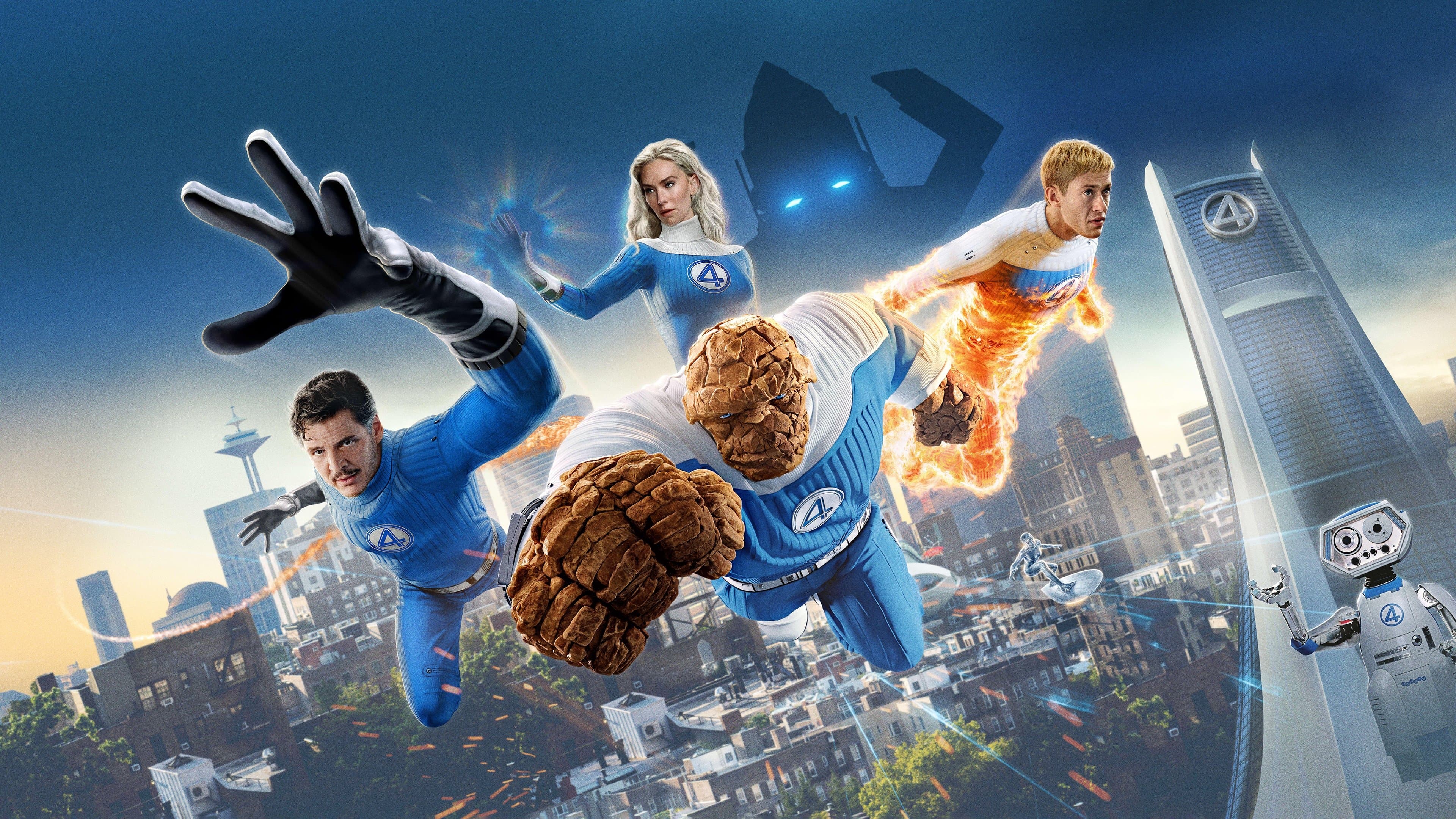
Against this stunningly realized backdrop, the plot is deceptively simple. Reed Richards (a wonderfully twitchy Pedro Pascal) and his wife Sue Storm (a regally frustrated Vanessa Kirby) are trying to hold together their family - which includes Sue’s hot-headed brother Johnny (Joseph Quinn) and the deeply empathetic rock monster Ben Grimm (Ebon Moss-Bachrach) - while the sky literally turns to static. The cosmic horror of Galactus arrives, a planet-devouring god voiced with terrifying gravitas by Ralph Ineson. He isn't a cloud; he is a walking eclipse, a shadow that swallows stars.
But the real genius of First Steps lies in its domestic tension. This is not a film about punching bad guys. It is a film about coping mechanisms. Pascal’s Reed is a man drowning in his own intellect, unable to solve the one equation that matters: how to be present. He stretches himself so thin - literally and metaphorically - that he is a ghost in his own home. Kirby, meanwhile, delivers a masterclass in steely resilience. Her Sue is the true leader, the one who sees the emotional board clearly while her husband fumbles with his cosmic abacus. The scenes between them are electric, not with romance, but with the weary, loving friction of a marriage stretched across the event horizon of an apocalypse.
The performances are the film's greatest asset. Moss-Bachrach steals the entire show as Ben Grimm. His is the soul of the movie - a man trapped in a shell of orange stone who is more human than anyone around him. His quiet moments, a look of grief that can somehow pierce through layers of CGI rock, are devastating. Quinn, meanwhile, provides the jet-fuel of charm, playing Johnny as a swaggering, brilliant idiot who uses his flame as a shield against his own inadequacy. And then there’s Julia Garner as Shalla-Bal, the Silver Surfer. It is a bizarre, haunting performance. She isn't the silver-skinned stoic of the comics; she is a hollow, chrome-plated angel of sorrow, a weapon with a broken heart. Her dynamic with Galactus is less master-and-servant, more gravity and orbiting moon - an inevitable, tragic pull.
Yet, for all its ambition, the film can’t quite hold its own weight. The pacing is the most polarizing element. It luxuriates in its aesthetic, spending an almost absurd amount of time on world-building and family dysfunction before the third act kicks in. For some, this is the patient, character-driven storytelling the genre desperately needs. For others, it’s agonizingly slow. The TMDb rating of 6.948/10 reflects that perfectly - a score that points to a broad audience walking away with a shrug of "it was fine," even as a vocal minority champion it as a misunderstood masterpiece.
The film also introduces Paul Walter Hauser as Harvey Elder, aka the Mole Man. It’s a wild, off-kilter performance that feels like it wandered in from a different, more unhinged movie. His scenes are brief but memorably bizarre, leaning into the Weird Pulp vibe that Shakman seems to love. Natasha Lyonne’s Rachel Rozman feels similarly out of place, grounding the story in a dry, bureaucratic humor that somehow makes the cosmic nonsense feel more tangible - a government drone dealing with a space god like it’s a budget meeting.
The Fantastic 4: First Steps is not the clean, crowd-pleasing reboot Marvel needed. It is a strange, beautiful, and flawed piece of art. It is a film that dares to ask why a family with superpowers doesn't just fix everything, and then offers a painful, realistic answer: because they are broken. It’s a blockbuster that favors melancholic silences over explosions and features a villain who speaks in cosmic subsonics rather than quips.
When you press play on OTT Stories, don't expect a coaster ride. Expect a meditation. Expect spectacle wrapped in sadness, and a genuine, heartfelt thesis about how the only thing that saves us is not our powers, but our ability to forgive each other's weaknesses. It’s a gorgeous trainwreck of a movie, and in a landscape of polished-to-a-mirror sheen studios, I found it oddly, irrevocably human.