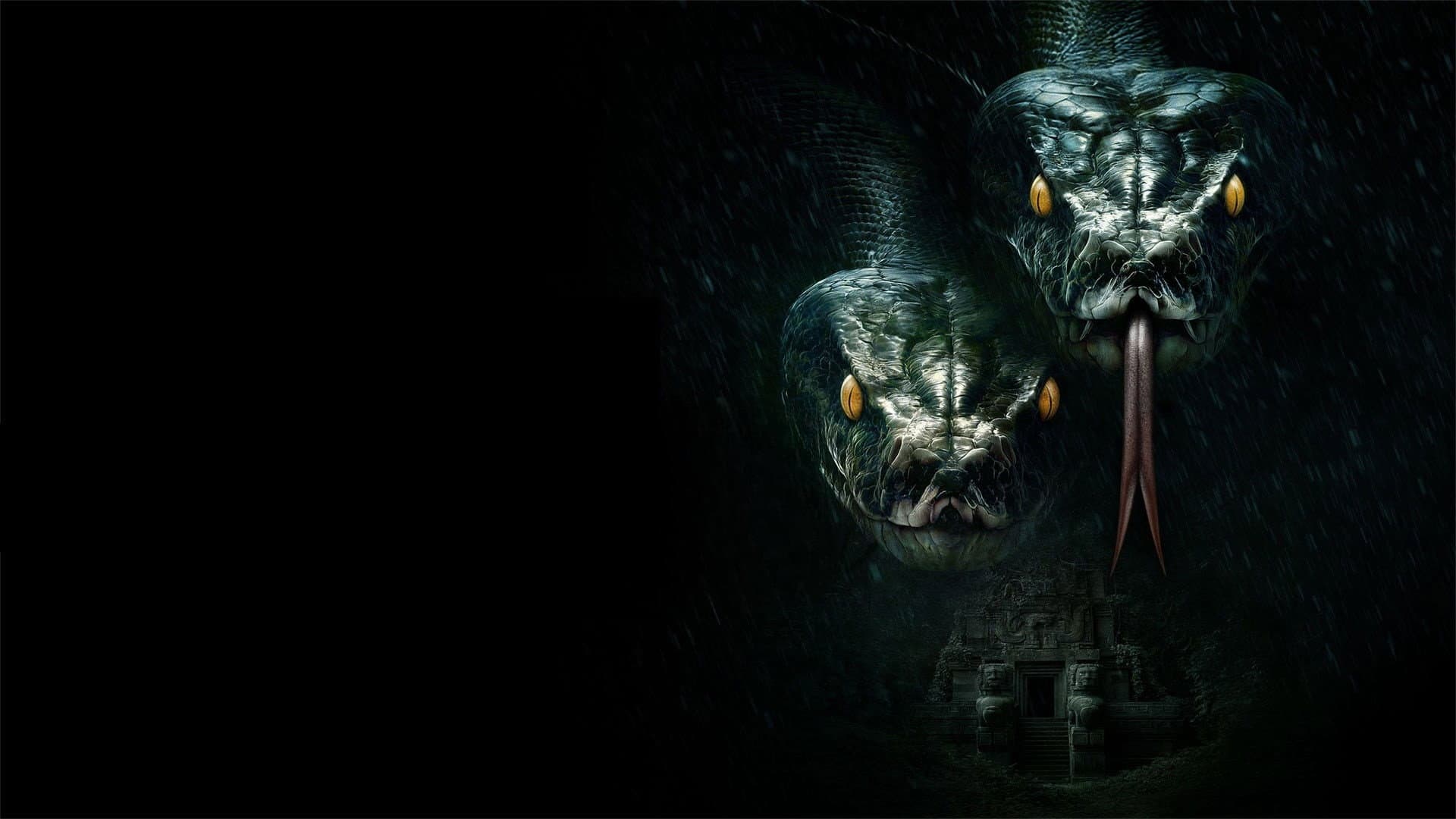
There is a special kind of magic in a monster movie that knows exactly what it is. It doesn't reach for prestige. It doesn't try to be a metaphor for grief or a meditation on the human condition. It simply says: here is a giant snake, and here are some people who should probably run. Marcel Walz’s The Anacondas arrives with that promise, and for better or worse, it delivers a lean, ninety-minute creature feature that feels like a relic from the video-store era - a B-movie with A-movie ambition squeezed into a shoestring.
Released in December 2025, the film opens with a premise that is pure pulp. A team of explorers in Mexico stumbles upon the ruins of an ancient civilization devoted to snake worship. This is not the kind of discovery that leads to a polite academic paper. No, this is the kind of discovery that leads to a celebration, then a very bad decision, and then an ever-growing anaconda that has been waiting centuries for its next human sacrifice. The snake is hungry. The explorers are conveniently present. You can guess the rest.
The cast is a familiar assortment of genre archetypes. Hannah Hueston leads as Amy Briars, the sort of resourceful protagonist who inevitably becomes the voice of reason in a room full of panicked archaeologists. Jordan Iverach’s Irving Jones and Philipp Karner’s Steve Bell fill out the expedition, while Dominic Keating - a name that will spark recognition for anyone who spent the early 2000s watching Star Trek: Enterprise - brings a touch of seasoned gravitas as Dr. Agustin Stiglitz. Maureen Kedes and Bix Krieger round out the team, and Giselle Garci and Marcus Mannis appear as Ichtaca and Atzi, characters whose names alone suggest they know more about the ancient ruins than the outsiders do.
Directed by Marcel Walz, the film has the distinct feel of a filmmaker who understands tension. Walz, whose previous work includes the Blind horror films, knows how to stage a jump scare and how to use darkness as a weapon. At ninety minutes, The Anacondas doesn't overstay its welcome. It moves from discovery to disaster with a briskness that is almost admirable. There is no time for subplots about funding cuts or romantic entanglements. There is only the snake, and the people who must survive it.
Critics, however, have not been kind. The film currently sits at a 3.6 out of 10 on TMDb, a rating that suggests audiences are split between those who appreciate the film’s unapologetic creature-feature ethos and those who expected something more polished. And it is not hard to see why. The visual effects, as one might expect from a film of this budget, are inconsistent. The anaconda itself is a mixed bag - sometimes menacing, sometimes distinctly digital. The dialogue veers into the kind of exposition that exists solely to explain why the snake is so big and why nobody thought to bring a flamethrower.
But there is a certain charm in that. The Anacondas is not trying to be Jaws. It is trying to be the kind of movie you watch on a rainy Sunday afternoon, the kind that doesn't demand much and gives exactly what it promises. The action is brisk, the adventure is pulpy, and the horror is laced with the sort of gleeful absurdity that has kept the creature-feature genre alive for decades.
The film’s strength lies in its setting. The Mexican ruins are rendered with a dusty, sun-bleached atmosphere that feels genuinely remote, and the jungle sequences are shot with enough claustrophobia to make the snake’s inevitable appearances feel earned. Walz leans into the mythology of the snake-worshipping civilization, giving the creature a backstory that is just detailed enough to justify its existence without bogging down the pace.
In the end, The Anacondas is a film that knows its audience. It is not for everyone. It is not a masterpiece. But for those who grew up on late-night cable and straight-to-DVD monster movies, it offers a familiar, undemanding thrill. It is a snake that has been starved for centuries, and a cast that is trying their best to survive it. Sometimes, that is enough.