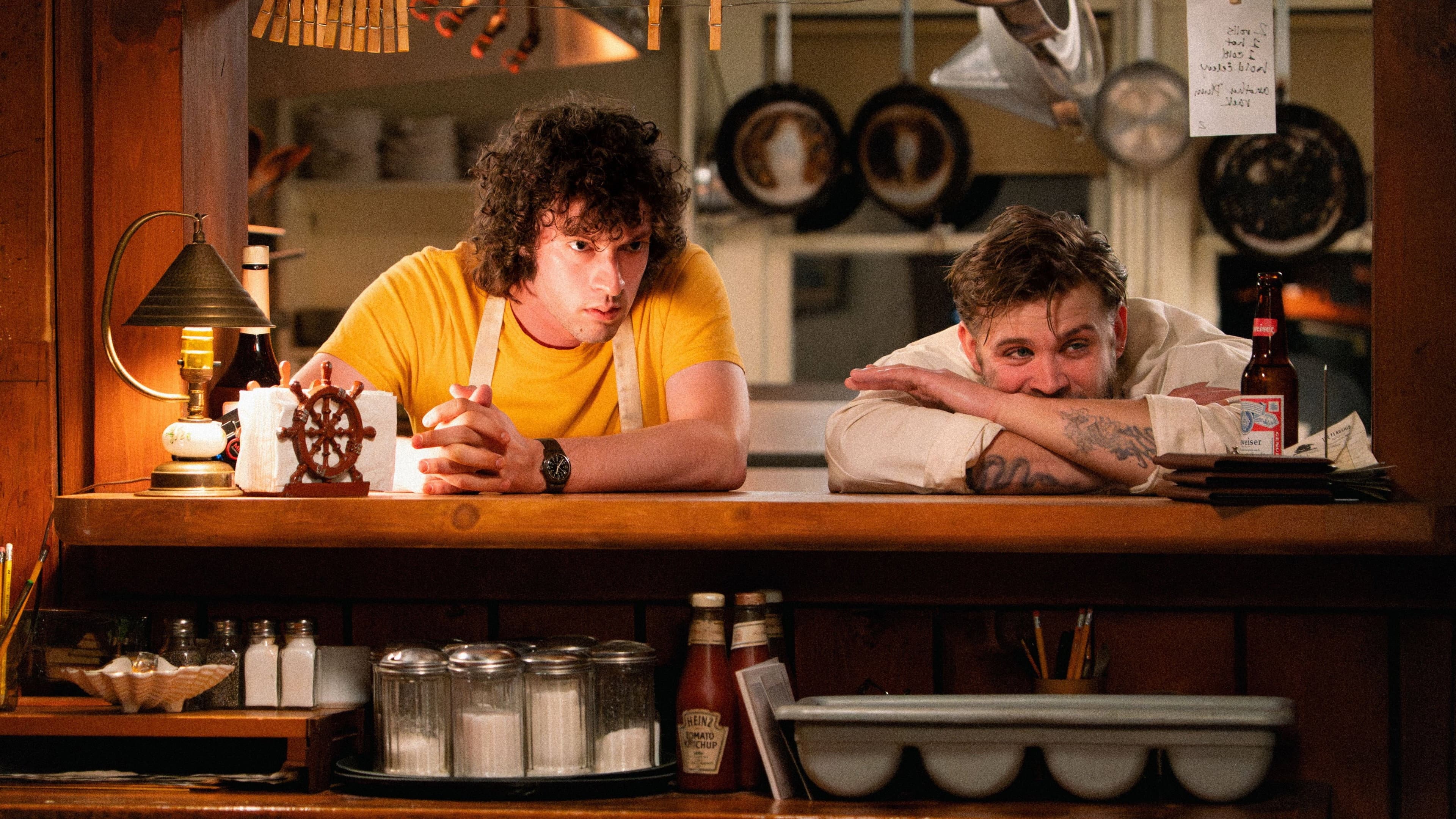
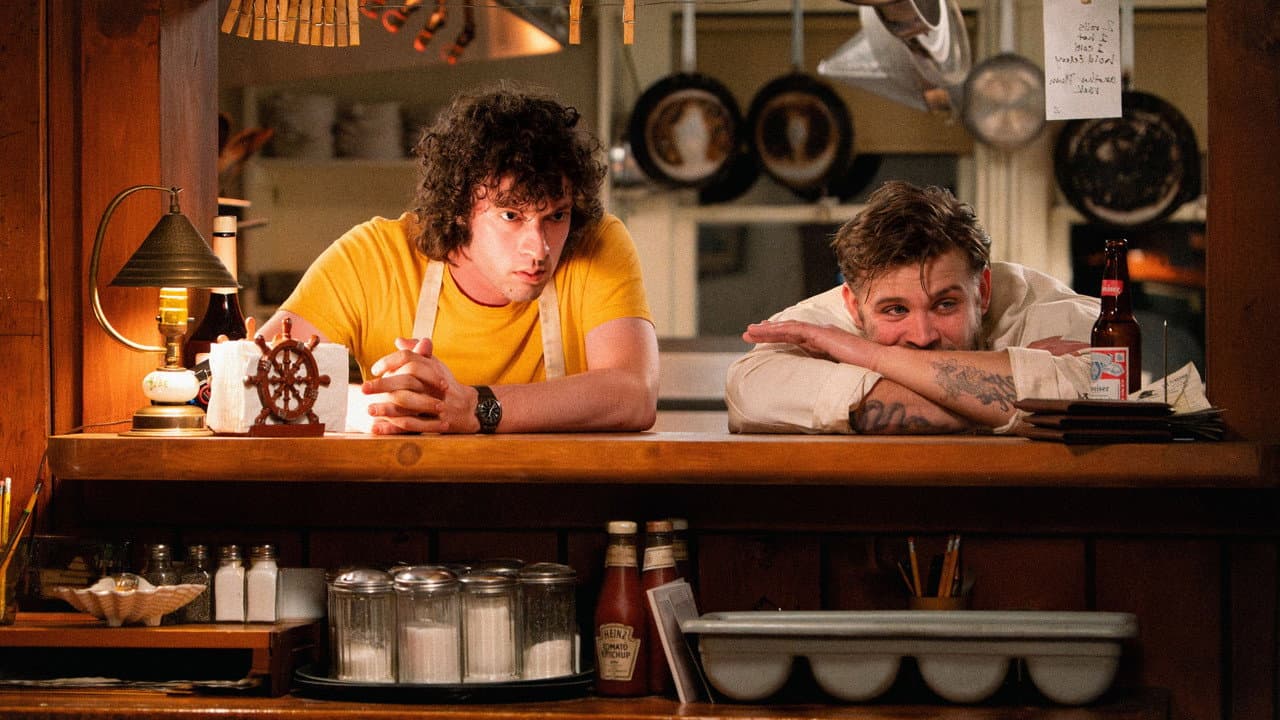

Before Anthony Bourdain became a globe-trotting oracle of food and a generation's favorite misanthrope, he was just a teenager with a summer to kill. That's the irresistible premise of Tony, Matt Johnson's new film that turns the iconic chef's origin story into a scrappy, sweaty kitchen comedy-drama. Released in theaters on August 7, 2026, it lands on streaming this month with a rare kind of momentum: a movie about finding yourself in the last place you'd expect, made with the same restless energy as the man it depicts.
The film opens in Provincetown, where 19-year-old Anthony - never "Anthony," always the nickname that gives the movie its title - stumbles off a ferry with no grand plan. Played by Dominic Sessa with a lanky wariness that recalls his breakout turn in The Holdovers, this Tony is raw clay: a kid who doesn't yet know he's hungry. He wanders into a restaurant kitchen and promptly gets swallowed whole. What follows is a summer of burns, bruises, grease fires, and small revelations - the accidental apprenticeship that would eventually birth Kitchen Confidential.
Johnson, the Canadian director who made his name with the vérité chaos of BlackBerry, brings a documentary-like immediacy to the back-of-house. His camera bobs and weaves through the line like a cook during a Friday-night rush. The sound design is a character unto itself: the hiss of a flat-top, the clatter of a falling sheet pan, the barked orders that sound less like language and more like combat signals. It's unglamorous and frequently hilarious, which is precisely the point. This is not a foodie movie. It's a movie about labor, and the strange family you form when you're all getting crushed together.
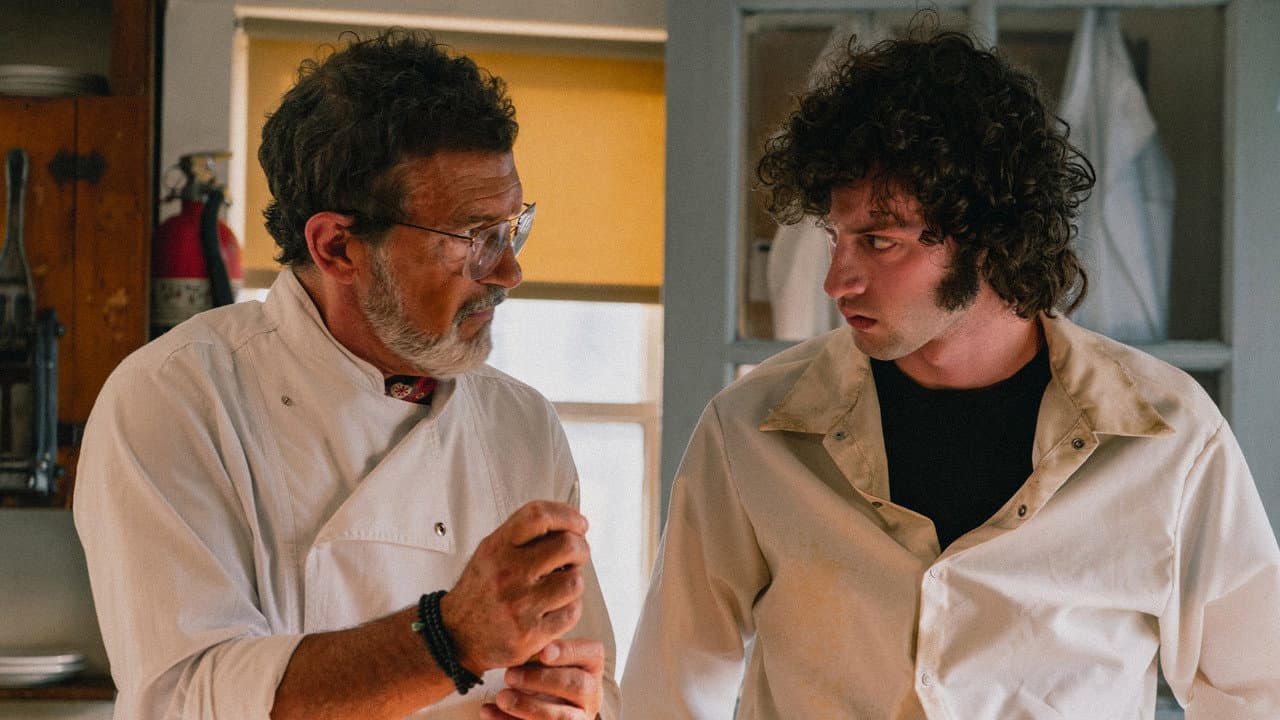
At the center of that family is Antonio Banderas as the Chef - a man of few words and volcanic silences. Banderas has spent decades playing seducers and swashbucklers, so it's a genuine thrill to watch him weaponize stillness. His Chef doesn't yell much; he doesn't need to. When he finally erupts, it's like a pressure cooker letting go, and the scene lands with a jolt that had my screening audience audibly exhaling. It's one of the actor's sharpest, least vain performances in years, and he and Sessa develop a prickly, wordless rapport that carries the film's emotional undertow.
Emilia Jones (CODA) is Nancy, a line cook with sharp elbows and a sharper tongue, serving as both foil and reluctant mentor. Leo Woodall's Sal is the charming, slightly dangerous front-of-house guy who treats every shift like a party he's hosting. Stavros Halkias, essentially playing a version of himself, brings a welcome jolt of comic looseness as Stavros, the dishwasher-turned-philosopher whose running commentary on the chaos around him is the film's secret weapon. Michael Jibrin's Tyrone, Monica Raymund's Mary, and Rich Sommer's Pierre round out a roster that feels lived-in from the first frame - the kind of ensemble where every background actor seems to have a life you'd want to follow home.
What keeps Tony from becoming just another scrappy-kid-makes-good story is its refusal to sentimentalize. The script, smart and economical, understands that kitchens are meritocracies of competence and that Tony's education is as much about ego as it is about knife skills. There are setbacks here that sting. There are choices that feel genuinely wrong. And there are moments - a plate sent back, a sauce broken, a look exchanged across a hot line - that quietly accumulate into something close to self-knowledge. By the time the season turns and Tony stands at a crossroads, the film has earned its final image without ever once telling us what it means.
The craft on display is unshowy but precise. The cinematography favors natural light and dingy fluorescents, giving Provincetown's tourist-town sheen a welcome scuff. The editing has a jazzy, improvisational pulse that mirrors the kitchen's rhythm, and the needle drops are deployed sparingly, which makes the ones that land hit harder. At 107 minutes, the film moves briskly without feeling rushed - a rare thing in an era of bloated runtimes.
It helps that critics and audiences are largely on the same page. With a TMDb score of 7.642 and an IMDb rating of 7.6, Tony has found that sweet spot of being well-liked without being overhyped. It's the kind of film that plays even better on a second viewing, once you know where the punches are coming from.
For those who came to Bourdain through his television travels, Tony offers something unexpected: the chance to watch the voice form. The sardonic asides, the romantic fatalism, the outsider's eye - they're all here in embryonic form, waiting to be discovered in a hot, loud, unforgiving room. You don't need to know a thing about the man to enjoy the movie. But if you do, the final act lands with a quiet resonance that borders on the elegiac.
Tony is now streaming. Watch it hungry.