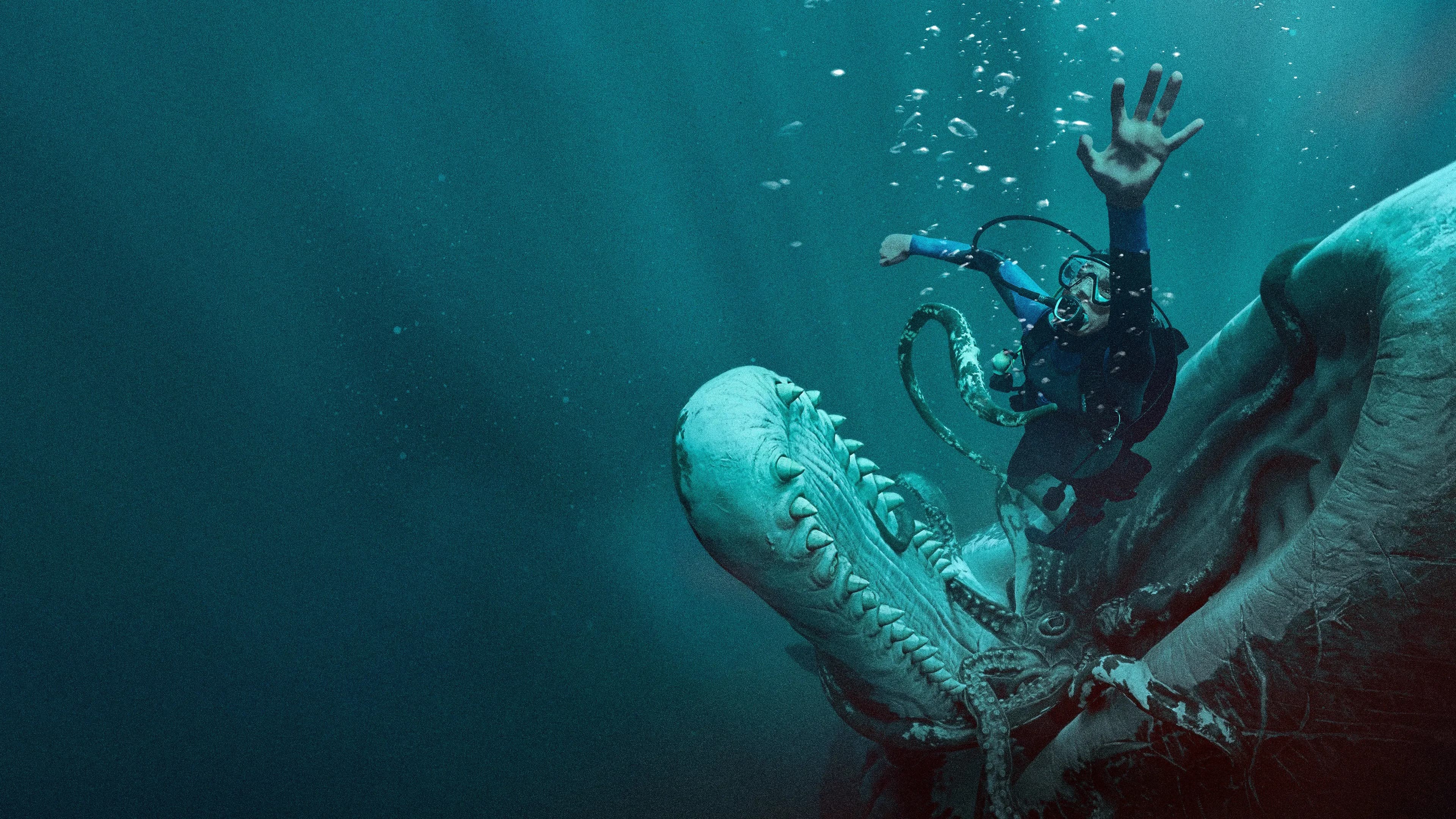
There is a particular kind of silence that exists a hundred feet below the surface of the Pacific, just off the jagged cliffs of California’s central coast. It is heavy, cold, and absolute. It is this silence that Brian Duffield weaponizes with terrifying precision in Whalefall, a claustrophobic thriller that hits streaming platforms today and immediately establishes itself as one of the year’s most suffocating cinematic experiences.
The premise sounds like the pitch for a high-concept monster movie: a grieving son, Jay Gardiner (Austin Abrams), descends into the deep to recover the remains of his father, only to be swallowed whole by a massive sperm whale. He has exactly one hour of oxygen left. The whale dives. The clock ticks.
But to dismiss this as merely a survivalist creature feature is to miss the point entirely. Duffield, who has built a reputation for high-wire genre tension in films like No One Will Save You, isn't just interested in the biology of a whale’s stomach or the mechanics of a regulator. He is interested in the psychology of a son trapped inside a tomb of flesh and bone, forced to confront the ghost of the man who raised him.
"It’s not just about getting out," Abrams says of his character’s ordeal. "It’s about why he went down there in the first place. Jay is looking for a body, but what he finds is a conversation he never got to finish."
That conversation is with Mitt Gardiner, played in flashback by Josh Brolin. Brolin brings a rugged, weary gravitas to the role of a man who, like the ocean he loved, was both majestic and dangerous. Through fragmented memories and hallucinatory visions brought on by nitrogen narcosis and dwindling oxygen, the film weaves a tapestry of a complicated father-son dynamic. Mitt was a man of hard-earned lessons, a diver who taught Jay that the ocean doesn't care about your feelings, only your preparation. It is a philosophy that feels cruel in the sunlight but becomes a survival mantra in the dark.
Duffield keeps the camera tight, often trapping the audience in the visceral, wet confines of the whale’s belly alongside Abrams. The sound design is a character in itself - the groaning of the leviathan’s digestive system, the frantic hiss of a regulator, the thumping of a heart that refuses to quit. It is a masterclass in tension, but it avoids the trap of becoming torture porn. Instead, it leans into the surreal.
The supporting cast, seen mostly in the terrestrial world that Jay is fighting to return to, grounds the film. Elisabeth Shue is poignant as Zara Gardiner, the mother caught in the crossfire of her husband’s obsession and her son’s grief. Jane Levy and Emily Rudd provide sharp, necessary counterpoints as Eva and Nan, representing the life Jay has neglected and the sister he needs to protect, respectively. John Ortiz offers a brief but memorable turn as Hewey, a mentor figure who understands the lethal gravity of the situation.
Yet, the film belongs to Abrams. For a significant portion of the 106-minute runtime, he is alone, acting opposite a green screen and a mechanical rig, and he sells every second of the terror. He moves from panic to despair, and finally, to a steely, inherited resolve. The realization that his father’s "hard-earned lessons" are the key to his escape is not just a plot device; it is an emotional epiphany. The tools to survive were given to him by the man he is mourning.
Whalefall arrives with a perfect 10/10 rating on TMDb, a rare feat that signals just how effectively it has resonated with early viewers. It is easy to see why. The film operates on a primal level. The fear of being eaten alive is universal, but the fear of forgetting a parent’s voice is equally so.
As the film nears its climax, the physical struggle for oxygen merges with the spiritual struggle for closure. The title itself suggests a fall from grace, a descent into the abyss, but also a necessary cycle of nature. To escape the whale, Jay must become something new. He must shed the boy who needed his father and become the man his father prepared him to be.
Whalefall is not a comfortable watch. It is tense, dark, and often breathless. But in the crowded landscape of streaming thrillers, it is a rare beast: a film that actually has something to say beneath the surface. It is a story of survival, yes, but it is also a story about the weight of legacy. It asks us what we carry with us when we are stripped of everything but our own will to live.
For those willing to take the plunge, Whalefall offers a cinematic adrenaline spike that is as moving as it is terrifying. Just remember to breathe.